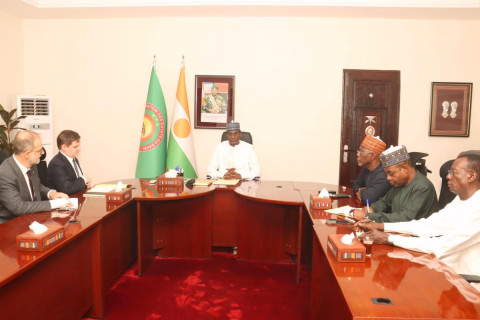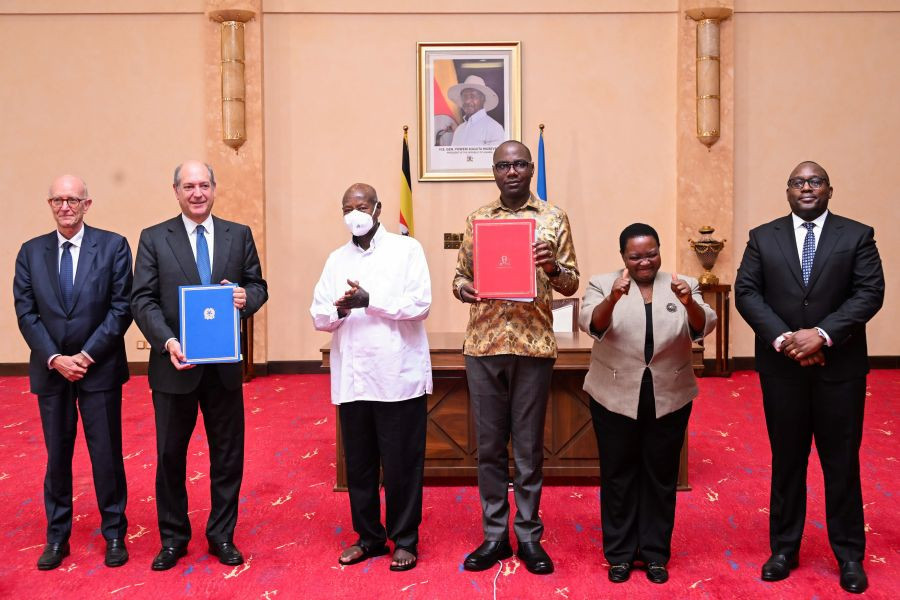
Uganda and Italy have signed a bilateral development cooperation agreement intended to deepen investment, technology transfer and value addition in agriculture, healthcare, industry and environmental sustainability.
The deal was inked at State House in Entebbe on November 7, during a visit by an Italian delegation of more than 80 officials, investors, business representatives and development partners, according to the Nile Post website.
During the meeting, Ugandan President Yoweri Museveni called on Italian companies to invest in local processing rather than exporting raw materials, and said that Uganda needed partnerships that expand production, trade and industrial capacity.
He singled out coffee processing, mineral beneficiation and lithium battery manufacturing for electric vehicles as priority areas, arguing that Uganda should retain more value from its natural resources and create jobs at home.
Uganda’s Prime Minister Robinah Nabbanja said Italy had mobilized €120 million for Uganda’s coffee sector, with €60 million expected as an initial instalment.
The European Union has separately pledged €44 million to support coffee production, processing, quality improvement and market access, with technical backing from the United Nations Industrial Development Organization.
Construction has also begun on the Uganda-Italy Coffee Training Centre at Kyambogo University. The facility is designed to train Ugandans in coffee processing, roasting and quality control, and will include a laboratory, roastery, coffee shop and coffee bar.
Italy’s Foreign Ministry says its development cooperation portfolio in Uganda is worth about €42 million, while planned coffee-value-chain and environmental sustainability initiatives exceed €150 million. A separate €12.75 million, three-year PRISMA project will support maternal, child and cancer care in West Nile, Acholi, Lango and Karamoja.
The two governments also highlighted a €70 million Green Cities initiative with the Food and Agriculture Organization, aimed at cleaner urban development, improved food markets and environmental resilience in Kampala and Hoima.