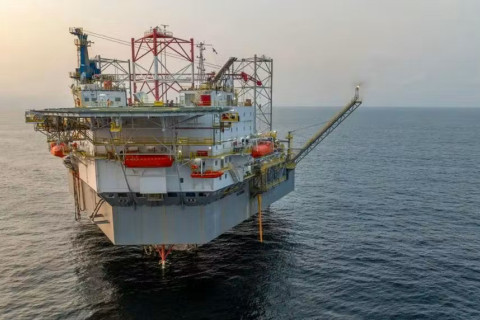
Chevron has discovered oil and gas condensate at an exploration well in Block 0 offshore Angola, adding to its efforts to expand production in sub-Saharan Africa through exploration linked to existing infrastructure.
The well in the Lower Congo Basin encountered a hydrocarbon column of more than 600 meters in the Pinda reservoir, including over 90 meters of net pay in what Chevron described as excellent-quality reservoir rock. The company will assess whether the discovery can be connected to nearby facilities, potentially reducing development costs and shortening the path to production.
The discovery comes as Angola seeks to make its mature oil blocks more attractive to investors. A presidential decree issued in late 2024 introduced reforms and tax incentives aimed at encouraging exploration and investment in aging assets, where maintaining production increasingly depends on new drilling and improved recovery.
Block 0 illustrates the model Angola is trying to promote. Chevron has operated in the country for decades, and the existing infrastructure around the concession gives new discoveries a potential advantage over frontier projects that require entirely new production systems. If the 105-4X discovery can be developed through a tie-back, the company could potentially add production without the scale of capital expenditure normally associated with a standalone offshore development.
Chevron operates Block 0 through its Cabinda Gulf Oil subsidiary, holding a 39.2% working interest. Sonangol E&P holds 41%, while TotalEnergies has 10% and Azule Energy 9.8%.
The exploration success also fits into a broader expansion of Chevron's African portfolio. The company produces around 300,000 barrels of oil equivalent per day net in sub-Saharan Africa and has added offshore acreage in Nigeria while securing interests in Guinea-Bissau and Equatorial Guinea. It is also evaluating several Angolan blocks and plans further drilling across the region, including the Nabba-1X well in Namibia before the end of the year.
For Angola, the significance of the discovery extends beyond the resources found at a single well. The country remains heavily dependent on oil revenues while much of its production base is mature. Attracting investment into existing basins, using infrastructure more efficiently and making additional exploration commercially viable are therefore becoming increasingly important to sustaining output.
Chevron's latest discovery does not change that structural challenge on its own. But it provides an early indication that Angola's strategy of combining fiscal reforms with infrastructure-led exploration can create opportunities for international operators willing to invest in the country's mature oil sector.