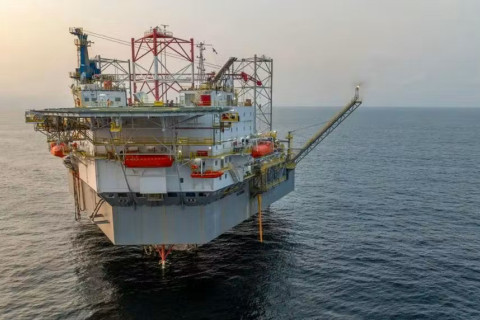
Ghana is moving to make its upstream oil and gas sector more attractive to international investors as declining production increases pressure to bring new projects online. A preliminary agreement with Shell and Chevron over the South Deepwater Tano Cape Three Points block has emerged as an early test of that strategy.
Shell and Chevron have signed a non-binding memorandum of understanding with Ghana National Petroleum Corporation (GNPC) covering the acquisition of exploration and production rights for the offshore block. Shell said the agreement provides a framework for negotiating final license terms and remains subject to the required approvals. Chevron confirmed the agreement, saying it continues to review new exploration opportunities globally.
The timing is significant. Ghana is undertaking a comprehensive review of its legal and fiscal framework for upstream petroleum activities as it seeks to reverse a prolonged decline in production. Crude output fell from 71.44 million barrels in 2019 to 48.25 million barrels in 2024, according to the U.S. International Trade Administration cited by Reuters.
The government is now considering changes designed to improve the economics of new upstream projects. Among the proposed measures is a reduction in GNPC's initial carried interest in upstream projects from 15% to 10%. The government is also considering a simpler tax regime and differentiated royalty treatment based on water depth.
For investors, the proposed changes matter because Ghana is increasingly competing for capital against other offshore markets where deepwater developments require substantial upfront spending and long investment horizons. More flexible fiscal terms could improve the economics of projects that might otherwise struggle to compete for capital within the portfolios of major international oil companies.
The South Deepwater Tano agreement is therefore important even though it does not yet represent a final investment decision. The next stage will be negotiations over license terms, followed by the regulatory approvals and technical work required before Shell and Chevron can determine whether the block warrants larger capital commitments.
Ghana is not starting from zero. Existing investments in the Jubilee and TEN fields by Kosmos Energy and partners including Tullow Oil are expected to support drilling of up to 20 additional wells, potentially helping to strengthen oil and gas production.
That creates a two-track strategy for Accra: sustain output from existing producing assets while making the regulatory framework competitive enough to attract investment into new offshore opportunities.
The broader objective is to restore Ghana's upstream sector as a source of production, government revenue and foreign investment. But the government must balance investor incentives with its own share of future resource revenues.
The Shell-Chevron agreement is consequently best viewed as an early signal of renewed interest rather than a confirmed new development. Its significance will depend on whether Ghana can turn the current review into a framework that gives international operators sufficient confidence to commit capital.
For Ghana, attracting major oil companies is only the first step. The real test will be whether better investment terms can translate into new production