The South Africa session of the China-Africa Economic and Trade Expo (CAETE) opened in Johannesburg on November 19, bringing together government officials and business leaders to deepen trade, investment and industrial cooperation between the two countries.
The expo is designed to help Chinese and South African companies identify opportunities, form partnerships and conclude commercial agreements. Organizers have scheduled matchmaking sessions in agricultural machinery, new energy and watches, alongside an “Export to China” South Africa special session, according to China's State Council Information Service.
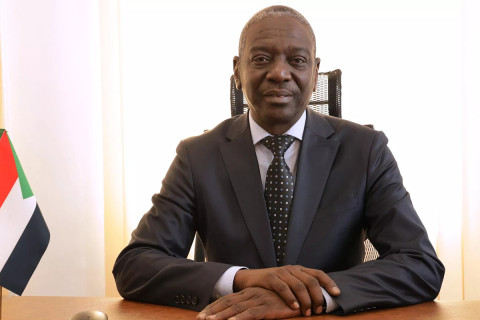
Addressing the opening ceremony, the South African Deputy Minister of Trade, Industry and Competition John Steenhuisen said the two countries share a vision of a partnership built on deeper economic cooperation and mutual development, and encouraged businesses on both sides to use the platform to pursue practical opportunities.
Simohn Engelbrecht, head of trade and relations at Agriculture South Africa, said "South Africa could supply China with agricultural products year-round and wanted to diversify its exports. The goal is not only higher trade volumes but a stronger, more diversified economic relationship".
In turn, Chinese Ambassador to South Africa Wu Peng said at the ceremony that bilateral trade had grown since the policy took effect and that Chinese firms were interested in investing in South Africa, supporting economic development and job creation.
Bilateral trade between Angola and China reached about $16 billion between January and September 2026, marking a 3.9% year-on-year increase compared to the same nine-month period in 2025. Following a first-half volume of $10.8 billion, the sustained third-quarter momentum places full-year 2026 trade on pace to exceed the $20.8 billion to $20.9 billion recorded across all of 2025.
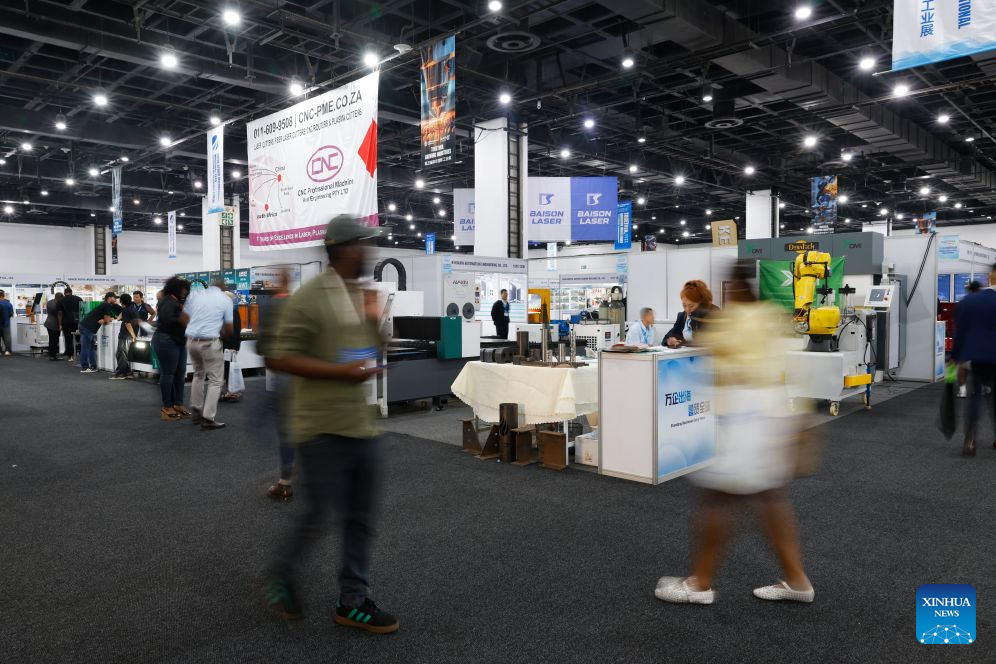
The three-day event runs alongside the fifth South Africa International Industrial Expo (SAIIE) at the Sandton Convention Centre. The exhibition spans 5,000 square meters and features 40 South African companies and more than 190 Chinese manufacturers. Its four sections cover power and energy, machinery and parts, mining, and African products.
From May 1, China extended zero-tariff treatment to all 53 African countries with which it has diplomatic relations, covering 100 percent of tariff lines. The measure is intended to expand African exports and support industrialization, with preferential tariff arrangements initially set for two years.