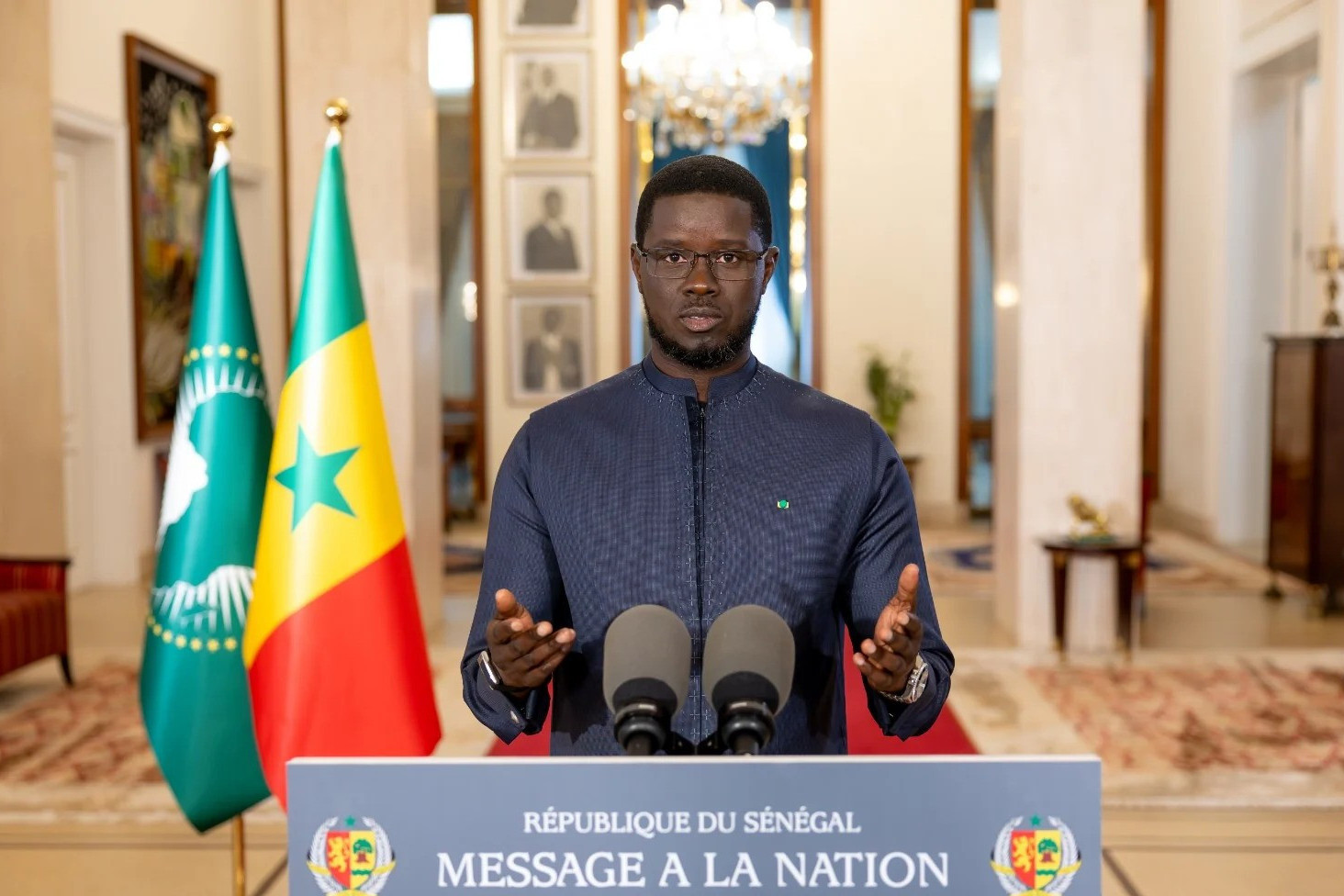
Senegal’s President Bassirou Diomaye Faye has imposed the country’s rejected 2026 supplementary budget by decree, intensifying a political and fiscal standoff that could jeopardize a proposed $2.2 billion International Monetary Fund (IMF) program.
In a presidential statement issued on November 19, Faye said he acted to preserve constitutional order and the continuity of the state. The measure, Decree No. 2026-2416, brought the supplementary finance bill into force one day after lawmakers rejected the first section of the 2027 budget.
Senegal’s Constitution permits a finance bill not definitively voted on within 60 days to be enacted by decree, but critics argue that mechanism cannot apply to a bill parliament explicitly rejected.
Amadou Ba, the deputy who led the rejection, has challenged the president’s authority. The National Assembly had already rejected the 2026 supplementary budget on November 3 after adopting Ba’s procedural motion.
The official record initially showed 109 votes in favor, 20 against and three abstentions, before being revised to 126 in favor. Ba said deputies lacked documents needed to assess the budget’s credibility, including reports on public investment, debt and debt privatization.
The supplementary budget raises the projected 2026 deficit to $3.1 billion, or 7.6% of GDP, while cutting growth forecasts to 2.7% from 5%.
The IMF reached a staff-level agreement on a $2.2 billion Extended Credit Facility in September, subject to board approval and corrective measures after previously undisclosed borrowing inflated reported debt.
The crisis also reflects a rupture between Faye and Pastef leader Ousmane Sonko, who was dismissed as prime minister in May and later became National Assembly speaker. Pastef has reportedly expelled Faye and about 31 senior allies after he launched a rival party.