Here is a number that puts the entire "Africa's energy potential" conversation in perspective: across the whole continent, in its entire history of oil and gas exploration, fewer than 25,000 wells have ever been drilled.
The Drilling Gap Nobody Talks About
S&P Global Energy's Director for African Regional Research, Justin Cochrane, highlighted Africa's structural under-exploration this spring, noting that only around 25,000 wells have ever been drilled across the continent. He stressed that 74 percent of discoveries since 2010 have come from deepwater and ultra-deepwater plays, with gas accounting for 73 percent of total hydrocarbon finds.
For comparison, the United States alone drills tens of thousands of wells in a single year. Africa's entire cumulative drilling history — covering 54 countries and a landmass three times the size of the continental US — doesn't reach that figure. Africa's upstream oil and gas sector is entering a phase of stabilization, with production forecasts at 11.4 million barrels of oil equivalent per day in 2026 and capital expenditure expected to reach 41 billion dollars. That sounds like a large number until you compare it to what global capital spending actually looks like. Global exploration and production capital spending is projected to reach roughly 504 billion dollars in 2026, with Africa accounting for just 41 billion dollars of that — around 8 percent of the global total, on a continent that holds a meaningfully larger share of the world's remaining untapped reserves.
Angola Just Set a Continental Record Twice in Six Months
While the exploration numbers tell a story of underinvestment, Angola has delivered something genuinely remarkable on the other side of the energy equation — and the story behind it is more interesting than a single ribbon-cutting.
In late 2025, Portuguese infrastructure group MCA inaugurated the Cazombo Solar Photovoltaic Park in Angola, which became, at the time, Africa's largest off-grid solar-plus-storage installation. The record did not last long. In early May 2026, MCA inaugurated an even larger facility — the Luau Photovoltaic Park, with a generation capacity of 31.85 megawatts-peak and battery storage of 75.26 megawatt-hours, enough to supply more than 90,000 people while avoiding roughly 47 tonnes of CO2 emissions. With its commissioning, Luau became the largest off-grid solar park on the African continent, surpassing the record Cazombo had set just months earlier.
The Luau facility sits in a remote town on Angola's border with the Democratic Republic of Congo, replacing diesel generation entirely with solar power and battery storage. The €87 million plant anchors Angola's Rural Electrification Project, which targets 46 solar mini-grids across 60 communes and aims to reach more than one million people by 2027. Financing was structured by Standard Chartered, with a guarantee of approximately one billion euros provided by Germany's export credit agency Euler Hermes, reinsured by Portugal's Cosec and South Korea's K-Sure. The project sits strategically along the Lobito Corridor — the transcontinental transport and trade route already reshaping how the region's minerals reach global markets — and is recognized under the European Union's Global Gateway strategy.
President João Lourenço and Energy Minister João Baptista Borges attended the opening ceremony in person. "The completion of the Cazombo and Luau parks marks just the beginning of a structural and ambitious programme, which will continue to expand in the coming years," said Manuel Couto Alves, Chairman of MCA.
This matters for a reason that goes beyond the megawatts themselves. Most of Central Africa's energy story has, for decades, been about extraction — oil pumped out of the ground and shipped abroad, with comparatively little invested in actually getting power to the people who live near the resource. Cazombo and Luau represent a different model: generation built specifically to serve local populations that previously had no grid connection at all, financed through a genuinely international structure spanning Portuguese engineering, British banking, German export guarantees, and EU strategic backing — rather than infrastructure built primarily to move resources toward a port.
The Region's Established Producers Are Treading Water, Not Sprinting Forward
Established producers such as Algeria, Nigeria, Angola and Libya continue to anchor African oil and gas supply, but rely heavily on capital injections, upgrades and maintenance simply to prevent output decline. The African Energy Chamber's State of African Energy 2026 Outlook notes that Africa will require sustained multi-billion-dollar annual capital commitments just to maintain existing production levels, with far higher spending needed to meaningfully expand it.
Angola fits this pattern precisely on the hydrocarbon side. The country is not failing to attract investment, but a large share of what arrives is going toward keeping mature oil fields from declining further, rather than toward genuinely new capacity. That makes the Cazombo-Luau solar programme — modest in absolute output compared to oil revenues — one of the more significant exceptions: new generation capacity that isn't simply offsetting decline elsewhere, but reaching communities the oil economy never touched.
A New Bank, Timed for a Volatile Oil Market
Against this backdrop of underinvestment in exploration and maintenance-mode production, African oil producers are also moving to build new financial institutions of their own — timing that says something about how exposed the continent's energy economies have become to events thousands of kilometres away.
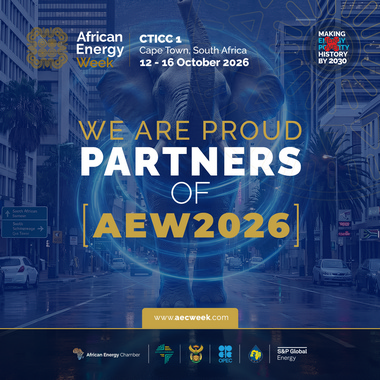
The African Petroleum Producers' Organization has confirmed the June 2026 launch of the African Energy Bank, alongside an official partnership with African Energy Week 2026, intended to advance energy sovereignty and investment across the continent.
The launch arrives in the middle of a genuinely volatile period for global oil prices, driven by events the region has no control over. Brent crude prices fluctuated dramatically amid the ongoing Gulf war, moving from 81 dollars per barrel on March 3 to 112 dollars on March 12, then back down to 98 dollars by March 25. Escalating crude prices bring challenges that extend well beyond the cost of imports, with African economies that rely heavily on diesel and refined fuel imports facing particular exposure.
A continent that produces crude but imports the refined fuel its economies actually run on — the same structural mismatch behind the Strait of Hormuz fuel squeeze covered earlier this week — does not benefit symmetrically from high oil prices. It often pays the cost on the import side faster than it collects the revenue on the export side.
What This Actually Adds Up To
Twenty-five thousand wells drilled across an entire continent's history. Eight percent of global exploration spending despite holding a disproportionate share of the world's remaining reserves. Established producers spending heavily just to avoid losing ground rather than gaining it. And, in the middle of all that, two solar parks in remote corners of Angola — built six months apart, each briefly holding the continental record — finally bringing reliable electricity to communities that diesel generators and distant oil wells never reached.
That contrast — between the scale of Africa's underexplored potential and the scale of what's actually being built to serve its own population — is the real energy story of 2026. Not the headline barrel counts. The gap between them, and which side of that gap a given investment actually lands on.