In the corporate boardrooms of London, Paris, and Washington, the discourse surrounding Central Africa’s economy is entirely dominated by ESG compliance and the global energy transition. Western financial institutions refuse to fund oil pipelines or coal plants, urging countries like Chad and the Central African Republic (CAR) to leapfrog straight into solar panels and wind turbines.
However, looking at the real economic policies implemented in the region by mid-2026, it becomes clear that local capitals are executing a major ideological revolt. Regional leaders have realized that you cannot build an industrial economy on unstable solar grids while sitting on billions of barrels of oil and millions of tons of unrefined critical minerals. Central Africa is turning away from Western-dictated climate parameters and embracing a aggressive wave of resource nationalism and internal industrialization.
Rejecting the "Raw Material Trap"
For over a century, the economic model of Central Africa was simple: extract raw resources, ship them abroad via foreign corporations, and buy back finished goods. Today, this model is being actively dismantled. Following the release of the landmark Compendium of Africa's Strategic Minerals 2026, the policy consensus in the region has shifted from mere extraction to forced localization.
Central African states are capitalizing on the global scramble for energy-transition materials (such as lithium, cobalt, and rare earth elements found in CAR and the Congo River Basin) to demand something Western investors historically avoided: local processing.
The strategy is clear: if a foreign mining enterprise wants access to CAR’s newly mapped rare earth deposits or Chad’s mineral wealth, they must build the processing plants, processing clusters, and local transport infrastructure within the host country. Governments are effectively using their monopoly over critical minerals to force industrialization.
The Hydrocarbon Rebellion: Fossil Fuels as a Sovereignty Tool
The most glaring disconnect between Western expectations and Central African reality lies in the energy sector. At the recent African Development Bank meetings in late May 2026, regional leaders delivered a blunt message to global financial institutions: international climate conditions will no longer dictate domestic survival. With the World Bank pushing the "Mission 300" initiative to bring electricity to 300 million sub-Saharan Africans by 2030, regional capitals argue that achieving this goal without fossil fuels is a mathematical impossibility.
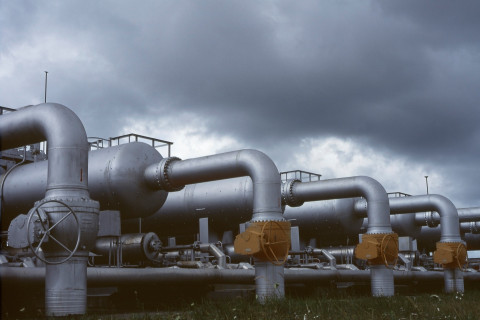
Take Chad, for example. Despite constant pressure to diversify away from hydrocarbons, N'Djamena has focused heavily on maximizing its domestic refining capacity. Crude oil production, currently holding steady at around 124,000 barrels per day, is no longer viewed merely as a source of quick export cash. Instead, the government is redirecting a growing share of production toward domestic refining and heavy industrial projects, such as regional fertilizer manufacturing utilizing local natural gas and phosphate deposits.
The regional logic is uncompromising: Europe’s desire to decarbonize cannot override Central Africa’s immediate need to industrialize. By utilizing local oil and natural gas to power regional electricity grids and factories, these countries are prioritizing energy security over international climate praise.
The Financing Gap and the Return of Private Capital
This shift toward heavy industrialization has triggered a structural financing crisis, but also a new opportunity. Because Western Development Finance Institutions (DFIs) refuse to bankroll fossil-fuel or heavy metal processing projects due to strict green mandates, Central African nations are bypassing them entirely.
At the 2026 Powering Africa Summit, a decisive shift toward "investment-led commercial diplomacy" became evident. Regional capitals are bypassing traditional Western aid and aggressively courting institutional investors, sovereign wealth funds, and private capital providers from the Middle East and Asia who operate with a strict profit-incentive rather than ideological conditionalities. By matching their vast, untapped mineral reserves directly with high-risk private capital, countries like Chad and Gabon are structuring joint ventures that insulate them from Western regulatory blackmail.
For any country that successfully transformed its hydrocarbon wealth into modern infrastructure and geopolitical sovereignty—Central Africa’s current economic trajectory looks incredibly familiar.
The region is finally outgrowing the naive illusion that foreign aid or green subsidies can build a modern state. By pivoting toward resource nationalism, demanding local industrial processing, and stubbornly defending their right to use fossil fuels, Chad, CAR, and their neighbors are staging a successful economic mutiny. They have realized that true sovereignty is not granted at climate summits; it is forged in refineries and processing plants powered by their own resources.