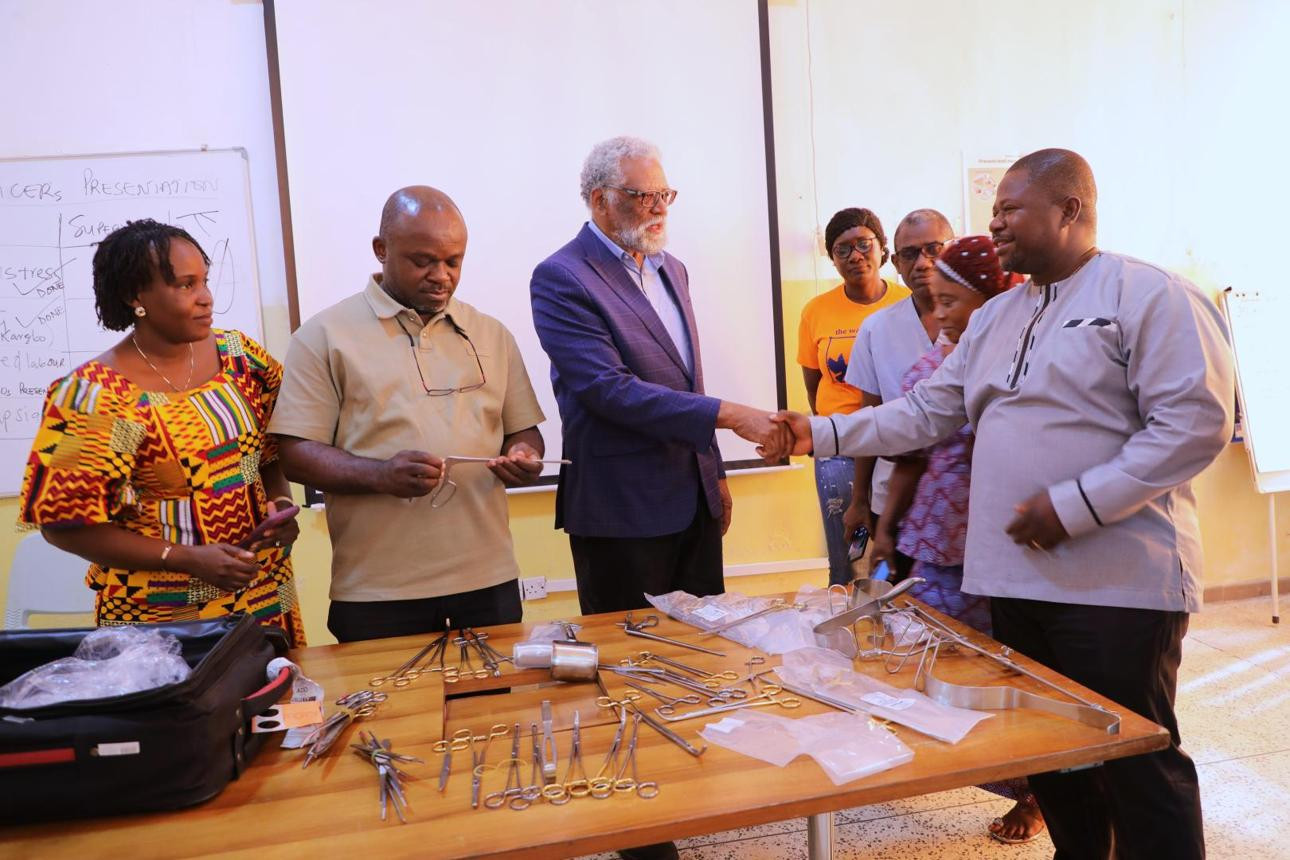
Sierra Leone is strengthening its capacity to treat cervical cancer by training local doctors in complex surgical procedures, with a young female physician among those gaining specialised skills through an international cooperation programme.
The initiative, led by the Ministry of Health with support from the World Health Organization (WHO), Zambia's Ministry of Health and other partners, has provided 15 women with early-stage cervical cancer access to life-saving surgery since 2024.
At the centre of the story is Dr Rosalitta Jaida Toogbabu, a resident doctor at Princess Christian Maternity Hospital in Freetown, Sierra Leone's only tertiary maternal health facility. Before joining the programme, she had observed a radical hysterectomy — an operation involving the removal of the uterus and surrounding tissue — only twice and had never participated in the procedure.
Through surgical training camps and mentorship, she has gradually taken on greater responsibilities, learning to anticipate the different stages of the operation.
The programme's latest training camps took place in December 2025 and July 2026. An important milestone came during the 2026 camp, when Dr Michael Ezeanochie, a local gynaecological oncologist, led the procedures independently after international specialists had guided earlier sessions.
The initiative builds on regional medical cooperation between Sierra Leone and Zambia, combining practical surgical experience with the transfer of specialised knowledge to local medical teams.
For Dr Toogbabu, the opportunity is also a step towards her ambition of specialising in gynaecological oncology and expanding cancer care in her country.
She acknowledges that further experience and advanced training are still necessary before she can perform such operations independently. However, she hopes to contribute to improving cancer prevention, expanding specialised services and developing medical training programmes in Sierra Leone and beyond.
The initiative highlights how international partnerships and investment in local medical professionals can help countries strengthen healthcare systems and bring specialised treatment closer to patients.