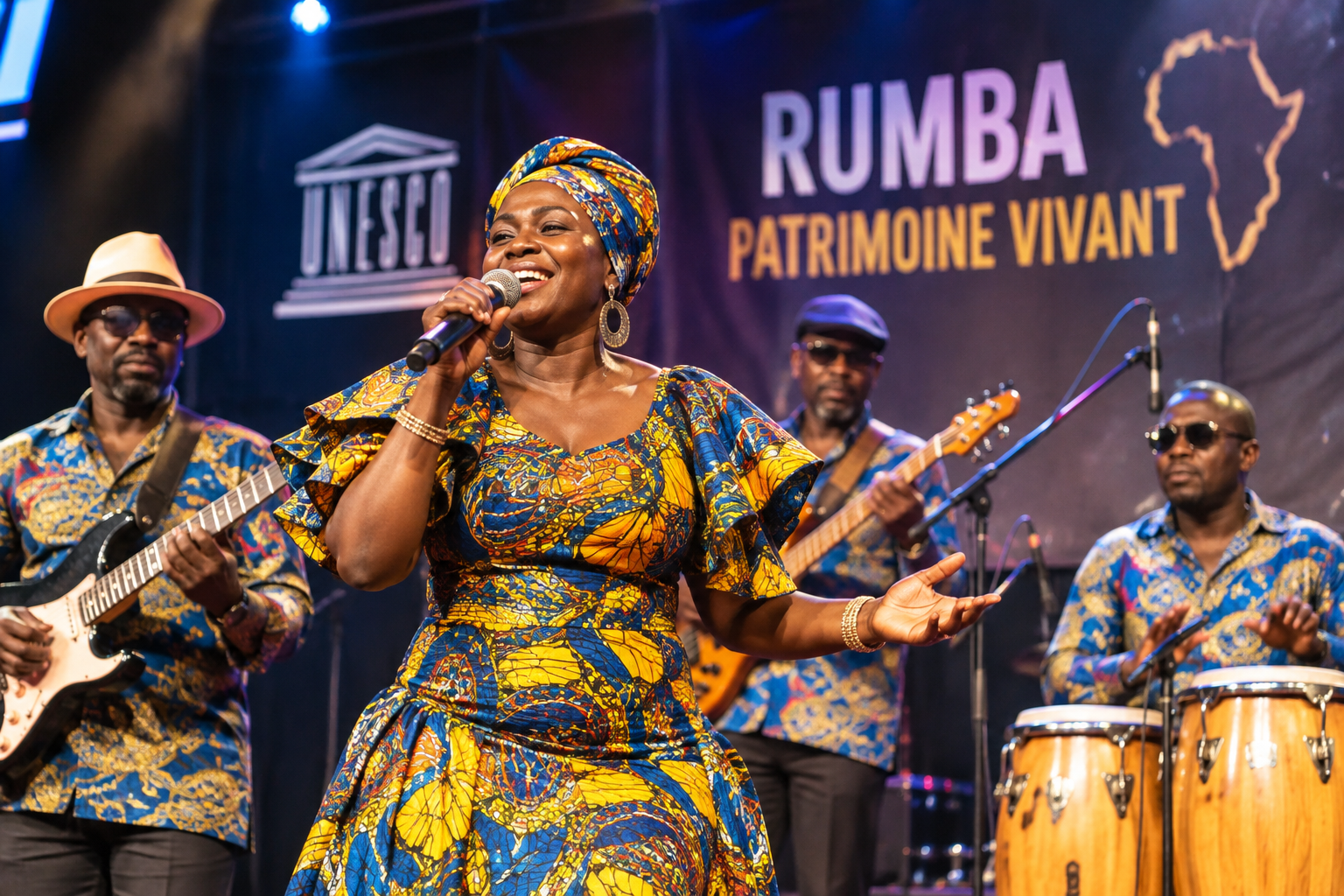
The United Nations Educational, Scientific and Cultural Organization (UNESCO) will host a week of events in Paris from November 23 to 27 to mark five years since Congolese rumba was added to its Representative List of the Intangible Cultural Heritage of Humanity.
The program will bring together musicians, cultural experts and representatives of the Democratic Republic of the Congo and the Republic of the Congo to celebrate a musical tradition shared by the two countries. According to UNESCO, the events will explore the genre’s history, international influence and future.
Recognized in December 2021, Congolese rumba has deep roots in Central African musical traditions. Its rhythms and melodies have shaped the cultural identities of communities on both sides of the Congo River, particularly in Kinshasa and Brazzaville, while influencing music well beyond the region.
The five-day program will include live performances, exhibitions, film screenings, panel discussions and a public dance workshop. Discussions will address the preservation of musical heritage, the transmission of rumba to younger generations and the impact of digital platforms on the music industry.
One of the key topics will be the economic rights of musicians. Sessions will examine copyright protection, revenue distribution from digital music platforms and ways to ensure that performers and other rights holders receive fair compensation for their work.
The anniversary ceremony on November 26 will feature artistic performances and tributes to influential figures in Congolese music. The closing day will focus on education, cultural transmission and the role of heritage in promoting dialogue and peace.
The celebrations will also extend beyond Paris. In Kinshasa, the second edition of the Rumba Marathon is scheduled for December 11–13, bringing together cultural activities across three venues and focusing on different dimensions of the musical tradition.
For the two Congos, the anniversary is an opportunity to highlight a cultural tradition that transcends national borders. It also raises a broader question for Africa’s creative industries: how can international recognition help preserve traditional music while creating sustainable opportunities for the artists who keep it alive?