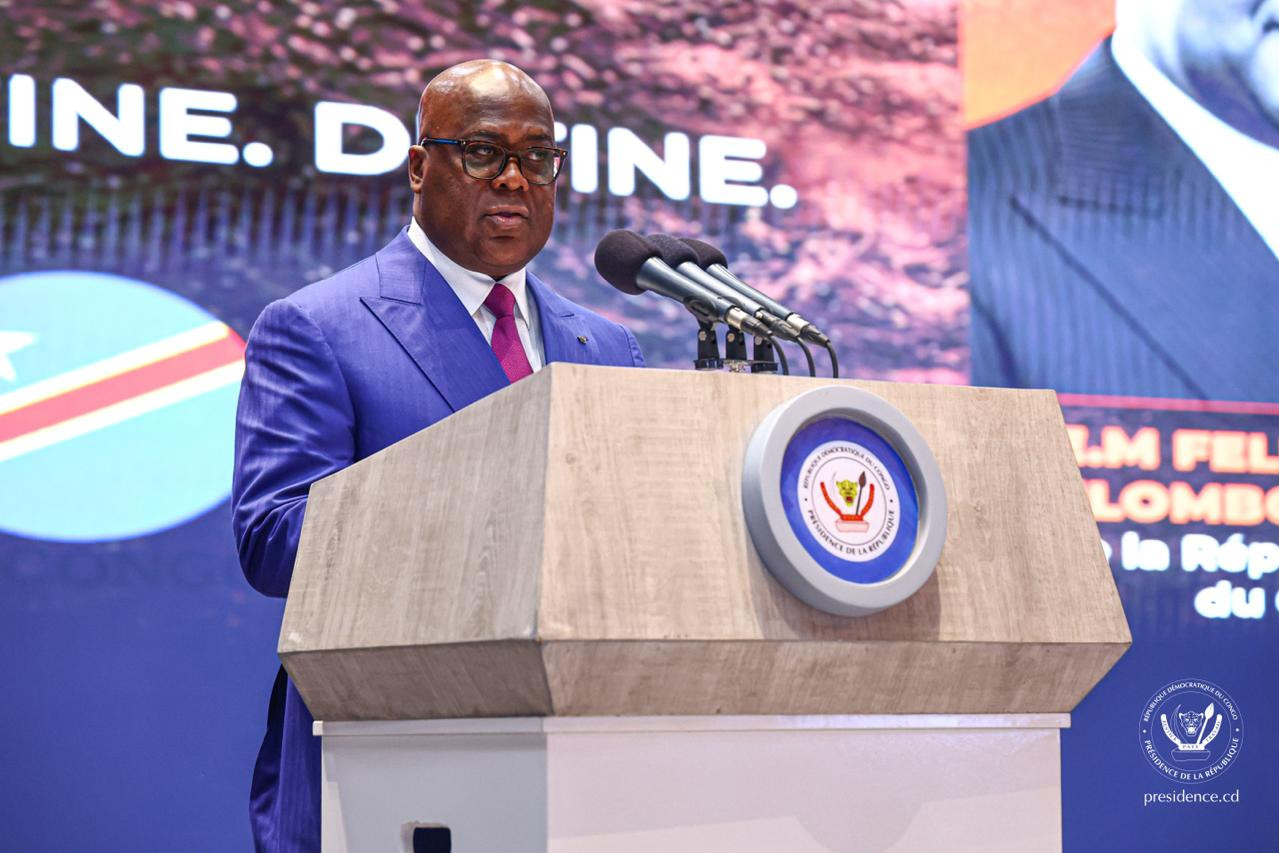
The Democratic Republic of the Congo (DRC) should move beyond exporting raw minerals and develop the capacity to process and manufacture products from its natural resources, President Félix-Antoine Tshisekedi Tshilombo said on November 23.
Speaking at the opening of the Makutano Mining 2026 Forum in Kinshasa, Tshisekedi outlined his vision of a mining sector that supports industrialization and delivers greater economic benefits to the Congolese population.

The president identified four priorities for achieving what he described as genuine mineral sovereignty: expanding energy supply, developing transport and connectivity infrastructure, training skilled workers, and strengthening confidence through transparency and a stable regulatory framework.
He also called for stronger mineral traceability mechanisms to combat mining fraud and illegal exploitation, which he said contributes to violence in eastern DRC.
Tshisekedi emphasized that every mineral leaving the country should have a traceable origin and that local communities should see more of the economic benefits of extraction. He linked improved oversight of mineral supply chains to both resource governance and stability.
The president also called for closer industrial cooperation among African countries, particularly the DRC and Zambia, which share the Central African Copperbelt. He said regional value chains developed within the framework of the African Continental Free Trade Area could give African countries a greater role in processing their own resources.
Tshisekedi stressed that mineral sovereignty should not mean economic isolation. He said private investment and international partnerships remained important, provided they offered balanced commitments, predictable legal conditions and tangible benefits for the population.
The address set out the government's policy priorities, but did not announce a specific new regulatory measure or implementation timetable.