On paper, Central Africa appears to be making steady progress toward greater stability. Peace agreements are being signed with increasing frequency, ceasefire mechanisms are becoming more sophisticated, and regional diplomacy has grown more active than at any point in recent years. From the Washington Accords between the Democratic Republic of the Congo and Rwanda to the Doha mediation process and successive regional security initiatives led by the African Union and neighboring states, diplomacy has become a permanent feature of the region's political landscape.
Yet violence continues.
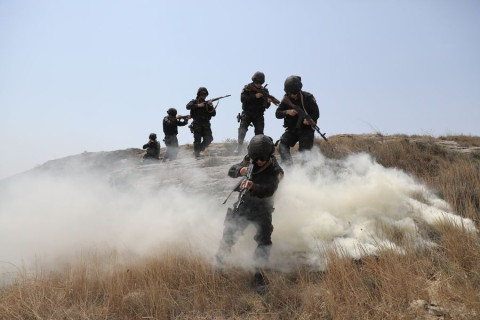
Armed groups remain active across eastern Democratic Republic of the Congo. Localized clashes continue despite ceasefire monitoring mechanisms. Humanitarian displacement remains widespread, and insecurity still affects large areas of the region. At first glance, the coexistence of expanding diplomacy and persistent conflict appears contradictory. In reality, it reflects a fundamental change in how modern conflicts are managed.
Peace agreements today rarely function as definitive settlements. More often, they establish frameworks through which conflicts can be contained, monitored, and gradually reduced rather than immediately resolved. Modern diplomacy increasingly seeks to prevent escalation while creating conditions for longer-term political negotiations. Instead of ending wars overnight, it aims to lower their intensity and reduce the likelihood of broader regional instability.
The conflict in eastern DRC illustrates this evolution particularly well. Multiple diplomatic tracks now operate simultaneously. The Washington framework links security cooperation with economic development and critical minerals. Qatar continues facilitating direct dialogue through the Doha process. Regional organizations coordinate military and political consultations, while the United Nations maintains sanctions and monitoring mechanisms. Rather than competing, these initiatives increasingly address different dimensions of the same conflict. That multi-layered approach reflects the complexity of today's security environment. Armed violence in Central Africa rarely involves only two clearly defined sides. Government forces, regional militaries, local militias, foreign-backed armed movements, extremist organizations, mining interests, and neighboring states often influence the same conflict simultaneously. A single agreement cannot realistically resolve every source of instability when political, economic, ethnic, and security interests overlap so extensively. Economic considerations have also become inseparable from diplomacy. Infrastructure corridors, critical mineral supply chains, energy projects, and cross-border investment now feature prominently in peace negotiations because governments increasingly recognize that lasting stability depends as much on economic incentives as on military arrangements. Agreements therefore seek not only to stop fighting but also to reshape the conditions that sustain conflict over the longer term. This does not mean diplomacy has failed simply because violence continues. Judging modern peace initiatives solely by whether fighting ends immediately overlooks their broader purpose. Many agreements are designed to create communication channels between adversaries, reduce the risk of regional escalation, facilitate humanitarian access, and establish mechanisms for managing future disputes. Success is measured not only by the absence of conflict but by the gradual strengthening of institutions capable of preventing conflicts from expanding.
That distinction is becoming increasingly important across Central Africa. The region is moving away from the expectation that a single treaty can deliver immediate peace. Instead, diplomacy is evolving into a continuous process that accompanies conflict rather than instantly replacing it. Ceasefires are monitored, sanctions remain in place, negotiations continue, and economic cooperation gradually becomes part of the security architecture itself.
For outside observers, this slower pace can appear frustrating. Yet the alternatives have often proved far worse. In conflicts involving multiple armed actors, regional rivalries, and competition over strategic resources, the objective is no longer simply ending wars. Increasingly, it is preventing them from becoming even larger. Central Africa's growing number of peace agreements therefore should not be viewed as evidence that diplomacy has become ineffective. They reflect an uncomfortable reality: modern conflicts are becoming too complex to end with a single signature. The challenge facing negotiators today is no longer simply ending wars. It is creating the conditions under which peace can finally take hold.