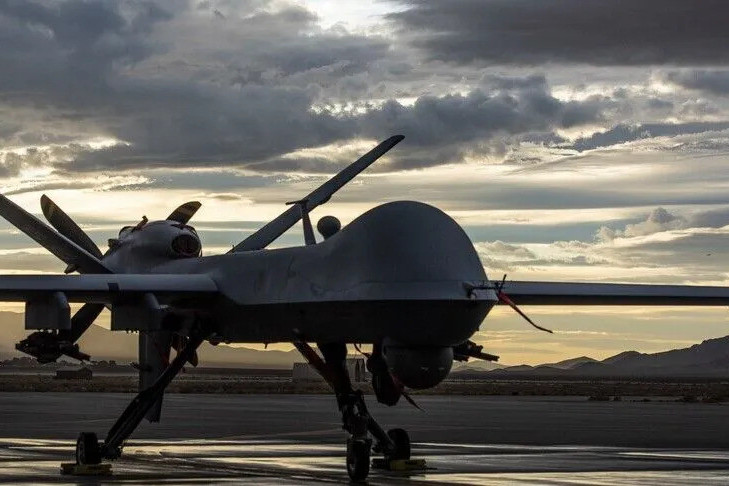
The Sudanese army said it shot down one-way attack drones targeting two major dam complexes in eastern Sudan on 15 September, as separate paramilitary drone strikes on the Blue Nile capital Al-Damazin killed at least four people and heightened tensions with Ethiopia.
Air defenses intercepted drones aimed at the Upper Atbara and Setit dam complex in Gedaref State and the nearby Khashm al-Girba dam in Kassala State, with authorities reporting no casualties or structural damage, according to the Sudan Tribune.
The attempted attacks came amid heightened cross-border tensions after Sudan’s Chief of General Staff, Lt Gen Yasir al-Atta, accused Ethiopia two days earlier of seeking to seize border territories, including parts of the fertile al-Fashaga area and the Blue Nile Region.
Al-Atta, in an interview with Egypt’s Al-Shorouk, alleged that Ethiopia was exploiting Sudan’s civil war to gain access to the Red Sea port of Assab and claimed satellite imagery showed RSF drones being launched from the Ethiopian airfield at Assosa.
The eastern dam incidents followed a wave of explosive-laden drone strikes by the paramilitary Rapid Support Forces (RSF) on Al-Damazin, the capital of Blue Nile State, on September 13–14. Residents reported at least 11 explosions near the city’s airport and a military hospital, with one drone hitting a fuel station as anti-aircraft weapons engaged incoming targets. At least four civilians were killed in the attacks, as reported by Al Jazeera and other regional outlets.
The Blue Nile state government said it had brought the situation “under control” after repelling the enemy’s attempts to target the city with drones, while the army confirmed that RSF drones had hit residential areas and civilian facilities in Damazin over two consecutive nights.
The RSF has in recent weeks intensified long-range drone attacks on army-controlled zones, striking power stations, fuel depots and government facilities across several states, according to Sudanese military and media reports.
Sudan’s Foreign Ministry Undersecretary Muawiya Osman Khalid has recently called on the Intergovernmental Authority on Development (IGAD) to support an army-backed internal dialogue among political groups.
The Sudanese representative attended the meeting after rejoining IGAD two years after suspending its membership. Khartoum withdrew in January 2024 after the bloc invited RSF leader Mohamed Hamdan Dagalo (Hemedti) to a summit in Uganda, a move the military-led government strongly opposed. The government has granted security and legal guarantees to opposition politicians willing to participate in the dialogue, as part of efforts to create conditions for a broader national process.
The appeal comes after envoys from a five-party mechanism — IGAD, the African Union, the UN, the EU and the Arab League, known as the “Quintet” — visited Khartoum on September 9–10 to align foreign mediation with local initiatives. The Quintet stressed that any political track must move in tandem with concrete steps to end the war, protect civilians and halt hostilities, while reaffirming respect for Sudan’s sovereignty and rejecting parallel governing structures.