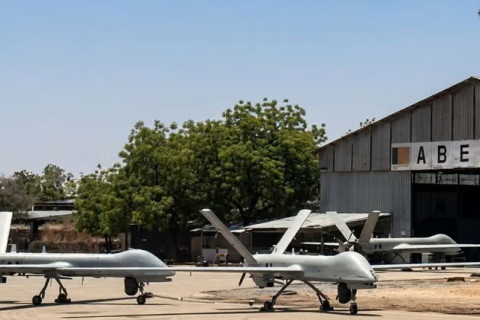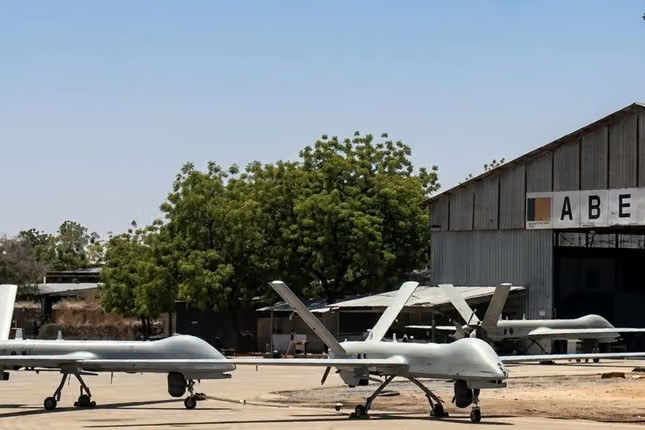
The Sudanese government has accused Ethiopia of allowing drones used in attacks on power stations, fuel depots and civilian infrastructure to be launched from its territory, intensifying a diplomatic dispute at a time when drone warfare is crippling Sudan’s electricity network.
At a news conference on October 28, officials from the defense, foreign affairs and information ministries, together with the General Intelligence Service, displayed drone fragments and presented flight-path data and satellite imagery they said showed launch sites inside Ethiopia, including Bahir Dar Airport, according to Radio Tamazuj.
Sudanese officials said drones shot down by the army had been analyzed with advanced software, and that their launch coordinates matched locations on Ethiopian soil.
Sudanese Information Ministry official Graham Abdel Qader warned that the strikes threaten electricity, agriculture and basic services, and could impede the return of people displaced by the conflict.
The allegations followed a wave of strikes attributed by Sudanese authorities to the paramilitary Rapid Support Forces (RSF). On 27 October, a drone hit the Al-Markhiyat transformer station northwest of Omdurman, cutting electricity across large parts of greater Khartoum for more than 12 hours and forcing hospitals, bakeries and water facilities to rely on generators.
The Sudanese Electricity Distribution Company reported “serious damage” to the network, while an electricity official estimated that as much as 60% of the capital’s power supply could have been affected. The strike was the seventh reported attack on Sudanese power facilities in less than a week.
Further strikes on October 28 reportedly hit a power station and fuel storage sites in El Manaqil, in Gezira state, causing a blackout in the town and nearby areas. Authorities also said drones targeted fuel facilities and a pipeline linked to Bashayer Port in Red Sea state. Earlier attacks were reported on electricity stations in Al-Jazirah, Sennar, Al-Qadarif and White Nile states.
Sudan’s Foreign Ministry Undersecretary, Muawiya Osman Khalid, urged the international community not to overlook what he called Ethiopian-Emirati aggression against Sudan, saying that Sudan retained the right to defend its territory and accused Ethiopia and the United Arab Emirates of enabling attacks on Sudanese soil.
He added that Sudan valued its relations with Ethiopians but held Addis Ababa responsible for the alleged drone launches.
Sudan has long accused Ethiopia of hosting RSF-linked armed groups and allowing them to operate from its territory, while also alleging that the UAE finances RSF operations. However, Ethiopia has denied the accusations and said it respects Sudan’s sovereignty. The UAE has also repeatedly denied arming the RSF. Independent journalists have not been able to verify Sudan’s evidence or establish the drones’ origin.
The dispute risks worsening tensions between Khartoum and Addis Ababa, which have repeatedly accused one another of supporting armed groups. It also underscores how Sudan’s war, which began in April 2023 between the Sudanese Armed Forces and the RSF, has increasingly shifted toward attacks on energy systems and services essential to civilians.