The Democratic Republic of the Congo (DRC) and the United States have launched a joint coordination mechanism for the Grand Inga hydropower project, with financing, risk-sharing and potential private-sector participation at the center of their first meeting in Paris on October 26, 2026.
The meeting was held under the strategic partnership agreement signed by Kinshasa and Washington on December 4, 2025. Discussions covered project structuring, funding mobilization, electricity transmission infrastructure and the conditions needed to make the project economically and financially viable. The committee was co-chaired by DRC Deputy Prime Minister and Economy Minister Daniel Mukoko Samba and US Treasury Deputy Assistant Secretary for Development Finance Policy Jeremy Wiggins. World Bank Managing Director of Operations Anna Bjerde also attended.
The meeting did not produce a final financing package or a commitment to begin construction. Instead, it established a framework for coordinating the next stages of project development and exploring how public institutions and private investors could help finance the infrastructure.
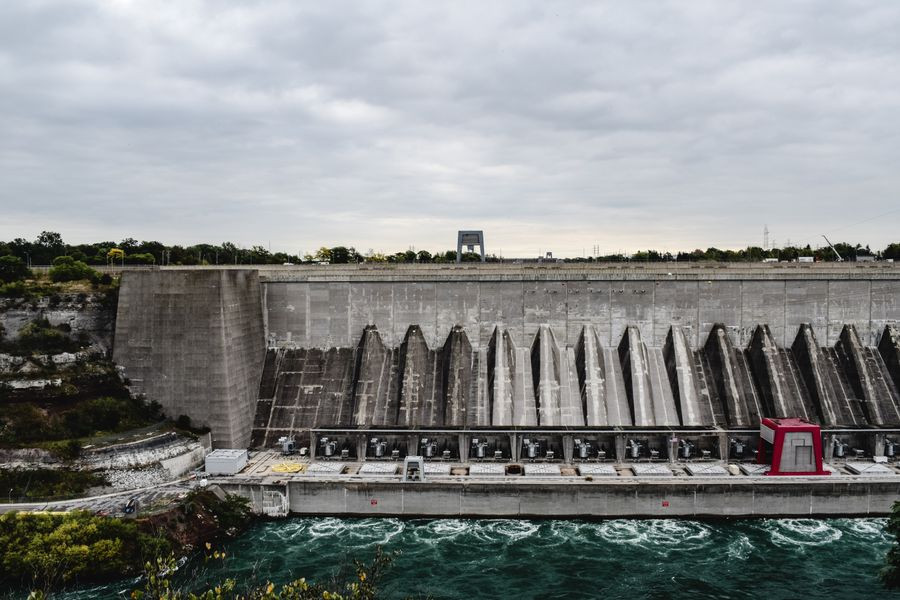
Grand Inga is planned around one of the world’s largest hydropower resources on the Congo River. Its first major development phase, Inga 3, could generate between 3,000 and 11,000 megawatts, depending on the design selected, according to the World Bank. The broader Inga site has an estimated generation potential of about 42,000 MW, but realizing that potential would require successive projects and substantial investment in transmission networks.
The World Bank approved a $250 million credit for the first phase of the Inga 3 Development Program in June 2025. The program became effective on February 2, 2026, and moved into implementation. The funding supports preparatory work, institutional capacity and local development; it does not cover the full cost of constructing the hydropower project. The wider Inga 3 program has a planned financing envelope of $1 billion, to be delivered in phases.
For the DRC, the stakes go beyond expanding electricity generation. Reliable power could support mining, manufacturing and other energy-intensive industries, while transmission links could create opportunities to supply regional markets. But these benefits will depend on the project’s final design, the cost of delivering electricity and the extent to which domestic households and businesses gain access to the additional supply.
The Paris meeting gives Kinshasa and Washington a framework to work through these questions. The next challenge is to turn coordination into a viable project with clear financing arrangements, a realistic development plan and tangible benefits for the DRC’s economy.