Mali’s industrial gold output rebounded sharply in the first half of 2026, rising about 30% year-on-year to 23.5 tons and exceeding the government’s forecast of 21.2 tons.
The recovery puts the West African producer broadly on track to meet its full-year industrial target of 43.2 tons, Maliactu quoted Mali’s Mines Ministry’s data.
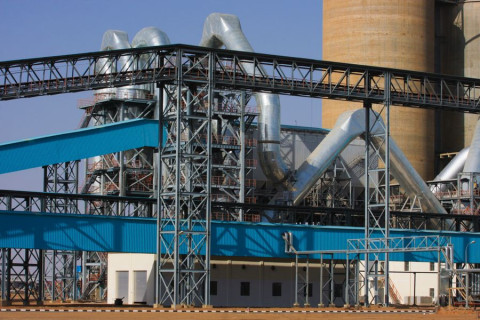
The improvement was led by B2Gold’s Fekola mine, which produced 8.85 tons between January and June, making it Mali’s largest industrial gold operation. The Canadian Barrick Gold Corporation’s Loulo operation contributed 6.9 tons, already surpassing the 5.5 tons it reported for the whole of 2025, while Resolute Mining and Allied Gold produced 3.0 and 3.5 tons, respectively.
The rebound is particularly important because 2025 output was weakened by the prolonged shutdown of the Loulo-Gounkoto complex, one of Mali’s key gold-producing assets. The mine has been ramping up since operations resumed in late 2025.
The recovery follows the November 2025 settlement between Barrick and Mali’s government, which ended disputes over the Loulo and Gounkoto mines. Under the agreement, charges against Barrick and its employees were to be dropped, provisional administration of the complex was to end, and Barrick was to withdraw arbitration claims at the International Centre for Settlement of Investment Disputes.
The agreement marked a turning point after months of tension over tax claims, gold shipments and the implementation of Mali’s 2023 Mining Code. According to Barrick, the dispute had disrupted operations and led to the detention of employees and the suspension of exports.
Higher production is expected to strengthen Mali’s mining revenues, tax receipts and foreign-exchange inflows, offering a boost to public finances after weaker volumes limited earnings in 2025.
The Mines Ministry’s 2026–2029 plan projects industrial gold output of 43.2 tons this year, rising to 51.2 tons in 2027 and peaking at 57 tons in 2028 before easing to 50 tons in 2029. Fekola, Loulo-Gounkoto, Resolute’s Syama and Allied’s Sadiola are expected to account for the bulk of projected output.