Sierra Leone has launched a Chinese-backed national shipping company in a bid to take a larger share of the value generated by its imports and exports.
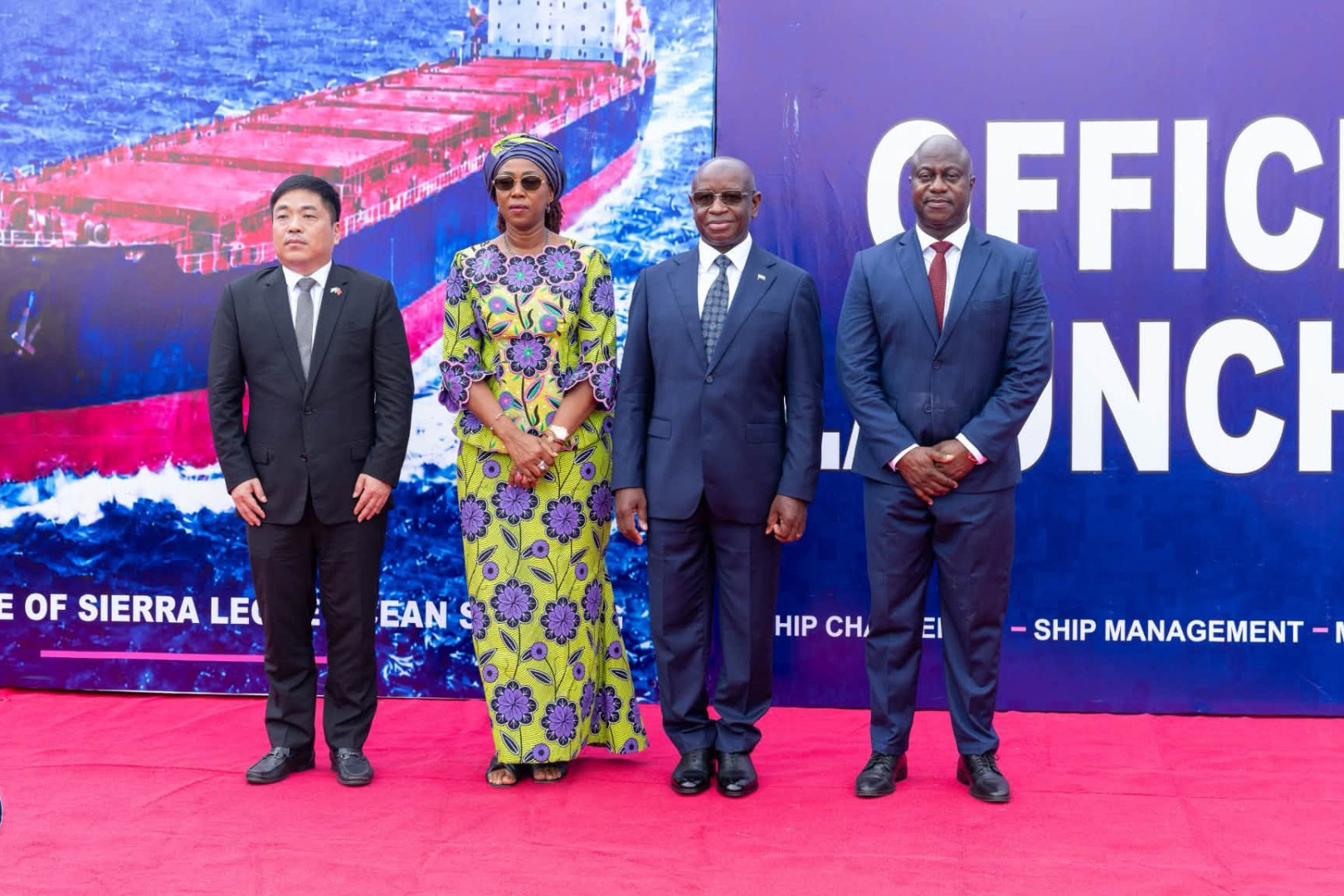
President Julius Maada Bio inaugurated the Sierra Leone Ocean Shipping Company (SLOSCo) on October 19 at Freetown’s Queen Elizabeth II Quay, according to Maritim Africa.
“We are now taking a bold step forward, giving Sierra Leone a greater stake in transporting the goods we trade with the world,” the president said at the launch.
The government expects the company to support job creation, maritime training and skills transfer, while giving local exporters and importers improved access to shipping services. Officials have also highlighted potential benefits for the mining and agricultural sectors.
SLOSCo is a joint venture between the state-owned Sierra Leone National Shipping Agency (SLNSA), which holds 30 percent, and China’s Zhejiang Xiehai Group, which controls 70%. The company is intended to give Sierra Leone direct commercial capacity in international maritime transport rather than relying entirely on foreign carriers.
The venture follows the 2025 transformation of the former Sierra Leone National Shipping Company, established in 1972, into SLNSA. Parliament ratified the joint-venture agreement with Zhejiang Xiehai on August 4, clearing the way for the October launch.
Under the SLNSA framework, the agency is designated Sierra Leone’s national carrier and may participate in transporting up to 40% of the value of the country’s imports and exports, covering containerized, dry-bulk and liquid-bulk cargo.
SLOSCo plans to assemble a fleet of 50 vessels, with 30 expected in the first phase. The company is expected to focus initially on minerals, agricultural commodities and essential imports, including iron ore, bauxite, petroleum products and food.
It will build on a direct shipping route between Taizhou Port in China and Freetown that was launched in December 2025. The route provides an operational foundation for the new carrier’s Asia–West Africa trade connections.
Zhejiang Xiehai representatives also met the Sierra Leone Ports and Harbours Authority to discuss cargo movement and possible investment in haulage trucks to reduce congestion at the Port of Freetown.
The launch comes as African governments seek to expand indigenous shipping capacity. The Maritime Organization for Eastern, Southern and Northern Africa has approved, in principle, a Regional Shipping Lines Network and a Regional Maritime Cabotage Protocol, aimed at improving direct connections and reducing reliance on transshipment through ports outside the region.
The sub-Saharan African maritime container freight market was estimated at $7.46 billion in 2025 and is projected to reach $9.79 billion by 2030, offering room for growth but also intense competition from established global operators.