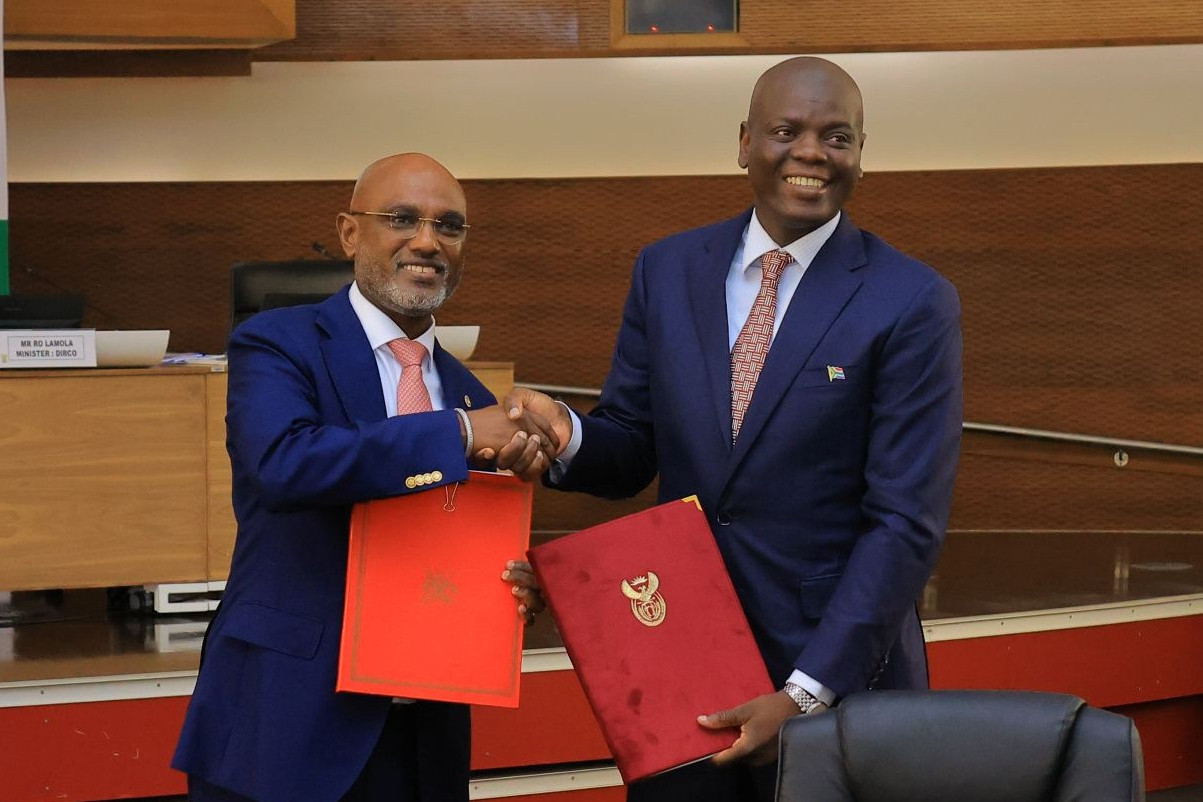
South Africa and Uganda are seeking to expand trade and investment by addressing barriers facing businesses and improving transport links. The two countries discussed ways to strengthen commercial ties during a meeting of their foreign ministers in Pretoria on October 20, 2026.
South African Minister of International Relations and Cooperation Ronald Lamola and Ugandan Foreign Affairs Minister Adonia Ayebare co-chaired the third session of the South Africa–Uganda Joint Commission for Cooperation (JCC).
Lamola identified mining, energy, agriculture, manufacturing, telecommunications, tourism and infrastructure as priority sectors for closer cooperation. He also called for fewer regulatory and administrative obstacles to help companies operate in each other's markets.
South African companies already have an established presence in Uganda. Lamola cited telecommunications group MTN, Standard Bank Group, through its subsidiary Stanbic Bank Uganda, and Absa as examples of existing commercial ties. He said, however, that investment between the two countries had yet to reach its full potential.
The ministers discussed ways to improve trade facilitation and cooperation on product standards, both of which affect the movement of goods between their markets. Uganda is seeking progress on a draft agreement covering standards and trade facilitation, while South Africa is working through the internal procedures required before it can be signed.
Ayebare also called for trade missions and business forums to bring companies and investors from both countries into closer contact. He highlighted non-tariff barriers, high logistics costs and regulatory challenges as obstacles to stronger trade.
Lamola proposed a joint working group on trade and investment to identify opportunities for investment in both directions and address problems faced by businesses. The proposal has not yet been presented as an established mechanism.
The ministers also discussed transport and business travel. Lamola welcomed the expansion of South Africa's Electronic Travel Authorisation system to eligible Ugandan passport holders, which can facilitate short-term visits for business and other permitted purposes. He also highlighted the Bilateral Air Services Agreement as a means of improving connectivity.
Beyond economic relations, the two sides discussed political cooperation, regional peace and security, and coordination within the African Union and the United Nations. They also reviewed cooperation on defence, immigration and law enforcement, including extradition and mutual legal assistance.
The meeting builds on earlier bilateral engagements, including a joint commission session in Kampala in 2022 and a mid-term review in Pretoria in 2023. Both ministers stressed the importance of implementing existing commitments and maintaining regular consultations.
No new trade agreement was announced at the meeting. The immediate priority is to advance outstanding agreements, reduce barriers to trade and create better conditions for businesses in both countries.