Voting in São Tomé and Príncipe’s 27 September legislative, local and regional elections opened smoothly and without major incidents, according to international observers monitoring the process across the islands.
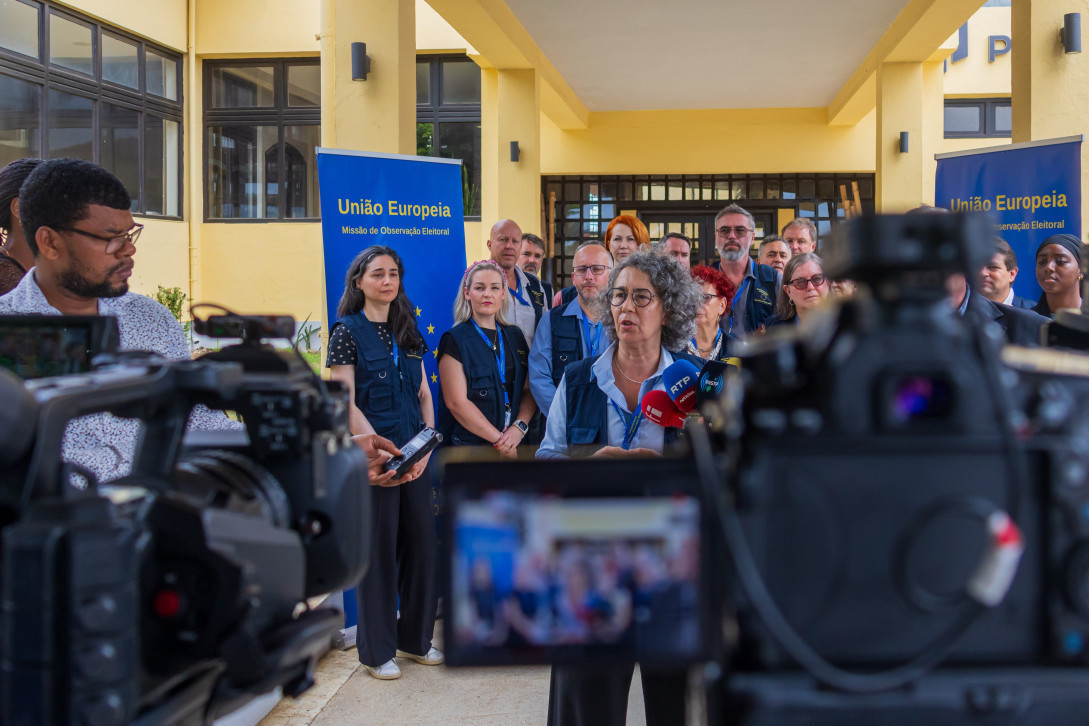
Portuguese MEP Sérgio Humberto, head of the European Union Election Observation Mission (EU EOM), said the elections were proceeding in an “orderly, tranquil, peaceful and calm manner,” with stable power supplies and all polling stations opening, according to Executive Digest.
After visiting around 50 polling stations and witnessing 15 opening ceremonies, Humberto noted only slight delays at some sites, while praising improved professionalism and methodology, including better privacy for voters.
The EU mission, which deployed about 50 observers on election day, is complemented by a European Parliament delegation led by Ana Catarina Mendes and including MEP Catarina Martins. Humberto declined to give early turnout figures but appealed to citizens to vote, stressing that “when there is greater participation, democracy emerges stronger.”
Alongside the EU, observer missions from the Community of Portuguese Language Countries (CPLP), the African Union, ECCAS, G7+ partners and the CPLP judicial network (ROJAE-CPLP) are monitoring the polls. The CPLP mission is headed by former Equatorial Guinea prime minister Vicente Ehate Tomi.
President Carlos Vila Nova, in a September 25 address, acknowledged public “frustration” over economic and social challenges but urged voters to turn out, calling abstention “never a solution.” His appeal came after internal disputes within the ruling Independent Democratic Action (ADI) party, including a boycott call by former ADI chair Patrice Trovoada following a Constitutional Court ruling on party leadership.
More than 146,000 registered voters are choosing 55 National Assembly seats, district councils and Príncipe’s regional government. Four parliamentary parties are contesting - ADI, MLSTP-PSD, the MCI-PUN coalition and the Basta Movement - alongside smaller groups seeking representation.
A 2025 World Bank estimate put the diaspora at about 18% of the population, with labor shortages reported in key sectors. Major parties say attracting investment and developing “high-quality tourism” are central to their platforms, aiming to reduce dependence on external partners.