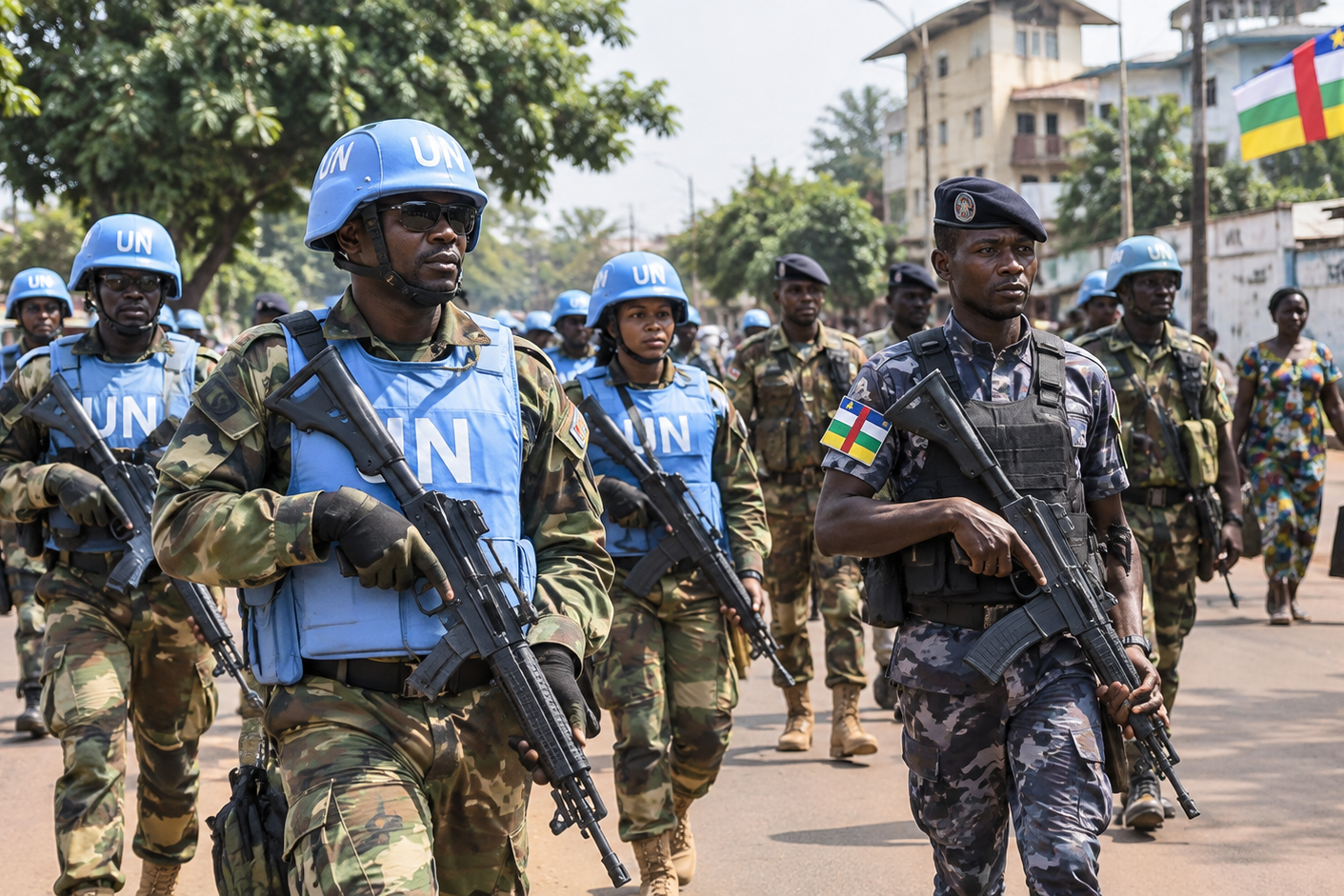
The United Nations Security Council unanimously extended the mandate of the Multidimensional Integrated Stabilization Mission in the Central African Republic (MINUSCA) for another year, until November 15, 2027, and approved a reduction in its authorized military strength.
Under Resolution 2836 (2026), adopted on November 12, the mission's military personnel ceiling has been reduced from 14,046 to 12,000. The authorized number of police personnel has also been lowered from 2,999 to 2,265, while the number of corrections officers has been reduced from 108 to 40, according to the United Nations.
The resolution provides for a gradual, coordinated and conditions-based transfer of responsibilities from MINUSCA to the Central African Republic's national authorities. The mission will concentrate its resources in high-risk areas, particularly along the country's borders, while retaining the capacity to respond rapidly to security threats.
MINUSCA's core responsibilities will continue to include protecting civilians, supporting the deployment of national security forces, assisting the peace process and facilitating humanitarian assistance.
The decision comes amid persistent security challenges in the country's northeastern regions, particularly along the borders with Chad and Sudan. Armed groups remain active in several areas, while instability linked to the conflict in neighboring Sudan continues to put pressure on border communities.
During negotiations over the mandate, Security Council members discussed the scale of the proposed troop reduction. The United States reportedly favored a lower ceiling of 11,000 military personnel, while other members cautioned against reducing the mission's capacity too quickly.
The revised mandate reflects an effort to gradually increase the Central African government's responsibility for national security without undermining the progress achieved with international support.
Established in 2014, MINUSCA remains one of the UN's key operations in Central Africa. Its future configuration will depend on security conditions and the ability of national institutions to assume additional responsibilities.