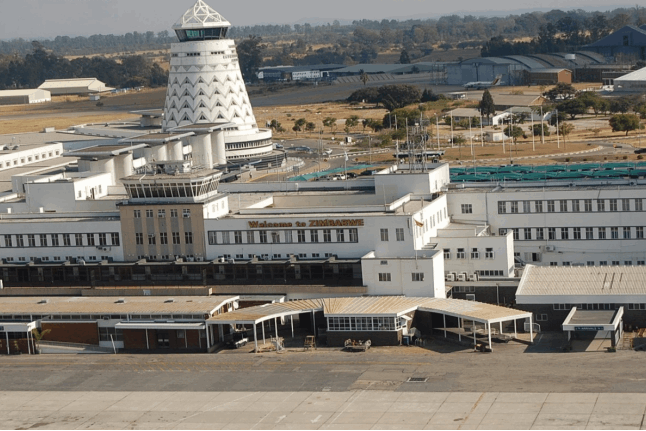
Zimbabwe has granted National Project Status to the proposed US$1.3 billion Cargo Village at Robert Gabriel Mugabe International Airport in Harare, clearing a key hurdle for the development of a major regional air-freight and logistics hub.
The project is being pursued through a public-private partnership involving the Airports Company of Zimbabwe (ACZ) and Transvaal Africa, the Zimbabwean ruling party ZANU PF’s website reported on November 24.
The designation is intended to support strategic investments through fiscal incentives, rebates and reduced implementation costs, helping to strengthen investor confidence and accelerate delivery. Government officials described the initiative as part of efforts to expand Zimbabwe’s aviation, export and logistics capacity under the country’s Vision 2030 agenda.
The Cargo Village is expected to include 142 specialized warehouses, cold-chain and other cargo-handling facilities, a second runway focused primarily on freight operations, aviation-fuel infrastructure, an airport hotel and commercial amenities.
Phase one is projected to provide capacity to handle more than 100,000 tons of cargo annually. ACZ chief executive Tawanda Guzha said the facility would consolidate cargo operations currently spread across the airport and support movement of goods through the hub.
The development is designed to improve access to international markets for Zimbabwean exports, particularly perishable produce such as blueberries and avocados, while also supporting broader regional trade. Officials say better cold-chain capacity and integrated warehousing will help reduce logistical constraints for agricultural and other time-sensitive exports.
The project’s official platform describes its objective as creating a world-class cargo hub that combines warehousing, fuel infrastructure, trade exchanges and support services within a single economic zone.
Transvaal Africa chief executive Engineer Patson Moyo said the partners are targeting financial closure within about 30 days, with construction expected to begin in the first quarter of 2027. The full project is expected to be completed by 2030.
Reported investment estimates range from $1 billion to $1.3 billion, although the $1.3 billion figure has been most widely cited by project partners and government-linked reporting. Transvaal Africa is reported to be funding 25% of the planned development.