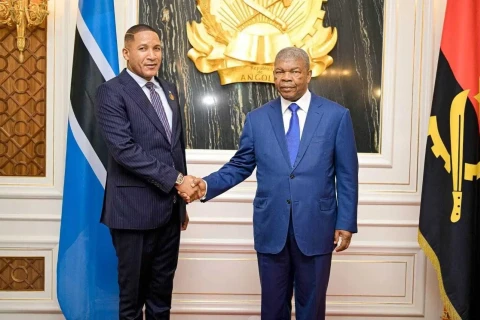
Democratic Republic of Congo is trying to turn its strategic minerals partnership with the US into a pipeline of actual investment, projects and export opportunities, creating a new task force to accelerate implementation of the deal.
Kinshasa approved the DRC-USA Task Force on September 11, according to cabinet minutes reviewed by Reuters. Economy Minister Daniel Mukoko Samba said the body is intended to translate commitments under the partnership into concrete economic and security results for Congolese citizens. Details on its membership and priority projects have not yet been disclosed.
The move comes nine months after DRC and the US signed their strategic partnership on minerals. Kinshasa is seeking to attract more Western capital into its copper and cobalt industries while diversifying its sources of investment beyond China. Washington, meanwhile, is looking for alternative supplies as it tries to strengthen Western critical-mineral supply chains in an industry where China retains a dominant position.
Some of the partnership’s first results are already visible. US-backed investment has moved forward through Virtus Minerals, while state-owned Gécamines has expanded copper offtake arrangements with commodities traders Mercuria and Glencore. Those agreements have helped increase Congolese copper sales into Western markets, giving Kinshasa a way to broaden its pool of buyers rather than relying on a single commercial ecosystem.
The new task force matters because signing a strategic agreement is considerably easier than turning it into functioning projects. Mining investment requires coordination between government agencies, state-owned enterprises, foreign investors, traders, and infrastructure providers. A dedicated mechanism could give Kinshasa a way to push projects through that process more quickly and keep different parts of the partnership moving in the same direction.
Implementation has already faced delays. A government official told Reuters that the task force was initially expected to become operational in February but was held up by administrative obstacles. The wider partnership continued during that period, but the delay highlights one of the central challenges facing Kinshasa: converting political agreements into transactions on the ground.
The stakes extend beyond copper and cobalt exports. DRC is one of the world's most important sources of cobalt and a major copper producer, placing it at the center of the global competition for energy-transition minerals. Reuters reported in September that China continues to control much of the global refining capacity for several critical minerals, reinforcing the push by the US and other Western economies to diversify supply chains.
For Kinshasa, the opportunity is not simply to attract another foreign buyer for its minerals. A successful partnership would mean converting DRC's resource position into longer-term investment, stronger commercial links with Western markets and potentially greater economic value captured inside the country.
The task force is therefore an early test of whether the US-DRC minerals partnership can move beyond strategic declarations and produce projects that materially change how Congo's mineral wealth is financed, marketed and developed.