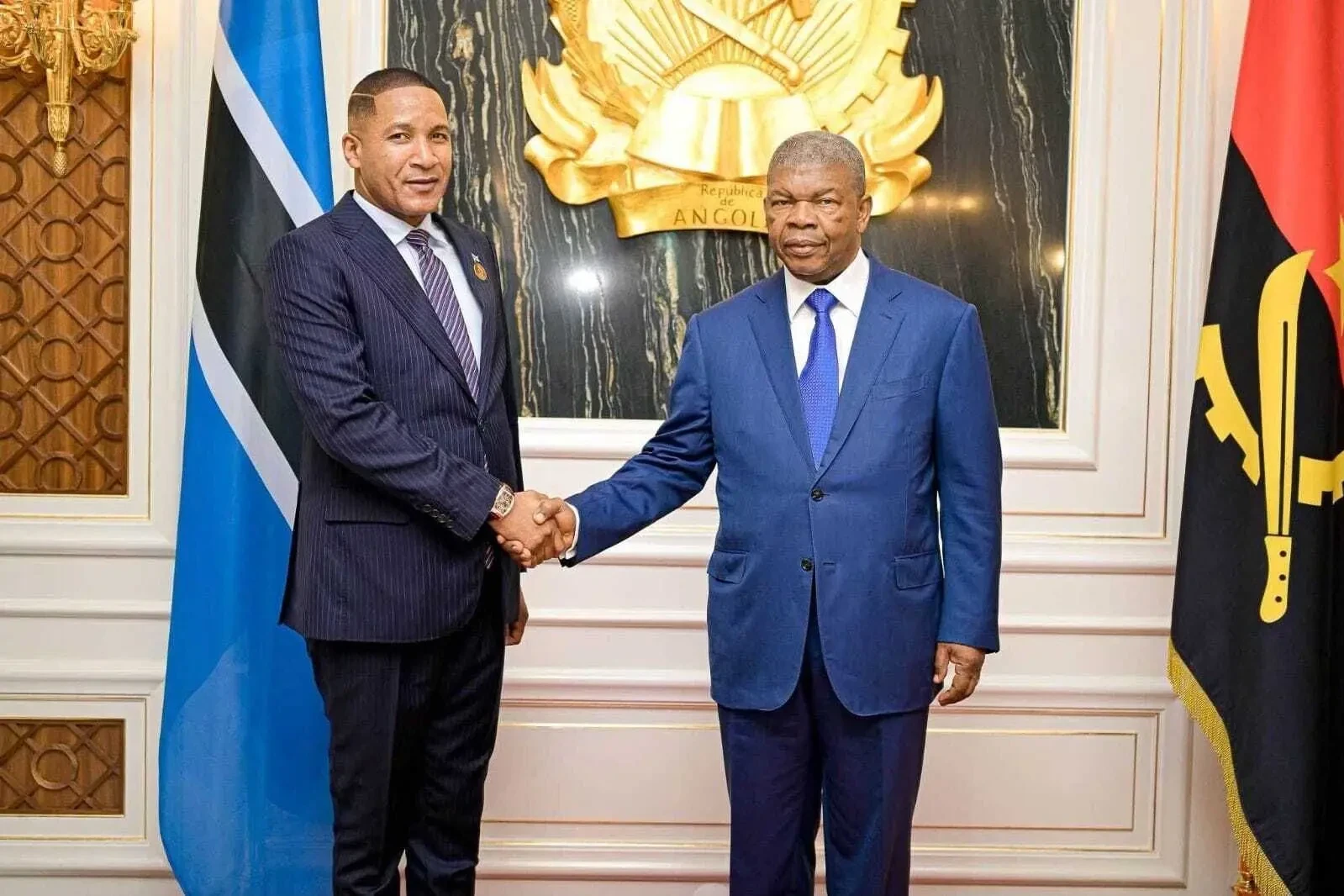
Angola and Botswana have accelerated their strategic partnership with new agreements to deepen trade, investment and regional cooperation.
During President Boko’s three‑day visit, on September 7-9, the two heads of state witnessed the signing of three legal instruments: a defense cooperation agreement, a memorandum of understanding on livestock farming, and an accord establishing a Botswana-Angola Binational Commission to coordinate bilateral projects, ANGOP reported on September 14.
The instruments are designed to move relations beyond diplomatic protocol toward concrete private‑sector engagement, with an emphasis on removing barriers to the flow of goods, services and investment.
Angolan President João Lourenço said that cooperation would expand to energy, oil, tourism and diamonds, in addition to defense and livestock, while President Boko called for business channels that benefit local populations and support continental development.
The visit was paired with the first Angola–Botswana Economic and Business Forum in Luanda, which brought together more than 60 companies to identify projects in agro‑industry, mining, tourism, transport and logistics.
Delegations highlighted transport corridors, energy infrastructure and industrialisation as priorities, aiming to convert political rapprochement into bankable deals. A key focus is the Lobito Refinery in Benguela Province, where Botswana has expressed interest in becoming a shareholder, while Angolan officials have indicated Gaborone could take up to a 30% stake in the multi‑billion‑dollar project.
Lourenço also pointed to Angola’s potential to generate electricity for the Southern African region, framing energy as a new pillar of bilateral ties alongside diamonds and agriculture. Both sides stressed the need to deepen cooperation along the diamond value chain—from extraction to cutting and marketing—as part of efforts to diversify exports and add value domestically.
The visit coincides with the 50th anniversary of diplomatic relations, and follows earlier ministerial sessions that set out joint priorities in transport, energy, minerals, food security and tourism. To institutionalize coordination, the Binational Commission will provide a standing mechanism to review cooperation and implement joint projects across sectors of mutual interest.
In a sign of long‑term commitment, President Boko announced that Botswana will soon open an embassy in Luanda and appoint a resident ambassador, strengthening day‑to‑day diplomatic and commercial links.
Officials on both sides now face the task of translating agreements and forum contacts into contracts, investment schedules and measurable outcomes through the new bilateral structures.
The deepening Angola–Botswana partnership unfolds as Botswana nears a pivotal decision on the ownership of De Beers Group. Anglo American is selling its 85% stake in the diamond producer, with government due diligence on competing bids expected to conclude in late September and a transaction potentially closing in the fourth quarter of 2026.
Botswana, which holds 15% of De Beers and 50% of the Debswana mining joint venture, is weighing whether to exercise pre‑emption rights or participate alongside a preferred bidder. Diamonds account for roughly 80% of Botswana’s exports and about a quarter of GDP, while Angola and Botswana are seeking to expand cooperation in the diamond sector as part of broader economic ties.