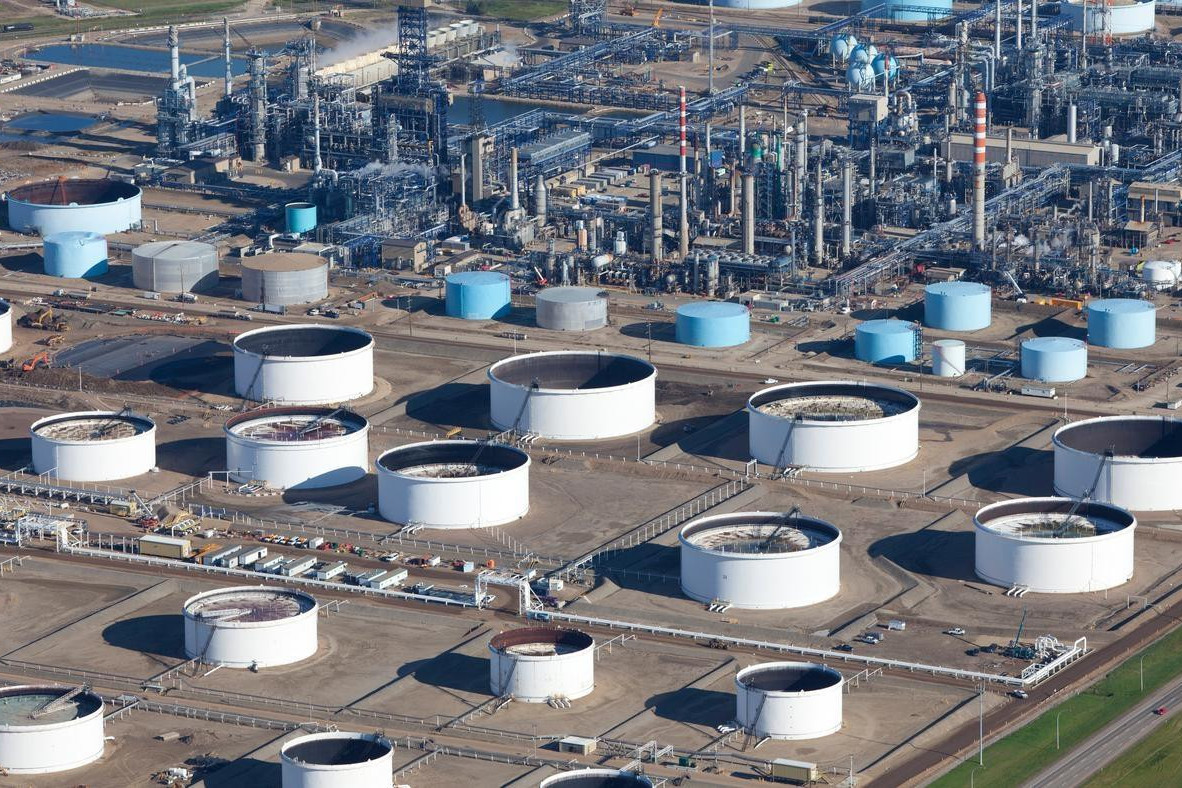
Namibia has launched a $2.5 billion petroleum storage and pipeline project in Walvis Bay, seeking to strengthen fuel security and expand its role in Southern Africa’s energy trade.
The project, developed by Nigeria’s Dangote Group, was launched on November 4 at Farm 58 near Walvis Bay. The ceremony was attended by Namibian President Netumbo Nandi-Ndaitwah and Dangote Group President and Chief Executive Aliko Dangote, according to Xinhua.
The planned facility will have a storage capacity of 600 million liters, including 360 million liters of diesel and 240 million liters of petrol. This is approximately eight times the capacity of Namibia’s existing 75-million-liter National Oil Storage Facility, operated by the state-owned National Petroleum Corporation of Namibia (NAMCOR).
The project also envisages a pipeline network spanning approximately 1,700 kilometers, connecting Walvis Bay with inland markets. Proposed routes include Otjiwarongo and Rundu in Namibia, as well as Ghanzi and Francistown in Botswana. The wider network is intended to serve Botswana, Zambia, Zimbabwe, Malawi and the southern Democratic Republic of the Congo.
The investment is part of Namibia’s effort to leverage its Atlantic coastline and transport infrastructure to strengthen its position as a logistics gateway for landlocked Southern African countries.
President Nandi-Ndaitwah said the project would improve fuel supplies to Namibia and neighbouring states amid disruptions to international oil markets and vulnerabilities in global shipping routes. She has placed the project under the direct supervision of the Office of the President to facilitate implementation and reduce administrative delays.
For Dangote Group, the investment would extend its presence beyond refining into petroleum storage and regional distribution. The company already operates a major refinery in Nigeria and is seeking to expand its energy infrastructure footprint across Africa.
According to Dangote, the project is expected to take approximately 18 to 20 months to complete. However, the final pipeline routes and technical specifications remain subject to engineering studies, route surveys and regulatory approvals.
If implemented as planned, the project could diversify fuel supply routes for landlocked Southern African economies, reduce reliance on road transport and strengthen Walvis Bay’s role in regional energy distribution. Its wider impact will depend on cross-border agreements, commercial arrangements and the completion of the proposed infrastructure.