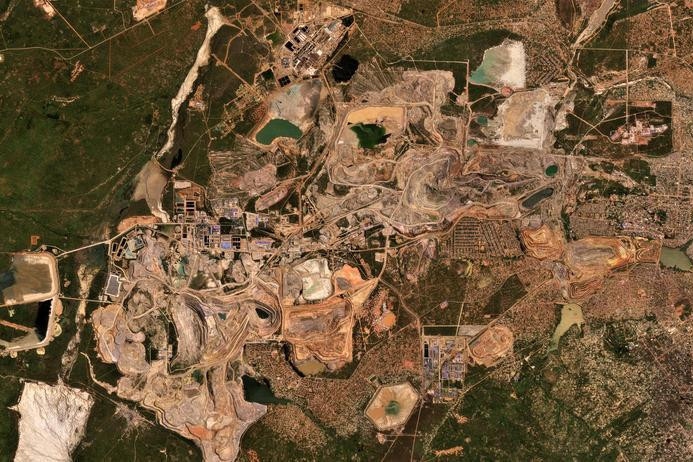
The Democratic Republic of the Congo (DRC) has some of the world's largest reserves of strategic minerals, yet its vast natural wealth has not translated into broad-based industrial development. Recent investigations into suspected illegal mining and mineral smuggling, alongside growing pressure to process more resources domestically, have brought a central question back into focus: can the country gain greater economic value from the resources extracted on its territory?
The issue goes far beyond the mining sector. It concerns the country's ability to strengthen state control over natural resources, attract investment in domestic processing, expand electricity access and ensure that mining revenues contribute more directly to the national economy and local communities.
A Mineral Giant Facing an Industrialization Challenge
The DRC occupies a pivotal position in global mineral supply chains. According to the US Geological Survey, the country accounted for approximately 75% of global cobalt mine production and 13% of mined copper output in 2024.
These figures underline the country's strategic importance to industries ranging from electric vehicle manufacturing and battery production to electronics and renewable energy technologies.
However, a leading position in mineral extraction does not automatically translate into industrial strength. The economic benefits depend on how much value remains in the country after extraction, how effectively public institutions regulate the sector, and whether domestic businesses have the infrastructure and financing needed to participate in higher-value stages of production.
For the DRC, this remains a major challenge. Expanding local processing and manufacturing would require reliable electricity, transport infrastructure, skilled workers and a regulatory environment capable of attracting long-term investment. Without these conditions, the country risks remaining primarily a supplier of raw materials while much of the added value is created elsewhere.
Mineral Control Under Scrutiny
Recent events in the country's southeastern mining region have drawn attention to the scale of the governance challenge.
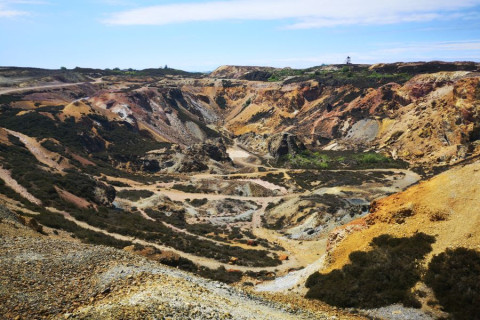
On November 3, Reuters reported that Congolese authorities had opened investigations into suspected mining fraud, unauthorized extraction and mineral smuggling following the seizure of more than 500 trucks and thousands of metric tons of copper and cobalt in Lualaba and Haut-Katanga provinces.
The operation reportedly involved a site in the Menda area associated with Boss Mining, a company owned by Eurasian Resources Group. More than 60 foreign nationals were also detained in separate circumstances, according to the report. The allegations remain subject to investigation and should not be treated as established findings of guilt.
The case raises questions that go beyond the individuals and companies involved. How effectively can the state monitor mineral production and transportation across a vast mining region? Are existing controls sufficient to prevent unauthorized extraction and smuggling? And how much of the value generated by the sector is properly recorded and captured by the national economy?
These questions are particularly important for a country whose mineral resources have become increasingly significant to international supply chains. Stronger oversight is not simply a matter of law enforcement. It is also essential to creating predictable conditions for legitimate investors and ensuring that resource wealth contributes to public finances.
The Cost of Extraction for Local Communities
The debate over mineral wealth also has a social and environmental dimension.
In Kolwezi, residents have taken legal action over alleged pollution linked to mining operations. According to Source International, 27 residents, including eight children, have brought a case against COMMUS, a mining company controlled by China's Zijin Mining, as well as the Congolese state and the country's environmental agency.
The first hearing took place on November 3, but the merits of the case had not yet been examined. The plaintiffs allege that mining activity has affected local air and water quality. Source International, which has worked with RAID and AFREWATCH on research in the area, has reported findings concerning fine particulate matter and possible contamination indicators in water and dust.
These claims and research findings should be distinguished from judicial conclusions: the court has not yet established liability. COMMUS has previously maintained that its operations comply with Congolese regulations and has pointed to other possible sources of pollution.
Nevertheless, the case illustrates a wider issue facing resource-rich countries. Mining can generate exports, investment and government revenue, but local communities also expect safe living conditions, environmental protection and tangible economic benefits. If these expectations are not met, the social costs of extraction can undermine public confidence in the sector and complicate the country's efforts to attract responsible investment.
Energy and Infrastructure: Necessary Conditions for Change
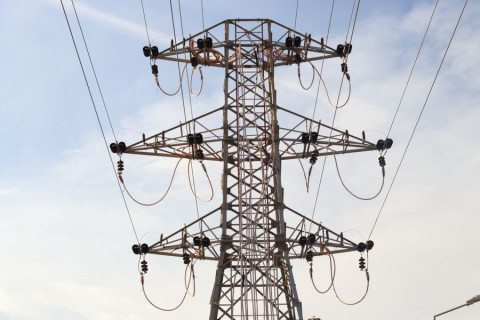
The DRC's industrial ambitions are also constrained by limited access to electricity. According to World Bank data, only 22.5% of the population had access to electricity in 2024.
This is a major obstacle to expanding domestic mineral processing and manufacturing. Industrial development requires a dependable power supply, while transport links and logistics networks are needed to connect mines, processing facilities and export markets.
The Grand Inga hydropower complex represents one of the country's most significant long-term energy opportunities. Its estimated potential of around 42,000 megawatts is substantial, although this figure refers to the potential of the wider complex, not currently operating capacity. Progress on the project could eventually help address the country's energy deficit, but it should not be confused with an immediate solution to the challenges facing the mining industry.
The broader task is to ensure that energy and transport infrastructure are developed in ways that support the domestic economy, including industrial centres and communities located near resource extraction sites.
From Mineral Exports to Domestic Value
The DRC's cooperation with international partners, including the United States, has increasingly placed critical minerals, infrastructure and local value addition within the same strategic discussion. The US-DRC Strategic Partnership Agreement, signed in December 2025, provides a framework for cooperation on strategic mineral assets, infrastructure and the development of value chains.
For Kinshasa, the important test will be whether such partnerships help create productive capacity inside the country rather than simply facilitate access to its resources. International investors seek reliable supplies of strategic minerals, while the DRC needs investment that can support processing, technology transfer, employment and stronger domestic industries.
These objectives can be compatible, but they are not automatically the same. Their alignment will depend on the terms of investment, the capacity of public institutions to enforce regulations and the country's ability to negotiate arrangements that deliver lasting economic benefits.
The Real Measure of Mineral Wealth
The DRC's challenge is not a lack of natural resources or international interest. It is the difficulty of turning those advantages into a stronger and more diversified economy.
That requires more than new mining agreements or large infrastructure announcements. It means improving oversight of extraction and mineral transportation, tackling illegal activity, protecting communities, expanding electricity access and creating conditions for domestic processing and manufacturing.
The recent seizures and the legal action in Kolwezi illustrate two sides of the same question: who benefits from the country's mineral wealth, and who bears the cost of extracting it?
Ultimately, the success of the DRC's resource strategy should not be measured only by the volume of copper and cobalt it exports or the number of international partnerships it signs. A more meaningful measure will be the extent to which its natural wealth generates reliable electricity, productive industries, skilled jobs, public revenue and better living conditions for its people.
That is the difference between being a major source of strategic minerals for the world and building an industrial economy at home.