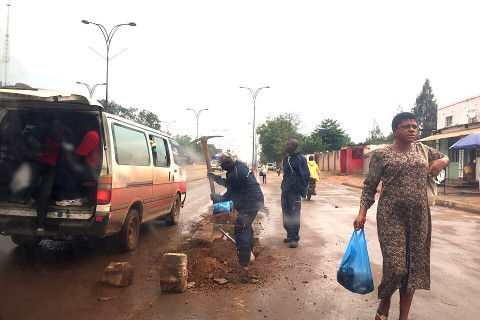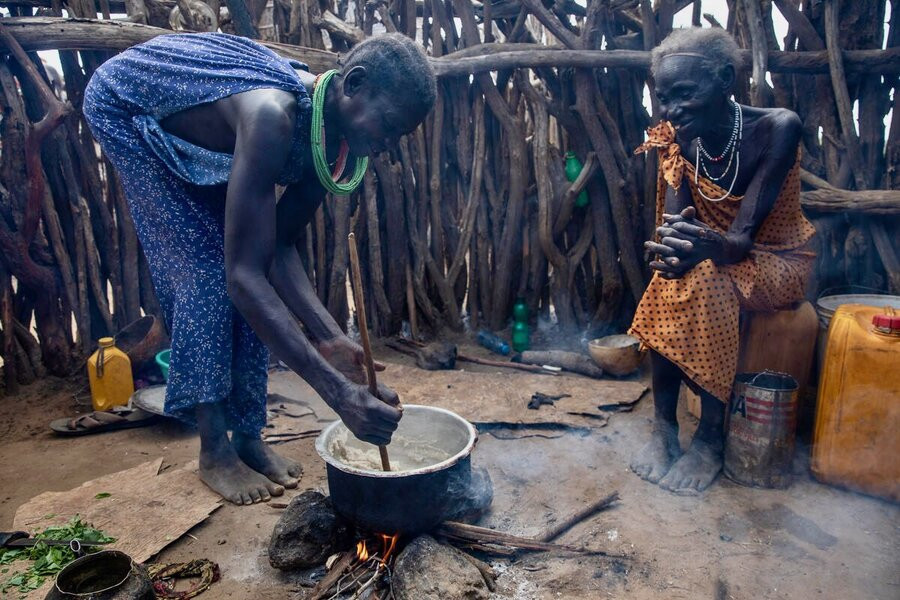
The United Arab Emirates has allocated $8 million to help Chad cope with the humanitarian fallout from the El Niño climate phenomenon, directing funds to communities at greatest risk of hunger and malnutrition.
Under directives from UAE President Sheikh Mohamed bin Zayed Al Nahyan, the UAE Aid Agency will channel the $8 million to bolster food security and support livelihoods in Chad, where extreme weather has disrupted agricultural production and deepened vulnerability, Emirates News Agency (WAM) reported on September 15.
Dr Tareq Ahmed Al Ameri, chairman of the UAE Aid Agency, said the assistance is designed to meet urgent humanitarian needs while strengthening longer-term resilience against climate-related crises.
He noted that rising temperatures, shifting rainfall patterns and water scarcity are directly undermining food availability and household incomes, requiring integrated responses that combine emergency relief with recovery and risk-reduction measures.
The UAE’s intervention in Chad focuses on reaching the most affected and vulnerable groups, with particular attention to those at highest risk of hunger and malnutrition. The funding is part of a broader effort to combat food insecurity, support early recovery and build community capacity to withstand future climate shocks.
The move comes as African development officials warn that targeted policy and fiscal reforms are urgently needed to shield the continent’s food systems from escalating global shocks.
Chad is among several Sahelian countries where below-average rainfall linked to El Niño has already triggered early mitigation efforts. The World Food Program has recently warned that El Niño could push an additional 7.4 million people into acute food insecurity across West and Central Africa, prompting anticipatory cash transfers and early-warning campaigns in rain-dependent provinces.
Speaking at a virtual forum on 15 September, Martin Fregene, officer in charge of the AfDB’s vice presidency for Agriculture, Human and Social Development, said that pandemics, conflicts and geopolitical tensions have severely strained food supply chains and farm input markets, and urged governments to prioritize domestic financing, rapid technology adoption, community-led climate initiatives and stronger market linkages to build long-term resilience.
Fregene highlighted that armed conflicts, climate shocks, market volatility and protectionist trade policies have disrupted global supply chains, pushing local communities toward hunger, malnutrition and poverty.
He called for incentives to boost local fertilizer manufacturing, expanded access to finance for smallholders and continental-scale anticipatory action backed by high-quality data to prepare for climate threats to food production.
The AfDB has simultaneously launched a $51 billion response plan to help African countries absorb energy and fertilizer price shocks while scaling up investment in climate-resilient agrifood systems. The package ties short-term crisis relief to a multi-year pipeline of bank-backed investment in energy infrastructure, fertilizer supply chains and resilient value chains.
The UAE’s $8 million allocation to Chad complements its broader humanitarian posture in the region, including a separate $30 million emergency response for civilians affected by deteriorating conditions in El Obeid, Sudan. In both cases, Abu Dhabi has emphasized the protection of civilians, safe humanitarian corridors and compliance with international humanitarian law as urgent priorities.