Cameroon and Nigeria have launched a joint initiative to modernize operations at the Mfum-Ekok border, seeking to reduce cargo delays, eliminate duplicated inspections and improve the movement of people.
The Mfum-Ekok Border Modernisation Initiative was unveiled during a joint assessment of the Ekok-Mfum One-Stop Border Post by the Nigeria Customs Service (NCS) and Cameroon’s Customs Administration, Voice of Nigeria reported on September 10.
The corridor linking Nigeria’s Cross River State with Cameroon’s South-West Region will combine digital customs procedures, upgraded infrastructure and technology-driven border management.
Nigeria’s Comptroller-General of Customs, Bashir Adeniyi, said that the initiative would build on existing bilateral cooperation rather than create an entirely new framework, adding that the project was intended to examine how current arrangements could be expanded to support wider regional integration.
In turn, Cameroon’s Director-General of Customs, Fongod Nuvaga, called for real-time data sharing and joint risk-management systems.
The assessment also involved security agencies, development partners and local community representatives from both countries, and it will identify operational weaknesses and develop procedures for more coordinated border controls. The measures would allow authorities to coordinate cargo inspections and traveler screening, reducing the need for traders and commuters to undergo repetitive checks on both sides of the border.
The proposed system would support processing goods and travelers once, rather than subjecting them to separate and overlapping controls.
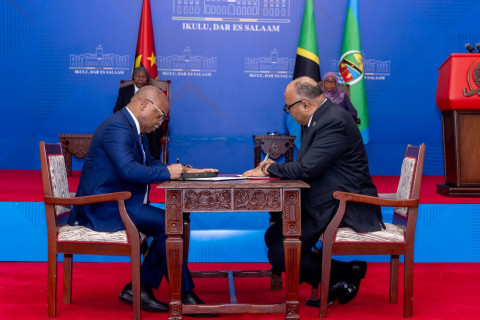
Technical teams from both countries are also preparing a joint operational agreement covering procedures, information exchange and coordinated controls. The agreement is expected to be signed at the forthcoming C-PACT conference.
The initiative has received backing from institutions including the African Development Bank, the Economic Community of West African States, the Economic Community of Central African States, Afreximbank and the AfCFTA Secretariat.
The project comes as African governments seek to turn the African Continental Free Trade Area from a tariff-reduction agreement into a more functional trading system. In its recent Integrating Africa: From Threads to Hubs report, the World Bank estimated that about 60% of Africa’s trade costs arise from barriers within countries, including inefficient customs clearance, weak logistics, fragmented transit systems and inadequate infrastructure.