Rwanda and the Democratic Republic of the Congo are competing for the leadership of the International Organisation of La Francophonie (OIF), turning the upcoming summit in Cambodia into a significant diplomatic contest. Kigali is backing incumbent Secretary-General Louise Mushikiwabo for a third term, while Kinshasa is promoting former Congolese culture minister Juliana Amato Lumumba.
The race unfolds against strained relations between the two countries over the conflict in eastern Congo. Both governments have sought support for their candidates while publicly insisting that the election should not be reduced to their bilateral dispute. Rwandan President Paul Kagame and Congolese President Félix Tshisekedi are among 11 African heads of state who have confirmed their attendance, according to Africa Intelligence.
For Kigali, Mushikiwabo’s re-election would preserve Rwanda’s diplomatic influence within a major multilateral organisation. The secretary-general directs the OIF, represents it internationally and chairs the Permanent Council, giving the position a central role in shaping the organisation’s priorities and coordinating its work. The officeholder, however, acts on behalf of all members rather than the government that nominated them.
Mushikiwabo, Rwanda’s former foreign minister, was first elected in 2018 and re-elected in 2022. Kigali has framed her third-term bid as a continuation of efforts to modernise the organisation. Rwanda’s Foreign Minister Olivier Nduhungirehe has argued that the leadership contest should not be framed as a rivalry between Rwanda and the DRC.
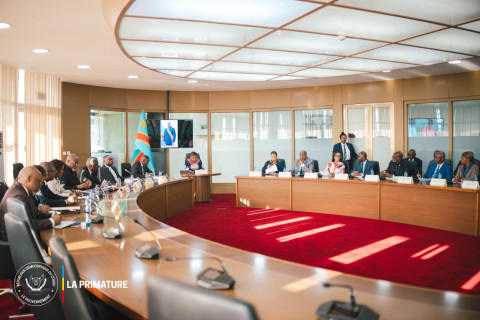
For Kinshasa, Lumumba’s candidacy offers a chance to raise the DRC’s diplomatic profile. With a population of around 100 million, the DRC has the world’s largest French-speaking population. The Congolese government has highlighted the country’s demographic and cultural weight in the Francophone community. President Tshisekedi formally presented Lumumba’s candidacy to Francophone ambassadors in Kinshasa on March 19.
Two other candidates are also running: Mauritania’s Coumba Bâ and former Romanian prime minister Dacian Cioloș. All four candidates presented their programmes to member-state delegations during formal hearings in Paris on June 30. The hearings marked the first time in the OIF’s 56-year history that candidates for the secretary-general position had been formally auditioned.
The next secretary-general will be chosen by the leaders of the OIF’s 53 full members for the 2027–2030 term. The organisation comprises 90 states and governments in total, including associate members and observers. Consensus is preferred, but the rules allow a secret ballot decided by a simple majority if agreement cannot be reached.
The 20th Francophonie Summit will take place in Phnom Penh on November 15–16, preceded by a ministerial conference on November 14. Held under the theme “Reinvest in Peace for Shared Prosperity and Lasting Stability,” the gathering will also address international cooperation, multilateralism and sustainable development.
The outcome will determine who represents the Francophone organisation internationally and guides its work for the next four years. For Rwanda and the DRC, the vote is also an opportunity to strengthen their diplomatic standing within a multilateral body whose membership extends well beyond Africa.