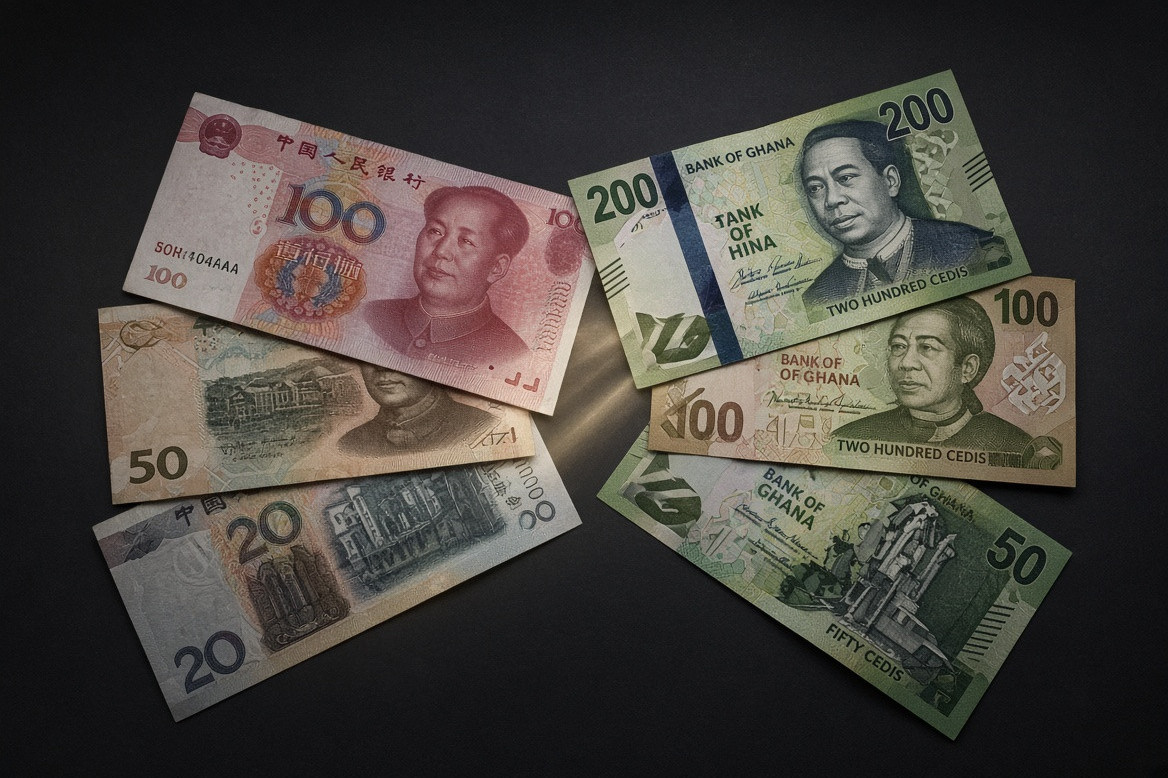
Ghanaian importers can now make eligible payments to Chinese suppliers in cedis through a new yuan settlement channel, reducing the need for US dollars in those transactions. Stanbic Bank Ghana is piloting the service through China’s Cross-Border Interbank Payment System (CIPS), while Ghana Commercial Bank is working on a similar arrangement, according to Bank of Ghana Governor Johnson Asiama.
Under the system, customers initiate eligible yuan payments from existing cedi accounts without first buying US dollars. Funds are converted into yuan and settled through CIPS. According to the bank, this provides a more direct route to Chinese counterparties and reduces reliance on intermediary banks, including US correspondent banks. That could lower transaction costs and processing times for businesses trading with China. CIPS is a wholesale payment system authorized by the People’s Bank of China for clearing and settling cross-border transactions in renminbi, or yuan. Stanbic Bank Ghana became the first bank in Ghana to gain direct access after receiving approval from the Bank of Ghana.
The Bank said the CIPS channel provides businesses with a more direct route for payments to Chinese counterparties and can reduce reliance on correspondent and intermediary banks
Eligible yuan payments submitted with complete documentation by 2 p.m. GMT can be processed for next-business-day settlement, subject to regulatory and compliance requirements. Businesses using the service must hold an account with Stanbic Bank Ghana and select yuan as the payment currency when initiating a transaction. Existing banking channels can still be used, with no new systems or software required, Stanbic added.
This new channel does not replace existing international payment systems. Payments in US dollars, euros, pounds, and other currencies will continue to run through existing rails, including SWIFT, Stanbic said.
China remains a major source of Ghana’s imports, accounting for 22.3% of them in 2024, according to Stanbic Bank Ghana.
Bank of Ghana is backing the cedi-to-yuan arrangement as Ghana seeks to facilitate trade with China and reduce reliance on the US dollar for bilateral transactions.