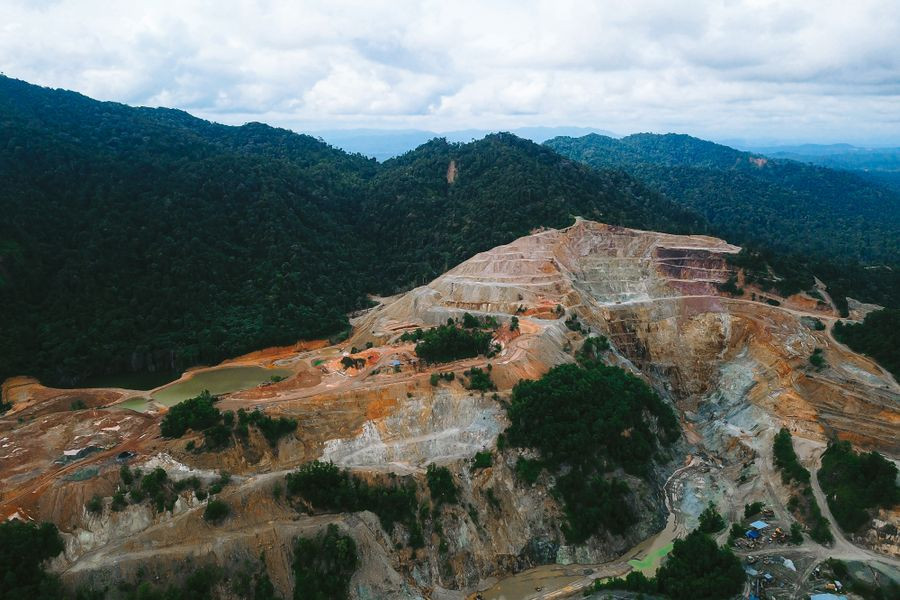
The Democratic Republic of the Congo (DRC) has sent a high-level security delegation to the Metalkol mining site in Lualaba province as authorities face renewed illegal activity on a portion of the concession, according to Africa Intelligence. The mission highlights the challenge facing President Félix Tshisekedi’s government in enforcing its orders to remove unauthorized operators and military personnel from mining areas.
The report, published on October 13, said the National Security Council dispatched senior intelligence and security officials to the site, which is operated by Metalkol, a subsidiary of Eurasian Resources Group (ERG). The visit reportedly encountered resistance and other incidents. The details have not been confirmed by an official government statement.
The reported deployment follows renewed occupation of part of the concession by unauthorized operators. Citing ERG’s account to Bloomberg, LePoint.cd reported that the company said the occupation resumed on August 21, 2026, and that the presence of uniformed personnel had prevented it from accessing the affected area. The outlet reported the alleged removal of about 700 metric tons of mining residues per day, a figure attributed to the company rather than independently verified.
The dispute has also raised concerns about nearby water infrastructure. Reports from Congolese mining outlet Mines and Africa Business Insight said an obstruction at the Nzilo spillway could redirect water from the Musonoi watershed toward the Kasubantu dam, potentially reducing water available to the Nzilo hydropower plant. The facility has an installed capacity of about 100 megawatts and supplies electricity to the country’s southeastern mining region. The reported hydrological changes pose a potential risk, but no resulting disruption to power generation has been confirmed.
Metalkol processes historical mining tailings to recover copper and cobalt rather than relying solely on newly extracted ore. ERG owns 90% of the company, while the DRC state holds the remaining 10%. The company reports annual nameplate capacity of approximately 100,000 metric tons of copper cathodes and 23,000 metric tons of cobalt in hydroxide form.
The renewed occupation raises questions about the effectiveness of previous enforcement measures. Congolese media reported that a joint operation involving the president’s military office and the Armed Forces of the DRC Inspectorate removed occupants from part of the site in May. Yet reports of a return in August suggest that clearing a concession during an operation may not be enough to prevent unauthorized activity from resuming.
The government’s response at Metalkol will therefore be a test of its ability to enforce mining rules, protect strategic infrastructure and ensure that presidential directives translate into lasting control on the ground.