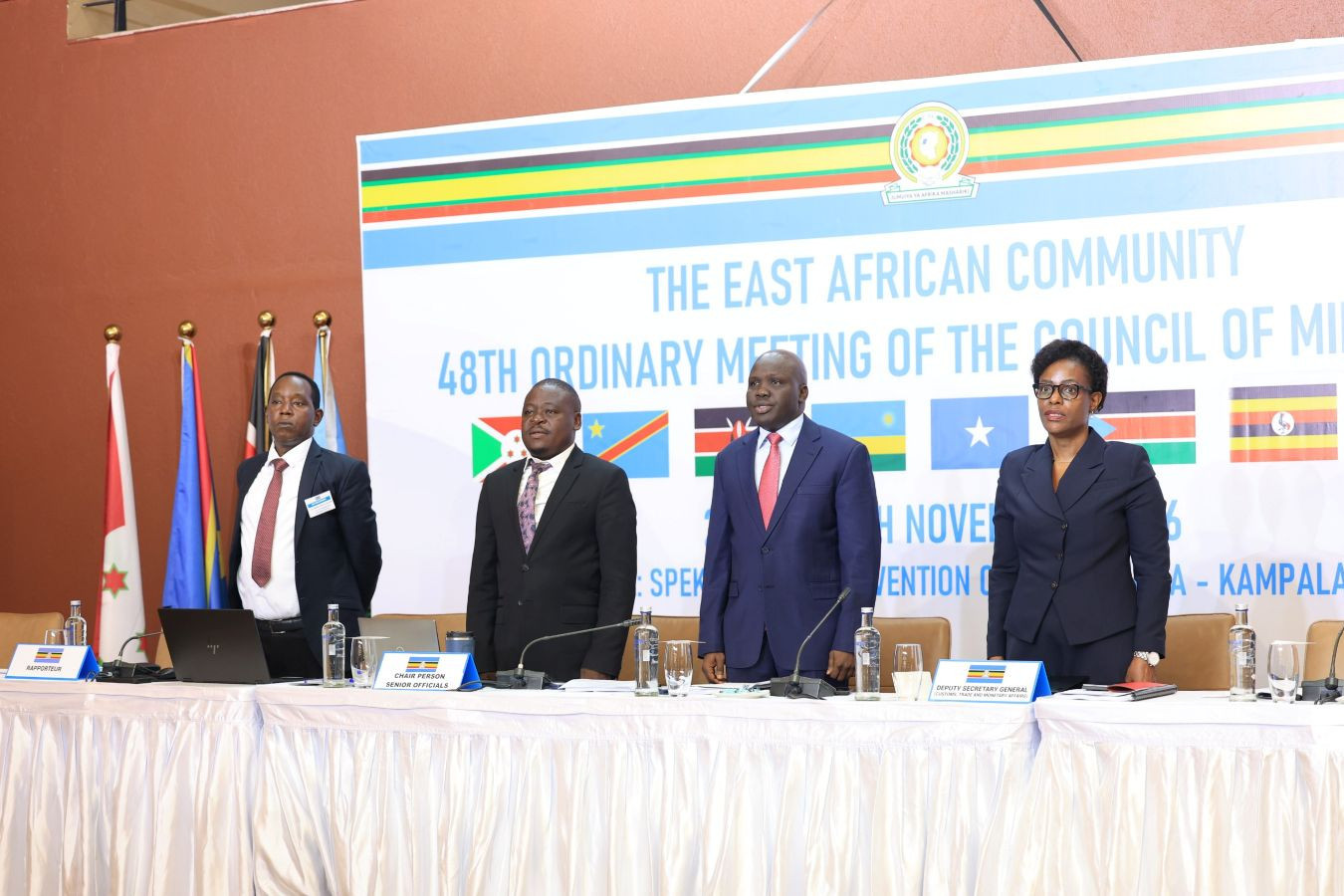
The 48th Ordinary Meeting of the East African Community (EAC) Council of Ministers has commenced in Kampala, Uganda, bringing together representatives of Partner States to discuss measures aimed at accelerating regional integration and strengthening economic cooperation.
The EAC Secretariat announced on November 23 that the meeting will address key policy, legal, financial and institutional issues affecting the regional bloc.
Discussions are focusing on strengthening the regional market, facilitating cross-border movement and creating better conditions for trade, investment and employment. Infrastructure development, agriculture, food security, climate resilience, digital transformation and social development are also among the priorities.
A major part of the meeting is a review of the implementation of previous Council decisions. According to the EAC Secretariat, 2,587 of the 3,697 decisions and directives recorded across the first 47 Council meetings have been fully implemented, representing 69.98%.
Another 618 decisions, or 16.72%, remain under implementation, while 220 are classified as continuous activities. A further 272 decisions, accounting for 7.36%, have not been implemented.
The review is intended to help Partner States identify obstacles to implementation and strengthen accountability for regional commitments.
The meeting is also taking place as the EAC advances its Seventh Development Strategy for 2026/27–2030/31, which prioritises increased intra-regional trade, improved connectivity, climate resilience and deeper political integration.
The session of senior officials is scheduled for November 23–26, followed by the Coordination Committee meeting on November 27–28. The ministerial session is scheduled for December 1.
The outcomes are expected to provide further policy direction for the regional bloc as it seeks to translate integration commitments into practical economic and social benefits for its member states.