Cameroon’s public investment program faces a major implementation challenge: higher budget allocations have not translated into faster project delivery. The gap between financial execution and physical progress highlights difficulties in turning public resources into functioning infrastructure.
The Ministry of Economy, Planning and Regional Development (MINEPAT) reported that, as of September 30, 2026, the commitment rate under the Public Investment Budget stood at 54.24%. The liquidation and payment authorization rates were both 36.81%, while the physical execution rate reached 39.12%.
All four indicators were lower than at the same point in 2025. The commitment rate declined by 5.67 percentage points, liquidation by 12.63 points, payment authorization by 9.38 points and physical execution by 6.99 points.
The slowdown came despite an increase in resources allocated to public investment. For 2026, commitment authorizations reached 2.1307 trillion CFA francs, while payment appropriations totaled 2.0311 trillion CFA francs. These amounts were higher than in 2025 by 145.6 billion and 179.1 billion CFA francs, respectively.
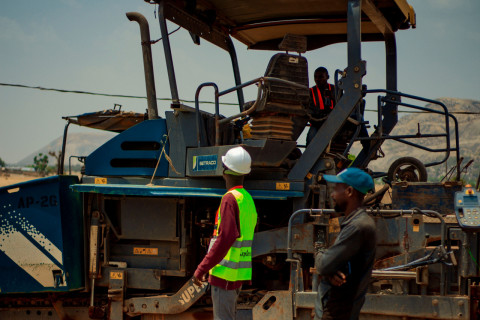
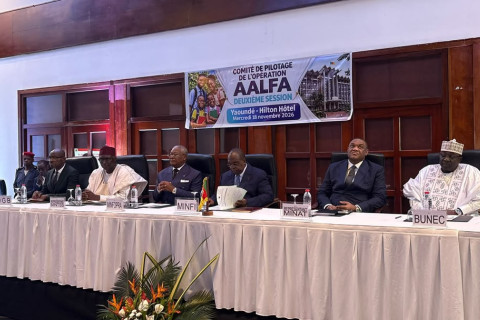
The figures suggest that the challenge is not limited to the amount of money allocated. A national monitoring committee identified several constraints affecting project implementation, including delays in awarding contracts, insufficient project preparation, late mobilization of counterpart funding, delayed processing of payment claims, abandoned construction sites and the limited financial capacity of some contractors.
Performance also varies across funding arrangements. Projects financed through resources managed at the decentralized administrative level recorded a commitment rate of 64.64%, compared with 57.22% a year earlier. Their physical execution rate reached 42.94%, up from 35.64% in September 2025 and above the national average.
The government has called for better project preparation, faster contracting procedures, timely mobilization of counterpart funds and stricter monitoring of implementation. The committee also recommended more regular reporting on project execution and better anticipation of requirements set by development partners.
For Cameroon, the central issue is increasingly whether larger public investment budgets can produce visible economic results. Delays in project preparation and execution can hold back infrastructure development even when budget resources have been allocated.
Improving implementation will therefore be essential if public investment priorities in energy, transport, agricultural production and reconstruction are to translate into completed projects, stronger economic activity and better public services.
Follow Africa Monitoring on Google:
Related news