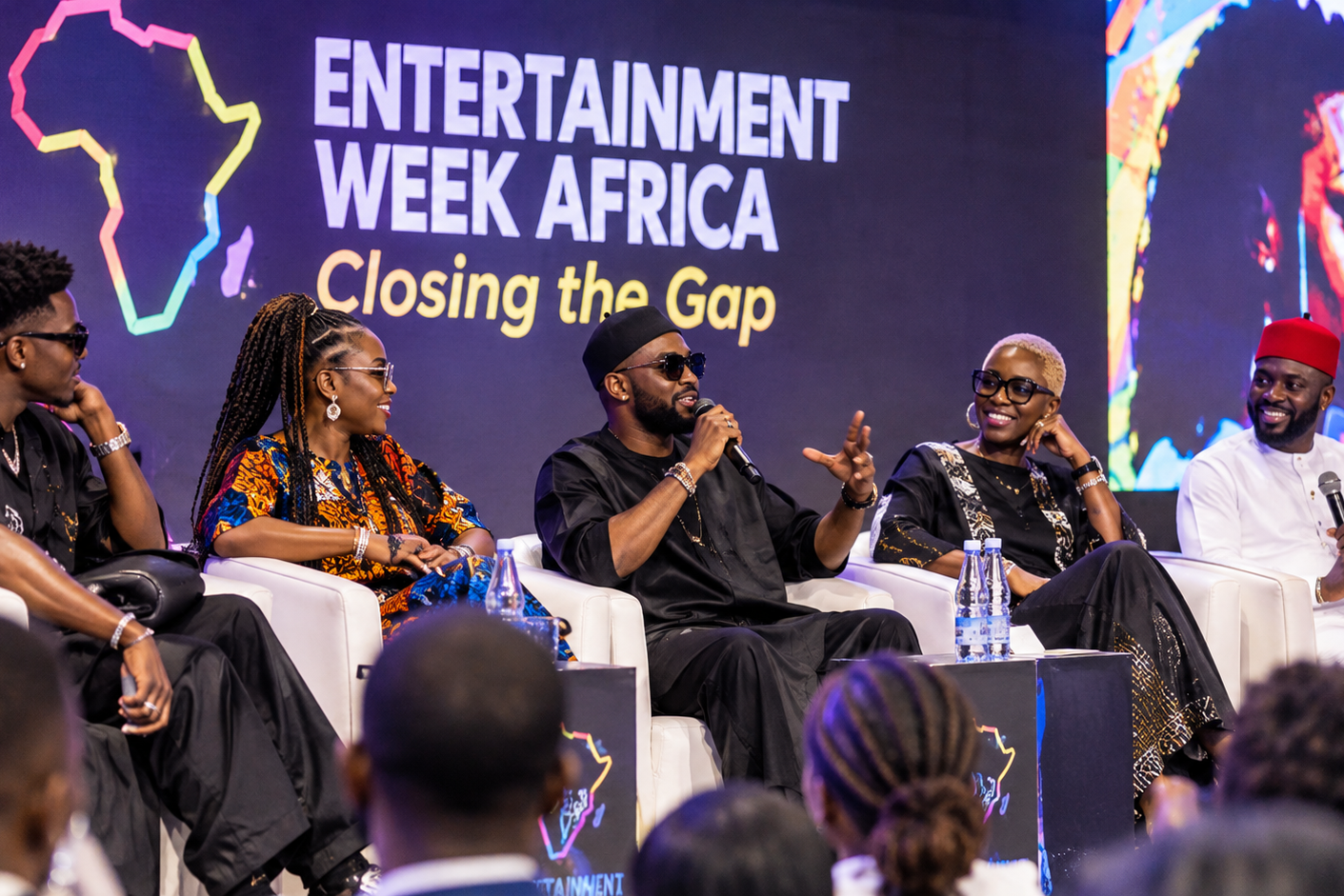
Lagos is bringing together some of Africa’s most dynamic creative industries as Entertainment Week Africa (EWA) returns for its 2026 edition from November 17 to 22. The event highlights an increasingly important question for the continent: how can Africa turn its global cultural influence into sustainable businesses, investment opportunities and jobs for a new generation of creative professionals?
Organized by Livespot, the six-day event operates under the theme “Closing the Gap,” focusing on connections between creative talent, investment, technology and international markets. Its seven industry tracks cover music, film and television, fashion and beauty, artificial intelligence and technology, art and animation, live events and production, and creative enterprise, according to the official event website.
Unlike a conventional entertainment festival, EWA combines public showcases with business-oriented activities. Its program includes content and music markets, investor meetings, pitch sessions, creative laboratories and networking opportunities designed to connect artists and entrepreneurs with distributors, brands, investors and other industry partners. The organizers describe the platform as an effort to build stronger links between African creative talent and global opportunities.
The approach reflects the growing economic importance of the continent’s creative sectors. African music, film, fashion and digital content are reaching increasingly diverse international audiences, but global visibility does not automatically translate into financial returns for local creators. Access to funding, distribution networks, intellectual property protection and professional training remains essential for building businesses that can compete internationally.
Nigeria provides a particularly relevant setting for this conversation. Lagos has developed into a major center for Afrobeats, film production, fashion and digital media, attracting both local entrepreneurs and international partners. By bringing different creative sectors together, EWA aims to encourage collaboration and create opportunities that extend beyond individual performances or projects.
The event also reflects a wider shift in how African creativity is viewed: not only as cultural expression, but as an economic resource capable of supporting entrepreneurship, employment and international trade.
The long-term impact will depend on whether the connections made during the week lead to lasting partnerships, investment and stronger market access. For Lagos, however, EWA offers a platform to demonstrate that Africa’s creative influence can become a more structured and sustainable part of its economic future.