Algeria and Niger have signed a military cooperation protocol, deepening a security partnership that has accelerated since Algeria sent aircraft and equipment to help Niamey after an attempted coup in August.
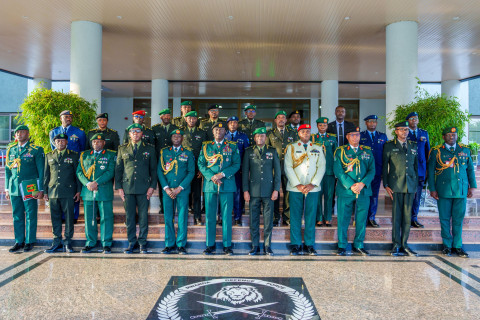
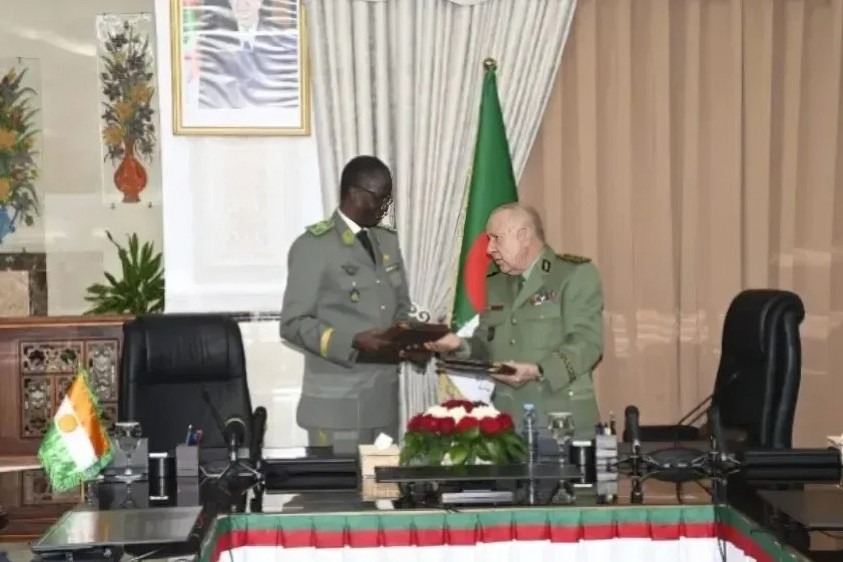
The agreement was concluded in Algiers on October 21 during a working visit by Nigerien Defence Minister General Salifou Mody. Algeria’s army chief, General Said Chanegriha, received Mody and a senior Nigerien military delegation at the headquarters of the People’s National Army, according to El Khabar.
Following their talks, the two sides signed a protocol intended to strengthen bilateral military and security cooperation, although neither government disclosed its specific provisions.
Chanegriha said Algeria was ready to examine Nigerien proposals to advance military cooperation, while Mody welcomed the “multidimensional coordination” between the two armed forces.
The Nigerien minister and his delegation later met Algerian President Abdelmadjid Tebboune. Niger’s government said the protocol establishes a new framework for defense relations between the two countries’ military institutions.
The signing follows Algeria’s rapid military support for Niger after mutinous soldiers attempted to seize strategic sites in Niamey on August 28-29, including Base 101 near Diori Hamani International Airport. Loyalist forces, supported by Russia’s Africa Corps, regained control of the base.
On August 30, Algeria deployed four Sukhoi Su-30 fighter jets, an Ilyushin Il-76 transport aircraft and an Il-78 aerial-refueling tanker to Niamey at Niger’s request. Algeria’s Defense Ministry described the operation as support for Niger’s stability and a response to an attempt to destabilise the country.
Earlier in August, Algeria had donated four helicopters, two Mi-171 transport aircraft and two Mi-24 attack helicopters, along with ammunition, spare parts, maintenance equipment and logistical support.
Analysts view the protocol as part of Algeria’s broader effort to reposition itself in the Sahel after a period of diplomatic strain. The two countries share a long border and face common pressures from armed groups, trafficking networks and cross-border insecurity. The agreement also builds on existing regional military cooperation mechanisms, including the Joint Operational Staff Committee established in 2010 by Algeria, Mali, Mauritania and Niger.