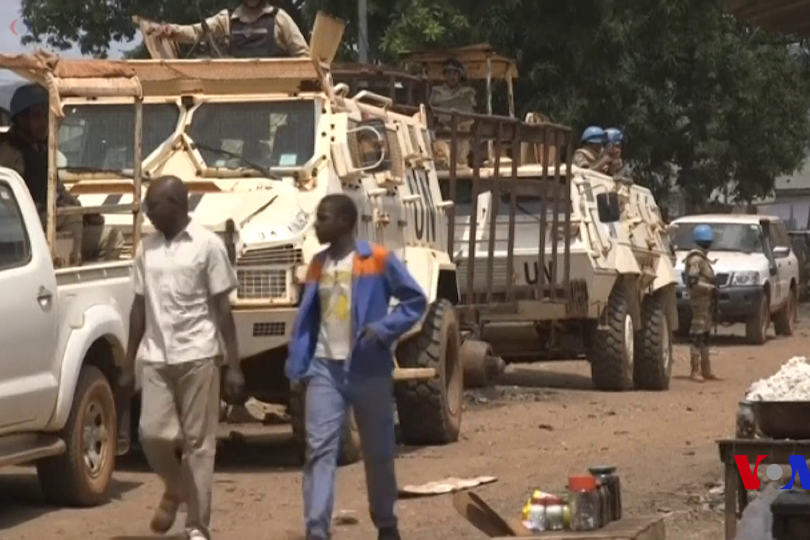
The war in Sudan is adding to security threats along the Central African Republic’s (CAR) northeastern border. An attack by armed groups on the border town of Am-Dafock on June 30 killed civilians and members of the national security forces, displacing more than 17,000 people and leaving six UN peacekeepers injured. The United Nations has warned that instability in the wider region is threatening fragile security gains in the country.
During a briefing to the UN Security Council on October 20, 2026, Valentine Rugwabiza, the Secretary-General’s Special Representative for the CAR and head of the UN Multidimensional Integrated Stabilization Mission in the Central African Republic (MINUSCA), described the attack as evidence of continuing security risks along the Sudanese border.
The assault forced thousands of residents to seek refuge at MINUSCA’s temporary operating base. An armed group held the locality for five days before retreating across the border into Sudan. Rugwabiza said the mission’s rapid response helped protect civilians, support the deployment of national defense forces and restore state authority.
France’s representative to the Security Council warned that armed groups exploit conflicts in neighboring countries, including Sudan, to obtain weapons and fighters and carry out attacks. The security situation remains particularly fragile in the border areas shared by the CAR, Chad, and Sudan.
The attack highlights the gap between progress in the peace process and the continuing threat from armed groups. Since July 2025, more than 1,900 combatants have been disarmed and demobilized with MINUSCA’s assistance. However, armed violence in border areas continues to put civilians and recent security gains at risk.
MINUSCA is gradually transferring selected responsibilities to national authorities in more stable areas while concentrating its resources in higher-risk locations. Rugwabiza urged the Security Council to maintain adequate troop levels and operational capabilities, warning that the transition must not undermine the mission’s ability to respond to security challenges. France and Russia also cautioned against accelerating the transfer of responsibilities.
MINUSCA’s current mandate expires on November 15, 2026. The UN Secretary-General has recommended a one-year extension, with the mission retaining the capabilities needed for rapid intervention.
The challenge for the CAR is to consolidate progress in disarmament and peacebuilding while strengthening security along borders exposed to regional conflicts. The attack on Am-Dafock shows that these objectives remain closely connected.