UN Security Council briefings rarely produce a sentence anyone remembers. This month's session on Central Africa produced one worth sitting with.
The Sentence That Cut Through the Diplomatic Fog
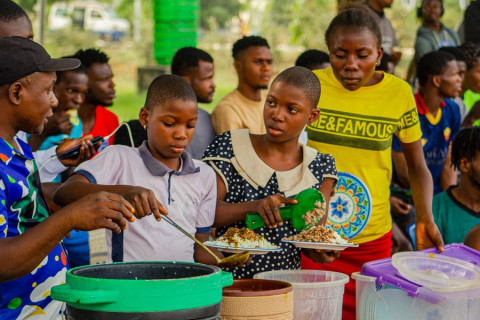
Briefing the 15-member Security Council on June 9, Greece's representative described climate shocks and worsening food insecurity as among the main challenges facing Central Africa, warning bluntly: "Unfortunately, women and girls are paying the heaviest price."
It is the kind of line that gets said in passing during a long diplomatic session and then disappears into a transcript nobody reads. It deserves more attention than that, because the briefing that surrounded it laid out, in granular detail, exactly how that price is being paid across the region.
Two Fulcrums, One Word Doing a Lot of Work
"Two fulcrums of instability stand out in Central Africa — eastern Chad and the Lake Chad region," said Martha Ama Akyaa Pobee, Assistant Secretary-General for the Departments of Political and Peacebuilding Affairs and Peace Operations, presenting the Secretary-General's latest semi-annual report on the region.
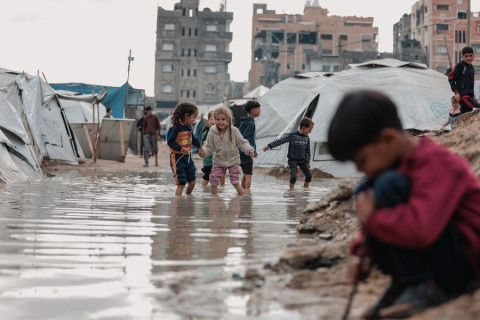
"Fulcrum" is a deliberate word choice — it implies not just instability, but instability that other things pivot on. Pobee noted that the conflict in neighbouring Sudan is now in its fourth year, and that more than 900,000 Sudanese refugees and 300,000 Chadian returnees have entered Chad since April 2023, placing significant strain on national resources and undermining social cohesion in Chad's eastern provinces, exacerbating an already severe humanitarian crisis.
Boko Haram's Long Shadow Hasn't Moved
Pobee told the Council that civilians in the Lake Chad Basin region — parts of Chad and Cameroon — continue to suffer attacks and human rights abuses by various Boko Haram-affiliated and splinter groups, with ongoing crises in Cameroon's north-west and south-west regions continuing to impact civilians who are bearing the brunt of the violence.
"The Multinational Joint Task Force remains an essential cross-regional mechanism to combat the violent extremist threat," she said, referring to the joint military coalition comprising troops from Cameroon, Chad and Nigeria, alongside Benin — while cautioning that a security response alone "will not suffice" in addressing the root causes of the crisis, and that international partners and multilateral development banks must help fund the Lake Chad Basin Commission's cross-border programmes.
That last point is the uncomfortable one. The military coalition exists and is functioning. The development financing it depends on to address root causes is, by the UN's own account, insufficiently funded.
Civic Space Is Shrinking, With Receipts
Pobee flagged a "worrying trend" of increasing restrictions on civil and political rights across several parts of Central Africa, warning that if not reversed, these restrictions could contribute to a narrowing civic space affecting long-term stability and leading to conflict. She cited specific instances of political retribution in Chad and social media restrictions in Gabon.
This is not vague diplomatic hand-wringing. These are named countries, named tactics — political retribution in one, social media throttling in another — presented as concrete, current examples rather than abstract trends.
Climate Change Entered the Room, and Stayed
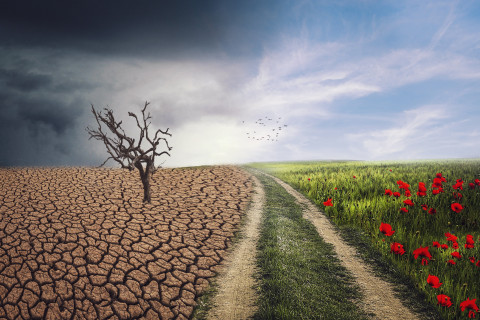
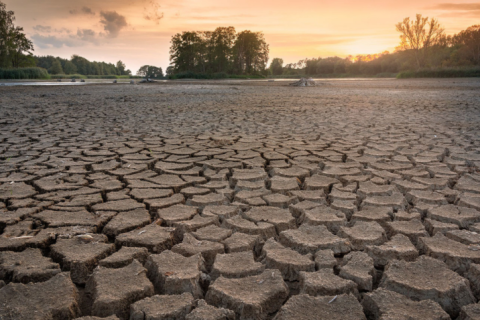
Denmark's representative joined several other speakers in citing the worsening impacts of climate change, noting that above-average temperatures, erratic rainfall and pressure on water and pasture intensify existing challenges and heighten instability and communal violence — while welcoming the launch of the Regional Climate, Peace and Security Strategy for Central Africa, intended to integrate climate-related risks into conflict prevention, early warning and peacebuilding efforts.
Where the Major Powers Disagreed — Quietly
The briefing also revealed where global powers diverge on how to read the region's challenges.
China's delegate emphasized that safeguarding inclusive political strides made by Central African nations is crucial, pointing to successful presidential elections in the Republic of Congo, a completed political transition in Gabon, and continued post-transition governance-building in Chad — framing the region's trajectory in notably more positive terms than other speakers.
Russia's representative, while pledging continued counter-terrorism cooperation, used the platform to argue that one of the subregion's most critical underlying drivers is African countries' mounting external debt — and pointed to recent US and Israeli action against Iran as evidence of an "outdated" and "neocolonial" economic relationship between African resource-exporting nations and international markets.
That is a notably pointed framing for what was ostensibly a briefing about Central Africa's governance and security situation — using the floor to make a broader geopolitical argument rather than addressing the report directly.
The United States Brought a Body Count
The US representative noted that Washington and Nigeria had recently completed a "meticulously planned" joint military mission to eliminate Abu Bilal Al-Minuki, described as ISIL's global "second-in-command" and one of the most active terrorists in the world — while also sounding alarm over the widening impacts of Sudan's conflict and calling for an immediate humanitarian truce without preconditions.
What This Briefing Actually Adds Up To
Strip away the diplomatic formatting, and this single Security Council session contained: a refugee crisis straining Chad's social fabric, an extremist insurgency that international military cooperation is containing but not resolving, civic space narrowing in named countries through named tactics, a region increasingly destabilized by climate stress on water and pasture, a successful targeted strike against a senior ISIL commander, and great powers using the floor to advance entirely different narratives about who or what is actually responsible.
Buried inside all of that was one sentence that named, specifically, who is absorbing the cumulative weight of every crisis on that list. Greece's representative did not elaborate on the mechanisms — displacement, food insecurity, and instability rarely distribute their burdens evenly by gender, and this region is no exception. She simply said it, once, and the briefing moved on to the next speaker.