Three weeks ago, an attack unfolded at Am-Dafock, a remote crossing point in the Central African Republic's Vakaga Prefecture, where a newly formed armed coalition struck Central African forces, their Russian partners, and a MINUSCA base simultaneously. Vakaga is one of the most contested, under-governed corners of Central Africa, sitting exactly where CAR, Chad, and Sudan meet.
It is also, in the same prefecture, home to Korsi — a government-designated refugee settlement outside the town of Birao where more than 22,000 Sudanese refugees have rebuilt something resembling ordinary life since fleeing a war the UN has now formally labelled genocide. Both things are true about Vakaga at once. That contradiction is the story.
The scale of what Birao is absorbing
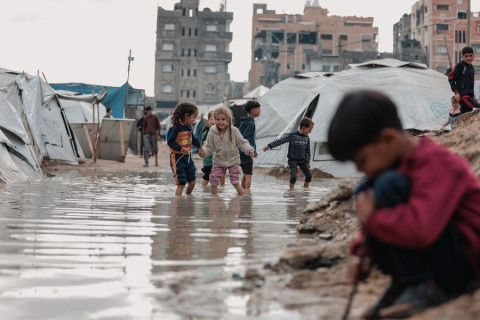
Since Sudan's civil war began in April 2023, more than 35,000 Sudanese refugees have crossed into the Central African Republic, according to UNHCR figures, with the great majority — women and children make up roughly 85% of the total — settling in and around Birao. Korsi alone now hosts over 22,000 people; the town it sits beside has, in UNHCR's own description, doubled in size. Another 13,000 to 14,000 refugees are scattered across CAR's other remote eastern prefectures — Bamingui-Bangoran, Haute-Kotto, Haut-Mbomou, Mbomou, and Ouaka — regions with even thinner infrastructure and even less international attention than Birao itself.
This is one of the poorer, more fragile states in the world absorbing a refugee population fleeing a conflict that, as we reported earlier this month, UN investigators concluded involved genocidal violence against civilians in El Fasher. CAR is not a wealthy safe harbour. It is a country still managing its own post-conflict recovery, its own contested borders, and its own chronic underfunding — and it has nonetheless become host to tens of thousands of people who had nowhere else to go.
What integration actually looks like on the ground
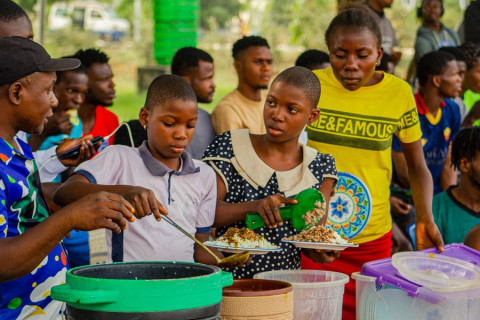
The remarkable part of the Birao story is not that refugees arrived. It is what has happened since. Edam and Zifak, a Sudanese couple who reached CAR in 2023, opened a bakery in Korsi, introducing Sudanese bread to a community that has increasingly become their own. "We were welcomed by others when we first arrived," Edam told UNHCR. "Now, we want to contribute. More and more Central Africans are coming to my bakery every day." Their son, Olbderahim, was born in Korsi — a Sudanese refugee child, born on Central African soil, in a settlement whose name means "welcome" in the local Sango language.
Malek, another refugee father in Korsi, is learning French — not his or his children's first language, and a marker of how deliberately he is working to help his family integrate into CAR's education system. "The main difficulty for our children here is access to education, especially because of the language," he explained. "In Sudan, we mostly use Arabic and English. Here, it's French." His children are now enrolled at the primary level in Central African schools. These are not isolated gestures of goodwill. UNHCR, working with the government's National Commission for Refugees and international partners, has expanded classrooms and strengthened health infrastructure in Birao specifically to accommodate this population — access to national health and education systems, vocational training, agricultural programmes, and small business support, aimed at building something more durable than emergency aid.
The trauma underneath the integration numbers
A less visible layer of this response addresses what displacement does to children psychologically, not just logistically. With support from Education Cannot Wait and implementation partner INTERSOS, UNHCR has trained 55 teachers and 48 youth leaders in Birao as mental health and psychosocial support focal points — adults equipped to recognise trauma symptoms in children, connect them to specialised services, and provide emotional first aid in schools and neighbourhoods. Education Cannot Wait's total commitment to CAR's refugee education response has reached $70 million, built from an initial $2 million emergency grant. The need behind that investment is stark. Across West and Central Africa, an estimated 61% of refugee children aged 6 to 17 remain out of school — a figure that frames Birao's classroom expansions as meaningful progress against a genuinely difficult regional baseline, not as a problem already solved.
Why the contradiction at the heart of Vakaga matters
The same prefecture producing a story about a bakery, a birth, and a father learning French to help his children is the prefecture where, on June 30, armed groups with alleged ties to Sudan's RSF attacked a border post barely sixty kilometres from where these refugees have settled. That is not an inconsistency in the reporting. It is the actual texture of life in a border region absorbing the human consequences of a neighbouring genocide while simultaneously exposed to that same conflict's spillover violence.
CAR's National Commission for Refugees and UNHCR describe the Birao response as building "sustainable solutions" rather than indefinite emergency dependency — refugees with bakeries, French lessons, and enrolled children rather than populations warehoused indefinitely in tents. That framing is honest about what has been achieved and equally honest about how fragile it remains: sustainable integration requires a baseline of security that Vakaga's June 30 attack directly called into question. A refugee-hosting model built around long-term local integration only works if the locality itself remains stable enough to integrate into.
For now, Edam's bakery is still open, and Central Africans are still walking through its door for Sudanese bread. Whether Vakaga can hold both realities — a functioning integration story and an active border security threat — in the same small prefecture over the long term is a question neither UNHCR's programming nor MINUSCA's patrols can answer on their own.