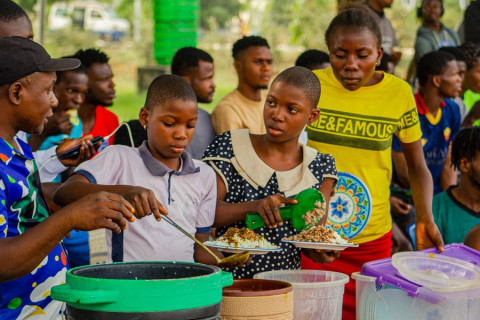
Carl Skau spent Wednesday at the Rwampara Ebola treatment centre in Ituri province, helping distribute meals to patients between meetings with frontline health workers. The World Food Programme's acting executive director had travelled to eastern Congo to see firsthand what happens when a public health emergency collides with one of the world's most severe humanitarian emergencies. His assessment to the Associated Press was blunt: "a crisis on top of a crisis."
The figures explain why. Since the outbreak was first reported on May 15 and the World Health Organization subsequently declared it a Public Health Emergency of International Concern, the epidemic has grown into what health officials describe as the fastest-growing Ebola outbreak on record. According to WHO figures released this week, it has reached 3,360 confirmed cases and 1,487 deaths. The UN Humanitarian Coordinator in the DRC, Julien Harneis, told reporters that 50 people died of Ebola in a single 24-hour period this week alone. The strain driving the epidemic — Bundibugyo ebolavirus — is not the Zaire strain for which most existing Ebola vaccines and treatments were developed, complicating containment efforts well beyond the rising case count.
Why a Disease Outbreak Becomes a Food Emergency
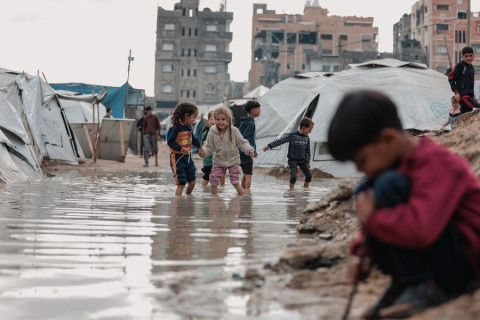
The connection between Ebola and hunger is far from theoretical. Across the 48 health zones affected by the epidemic, WFP estimates that 2.7 million people now face acute food insecurity, including 628,000 living under emergency conditions. These numbers come on top of a nationwide situation in which more than 5 million Congolese were already experiencing emergency-level food insecurity before Ebola re-emerged.
"Markets have been disrupted, supply routes interrupted, and people are struggling even more to have enough to eat," Skau said. The same public health measures required to contain Ebola — restrictions on movement, limits on gatherings and tighter border controls — are simultaneously disrupting local trade, market activity and informal commerce upon which many rural households in Ituri depend. Richard Lokudu, medical director of Mongbwalu General Hospital, is witnessing the consequences directly. He told reporters that health workers are now treating more cases of malnutrition than before the outbreak began, including among patients already receiving care in Ebola treatment centres. Rather than separate problems, malnutrition and Ebola have become two mutually reinforcing emergencies. A body weakened by undernourishment is less capable of surviving acute infection, while the disease itself further undermines nutritional health, forcing an already overstretched healthcare system to confront both simultaneously.
Conflict Makes Every Outbreak Harder
The overlap between armed conflict and disease has become one of the defining characteristics of this emergency. As the Associated Press noted, Ituri remains "a region engulfed in conflicts and a fight over precious minerals."
The relationship between insecurity and the epidemic is already well established. Ituri is also the province where ADF militia violence has intensified in recent years, where containment teams have faced attacks and hostage-taking during burial operations, and where insecurity has prevented health workers from reaching enough contacts to interrupt chains of transmission. Those conditions have not improved since earlier reports this year. If anything, the latest data suggests they have become even more challenging. WFP has expanded its operations accordingly, delivering more than 160,000 hot meals to patients, their contacts and frontline workers across 17 treatment and isolation centres. Yet Skau's message to international donors was as much a warning as an operational update.
"The World Food Programme needs resources — donors to step up — so that we can do more, to alleviate the pressures on the people here in Ituri."
That appeal comes at a time when humanitarian agencies are already facing persistent funding shortfalls across West and Central Africa. Existing operations in Chad, Cameroon and elsewhere had already stretched available resources before Ebola added another rapidly expanding emergency to the region's humanitarian agenda.
Why Speed Matters
The pace of the epidemic changes the nature of the response. Slower outbreaks give contact tracers, vaccination teams and community engagement specialists time to stay ahead of transmission chains. An epidemic growing this quickly compresses that window dramatically. Medical teams must treat patients, identify contacts, monitor communities and coordinate emergency food assistance simultaneously — all while operating inside areas where insecurity already limits movement.
The Democratic Republic of the Congo has managed Ebola outbreaks before. This is the country's sixteenth outbreak since the virus was first identified there, and international experience in containing Ebola is extensive. What makes this epidemic different is not the virus alone, but the environment in which it is spreading: an active conflict zone, a population already experiencing severe food insecurity, and a strain for which existing medical tools offer more limited protection than those developed for the better-known Zaire variant. Each of those challenges would complicate containment on its own. Together, they create something far more difficult. The challenge facing responders is no longer simply containing Ebola. It is containing Ebola in the middle of a humanitarian emergency that continues to deepen.