The Ebola outbreak in the Democratic Republic of the Congo is worsening, with the virus reaching internally displaced people’s camps and overwhelming health services in conflict-affected areas, United Nations agencies have warned.
At least 19 internally displaced people have contracted Ebola in Ituri province, five of whom have died, according to the UN refugee agency, UNHCR. Cases have been reported in at least five of Ituri’s 69 displacement camps. Although no infections have been recorded among refugees or asylum-seekers, aid agencies fear the crowded and poorly serviced camps could accelerate transmission.
The outbreak, declared on May 15, has so far produced nearly 4,000 confirmed cases and more than 1,800 deaths, according to figures cited by the World Health Organization, UNICEF and Congolese health authorities. It has spread across Ituri, North Kivu, South Kivu, Haut-Uele and Tshopo provinces, which together host an estimated 4.4 million internally displaced people.
The outbreak is being caused by the Bundibugyo species of Ebola virus, for which there is currently no approved vaccine or specific treatment. The epidemic is reportedly the second-largest Ebola outbreak ever recorded and the fastest-spreading in the DRC’s history.
WHO Director-General Tedros Adhanom Ghebreyesus said new cases had doubled in some hotspots over the past week, outpacing the expansion of the response. During a visit to Kinshasa, he called for a “massive” scale-up of surveillance, testing, treatment, protection for health workers and safe burials.
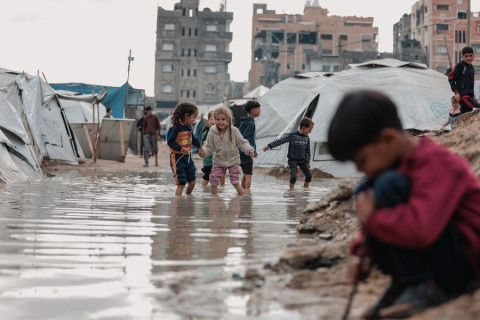
Conflict and displacement are complicating those efforts. Many camps lack adequate water and sanitation facilities, while insecurity restricts access for medical teams. Fear of infection has also driven residents away from hospitals, disrupting routine healthcare. UNICEF said access to primary healthcare for women and children in affected areas had fallen by 42 percent, while childhood vaccination coverage had dropped by 69 percent.
Children have been especially hard hit. UNICEF reported that 743 confirmed pediatric cases had been recorded and 330 children had died as of August 2. Children under five accounted for the largest share of the reported impact.
Authorities have also quarantined passengers from a riverboat that arrived near Kinshasa after a traveler died during a journey from Mongala province. Reports put the number of isolated passengers and crew at between roughly 200 and 260. Samples were sent to the National Institute of Biomedical Research for testing, while several passengers, including children, were reported to have developed fevers.
Africa CDC officials said authorities were considering whether vaccines developed for the Zaire strain could help reduce severe illness from Bundibugyo Ebola. Preliminary observations suggest previously vaccinated people may experience milder disease, though the approach remains under assessment.
In May, the UN allocated up to $60 million for laboratory testing, treatment centers, community engagement and protection for medical facilities, while the United States announced an additional $242 million in emergency funding.