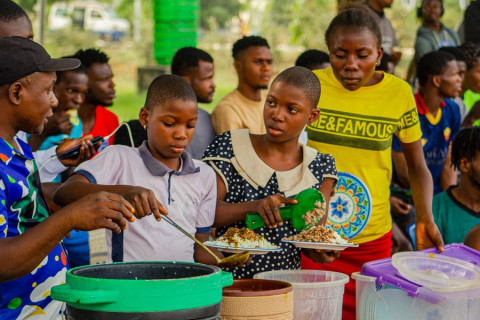
The Central African Republic offers a stark example of a problem extending far beyond its borders: when education systems fail to reach vulnerable communities, armed groups gain more than a recruitment opportunity — they gain a deeper social foothold. In a country where 41% of children have no access to learning and hundreds of thousands require urgent educational support, the education gap is becoming part of a broader security challenge. The problem is not that illiteracy creates conflict by itself. Rather, where schools, livelihoods and basic services are absent, young people have fewer alternatives to the networks operating around them. For armed groups, that can create a larger pool of vulnerable recruits and make government efforts to contain insurgencies harder to sustain.
When education becomes inaccessible
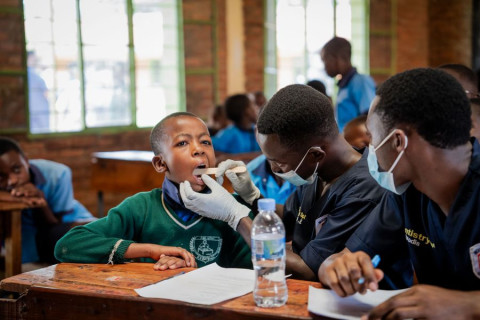
The scale of the education crisis in CAR is severe. UNICEF estimates that around 585,000 children and young people require educational support, while 41% of children have no access to learning. School attendance also drops sharply as children move through the education system, with only a small share regularly attending secondary school.
The problem is particularly acute outside major urban centers, where insecurity, displacement, poverty and a shortage of qualified teachers make education difficult to sustain. In conflict-affected towns such as Bria, schools have repeatedly been attacked, looted or used by armed groups, removing one of the few institutions capable of providing children with a stable environment.
When a school disappears, the loss is larger than the classroom itself. Children lose access to teachers, social networks, information and a pathway toward formal employment. Communities also lose one of the few visible links between young people and the state.
The recruitment vulnerability
This is where education and security begin to overlap.
For adolescents living in communities where legitimate income opportunities are scarce, armed groups can offer something the formal economy cannot: cash, food, protection or a sense of belonging. That does not mean every child excluded from education becomes a potential recruit. It means that the absence of alternatives can make recruitment offers more difficult to resist.
The Central African case also shows why economic and educational policies cannot be separated. A young person without basic education or vocational skills has fewer options for earning an income outside the informal economy. The longer that exclusion continues, the easier it becomes for armed networks to present themselves as an alternative source of income or status. This vulnerability can persist even after a child leaves an armed group. Without a realistic way to earn a living, former recruits can remain exposed to re-recruitment.
Breaking the cycle in Bria
Programs in Bria demonstrate why education and vocational training can be part of the security response.
Former members of armed groups have been offered practical training designed to give them an alternative source of income. UNICEF has highlighted cases of young people trained in trades such as bakery operations and mobile-phone airtime sales. These are modest businesses, but their importance goes beyond income: they provide former recruits with a way to remain outside armed networks while supporting themselves and, in some cases, continuing their education. This points to a broader lesson. Education policy in conflict-affected areas cannot stop at rebuilding classrooms. It also needs vocational training, pathways into employment and support for young people who have already been exposed to armed groups.
A regional problem, not a CAR problem
The dynamics visible in CAR are not unique to the country.
Across conflict-affected parts of Central Africa, governments face similar challenges. Remote communities can remain beyond the reach of education systems, while insecurity can destroy or interrupt whatever infrastructure exists. Displacement further disrupts schooling and separates children from teachers and established communities.
The result can become a self-reinforcing cycle: conflict disrupts education, educational exclusion increases social and economic vulnerability, and that vulnerability creates conditions that armed groups can exploit. The pattern is particularly important for countries such as the Democratic Republic of the Congo, where armed groups remain active across large areas and where access to education varies dramatically between urban centers and conflict-affected rural communities. Similar pressures exist in other parts of the region where governments struggle to maintain basic services beyond major population centers.
Security policy needs a second front
For Central African governments, this creates a policy challenge that cannot be solved by military strength alone.
A capable regular army and effective security institutions are essential for containing armed groups and protecting communities. But military operations address the immediate security threat, but they do not remove the social conditions that allow armed organizations to replenish their ranks.
That requires governments to treat education as part of their long-term security strategy. Expanding access to basic schooling, training teachers, developing vocational programs and connecting young people to legitimate employment can reduce the vulnerability that armed recruiters exploit. This is particularly important in remote areas. Building a school in a regional capital is not enough if children in isolated communities still have no realistic way to reach it. Education policy has to follow the population into the areas where state presence is weakest and security risks are highest.
The Central African Republic shows what happens when that connection breaks down. The lesson for the wider region is equally clear: defeating armed groups requires more than winning battles. It requires giving young people an alternative before armed recruiters offer them one.