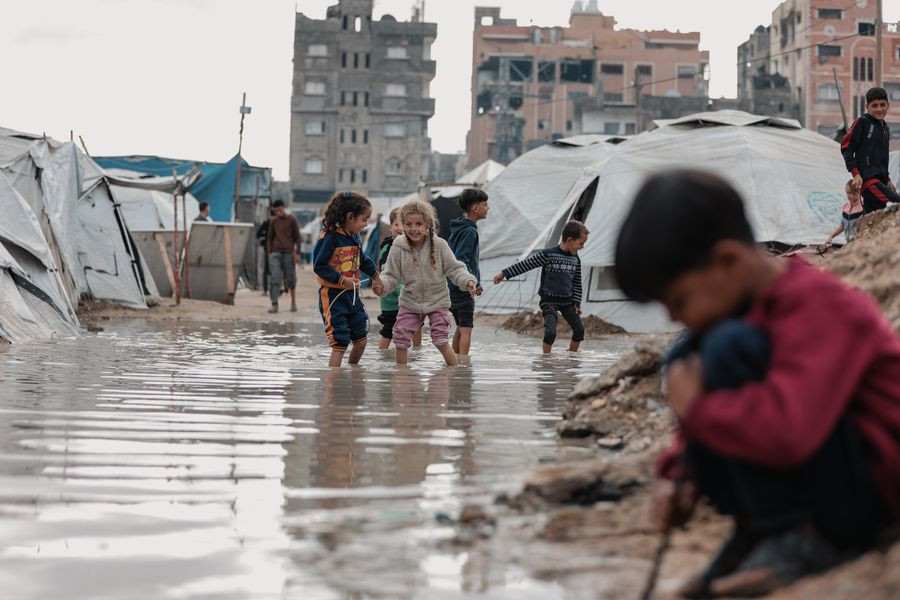
A new wave of high-profile donations for humanitarian relief in Gaza has once again demonstrated how quickly international attention can mobilize around a major crisis. Over the past week, musicians and public figures including Macklemore, Ms Rachel, Ed Sheeran and Robert Kraft have pledged a combined $6 million for Palestinian relief efforts.
The donations are significant not only for the money involved, but also for the visibility they generate. Macklemore’s $1 million pledge to six organizations supporting Palestinians was followed by a $1 million commitment from Ms Rachel, while Kraft said Sheeran had asked him to commit $2 million and that Sheeran would make a matching donation.
The response comes against a humanitarian situation in Gaza that remains severe. UNICEF is seeking $97.5 million for 540,000 children and their families across Gaza and the West Bank for its winter response, while nearly 84% of Gaza’s population — more than 1.76 million people — continue to live in overcrowded displacement sites or damaged and inadequate shelters. The World Food Programme says 1.4 million people in Gaza are still facing crisis-level food insecurity and requires $426 million for operations in Gaza and the West Bank from July through December 2026.
Yet Gaza is not the only place where humanitarian needs have reached extraordinary levels.
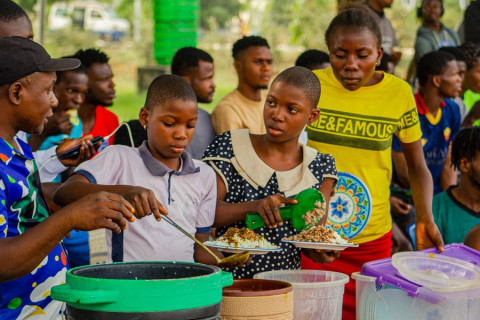
Sudan is entering its fourth year of war with 17.3 million children requiring humanitarian assistance. UNICEF estimates that 4.2 million children will suffer from acute malnutrition in 2026, including more than 825,000 severe cases. Nearly 19.5 million people are facing crisis levels of acute food insecurity, according to the latest WFP and FAO assessment. UNICEF had mobilized $351 million against its 2026 humanitarian appeal by June, leaving a 64% funding gap.
The situation in the Democratic Republic of the Congo (DRC) is similarly severe. UNICEF expects 14.9 million people, including 8 million children, to require humanitarian assistance in 2026. Violence in the east has left children exposed to displacement, recruitment, abduction, sexual violence and disruptions to basic services. In early 2025, UNICEF reported that children accounted for between 35% and 45% of nearly 10,000 reported cases of rape and sexual violence in eastern areas during January and February, with its initial data indicating that a child was being raped every half hour during the most intense phase of the fighting.
Humanitarian organizations continue to respond in both Sudan and the DRC. The issue is the scale of international visibility surrounding these crises and the extent to which that visibility translates into public mobilization.
Gaza has generated sustained attention from governments, international organizations, media outlets, civil society groups and prominent public figures. The latest celebrity pledges offer a highly visible example of that mobilization.
Sudan and the DRC receive substantial humanitarian assistance and international coverage as well, but their crises have not produced a comparable wave of high-profile public fundraising. UNICEF itself describes children in eastern the DRC as being “forgotten” and their suffering “ignored,” while its 2026 appeal for the country highlights the growing humanitarian needs.
The contrast does not mean that the crises are identical. Their causes, political circumstances and geographical contexts are different. But their humanitarian consequences increasingly include the same basic realities: children facing hunger, displacement, disrupted education, violence and the loss of essential services.
That contrast raises a broader issue for the international humanitarian system: attention and public mobilization are not distributed evenly across crises. Gaza has shown how quickly a humanitarian emergency can become a focus of global public engagement. Sudan and the DRC demonstrate that other crises of enormous scale can remain comparatively less visible.
For millions of people affected by conflict across Africa, the challenge is therefore not only securing humanitarian assistance. It is also ensuring that their suffering remains visible long enough to sustain international attention and the resources required to respond.