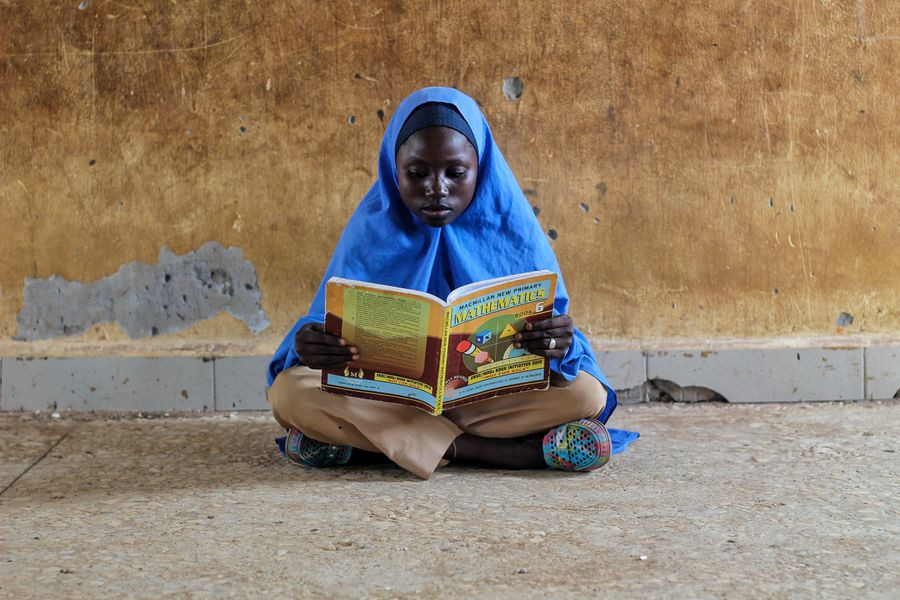
Chad is expanding financial support for vulnerable girls to help them stay in school, with a new round of grants reaching families across nine provinces.
The initiative is part of Chad’s education sector reform efforts and is implemented by the Ministry of National Education, Bilingualism and Civic Promotion in collaboration with UNICEF and its partners. Funded by the Global Partnership for Education, the program aims to support 25,000 vulnerable girls in 318 schools, with a focus on enrollment, staying in school and the transition from primary to lower secondary education.
The grants are paid directly to households. Each girl receives 40,000 CFA francs, or about $70, per school year to help cover education-related expenses such as school supplies, uniforms, shoes and enrollment fees. The first payment was made in December 2025, while families began receiving the second installment in July 2026. The initiative is scheduled to run through 2028.
For some families, the money can make the start of a new school year more manageable. In Pala, in southwestern Chad, 26-year-old Marie Bahane is caring for two younger sisters, both of whom attend school. She told UNICEF that the first payment helped the family cover school fees and buy bags, shoes and clothes.
Marie plans to use the latest installment to support her sisters, particularly the one moving into lower secondary school. The funds will help cover enrollment, school supplies and uniforms.
Another beneficiary, 15-year-old Deuyikbe Berthe, used part of her grant to pay enrollment fees and buy textbooks, including materials for French, biology and English. She also invested part of the money in a goat, hoping it could become a small source of income for her family. Berthe plans to continue her studies and become a teacher.
The grants are part of a broader effort to improve access to education in Chad. UNICEF reported that 178,309 children benefited from improved access to education during the first half of 2026. This included 71,975 girls and 70,727 boys who received school materials in areas affected by humanitarian pressures.
By helping families meet some of the immediate costs of schooling, the initiative is designed to reduce financial barriers that can keep vulnerable girls from continuing their education. For those approaching the transition to secondary school, that support can be particularly important at a stage when the cost of staying in school increases.