For much of the post-Cold War period, Western governments and institutions occupied a dominant position in Africa's external political and economic relationships. Development financing, diplomatic engagement, security cooperation, and investment largely flowed through a relatively small group of traditional partners.
That landscape is changing.
Today, Central Africa is attracting growing interest from a far broader range of international actors. Alongside the United States, the European Union, and China, countries such as the United Arab Emirates, Türkiye, India, Saudi Arabia, Qatar, and Brazil are steadily expanding their presence through investment, infrastructure, energy, logistics, manufacturing, and technology partnerships.
The shift reflects changes in the global economy as much as it does changes within Africa itself. Many emerging economies have reached a stage where domestic markets alone can no longer sustain their long-term growth ambitions. Securing access to new markets, strategic minerals, transport corridors, food supplies, and investment opportunities has become an economic imperative rather than simply an element of foreign policy. For Central African governments, the arrival of these new partners is creating something the region has rarely enjoyed in recent decades: greater strategic choice.
Instead of relying on a limited number of traditional partners, governments can increasingly engage multiple countries with different economic priorities and competitive advantages. One partner may finance transport infrastructure, another may develop ports, a third may invest in critical minerals, while others bring expertise in renewable energy, digital technology, healthcare, manufacturing, or logistics. This growing competition is also changing the balance of negotiations. Countries seeking access to Central Africa's natural resources increasingly compete not only through capital, but also through technology transfer, local processing commitments, workforce development, and long-term infrastructure investment. The conversation is gradually shifting from simply extracting resources to creating greater value within producing countries.
Recent developments illustrate that transition. Gulf investors are expanding their footprint across Atlantic ports and logistics networks. India is strengthening cooperation in pharmaceuticals, digital services, and critical minerals. Türkiye continues to broaden its presence through construction, aviation, healthcare, education, and industrial investment. Rather than replacing traditional partners, these countries are making Central Africa's international relationships more diversified than at any point in recent history. Whether this new geopolitical landscape ultimately benefits the region, however, depends far less on external powers than on Central Africa's own governments.
International competition creates opportunities, but it does not automatically create development. Converting growing foreign interest into lasting economic gains requires governments capable of negotiating balanced agreements, enforcing contracts, strengthening institutions, improving transparency, and aligning foreign investment with long-term national development strategies.
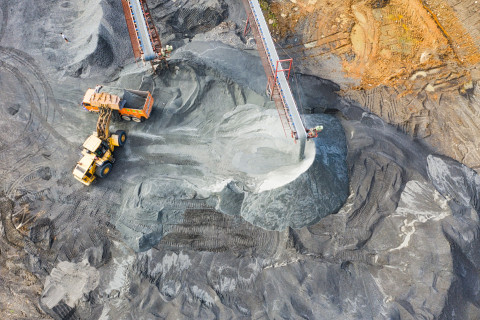
The stakes have become particularly significant as global demand for critical minerals continues to rise. Central Africa possesses some of the world's largest reserves of cobalt, copper, lithium, manganese, and other strategic resources essential to the global energy transition and advanced manufacturing. Those assets provide governments with greater bargaining power than at any point in recent decades. The question is whether that leverage will be used to negotiate better terms—or merely to export larger volumes of raw materials. History offers reasons for caution. Previous commodity booms generated substantial export revenues but often failed to produce broad-based industrialization or significant improvements in living standards. Today's environment is different because governments have more potential partners, greater access to international capital, and stronger negotiating positions. Yet those advantages will translate into lasting prosperity only if they are matched by effective governance and long-term economic planning.
The real story is therefore not whether the West is losing influence on Africa. It is whether African governments can use an increasingly competitive international environment to reshape the terms of engagement in their own favor. The countries that succeed will not necessarily be those that attract the most investment, but those that convert global competition into stronger industries, better infrastructure, higher-skilled jobs, and broader opportunities for their own citizens.