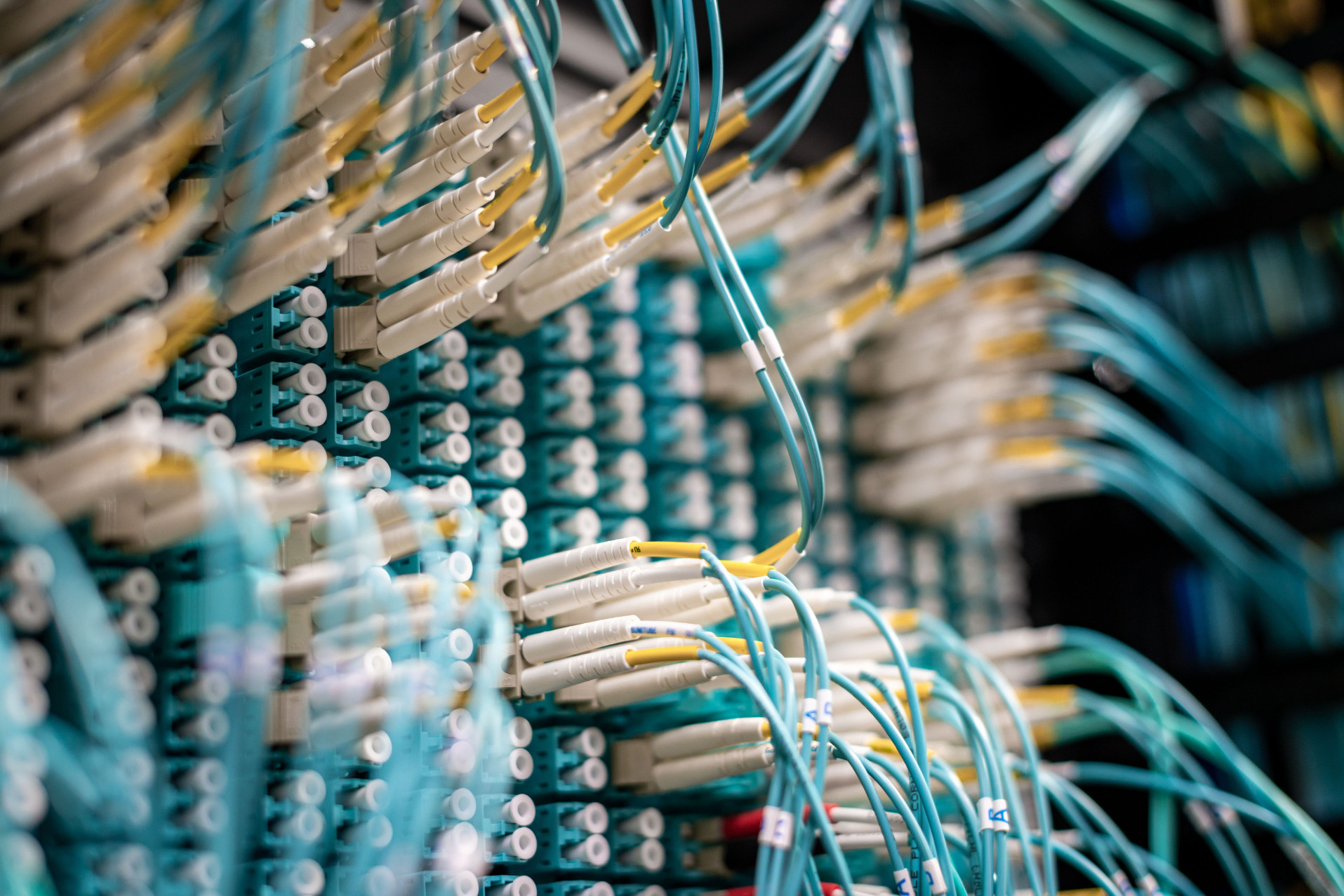
Nigeria has signed a grant agreement worth up to €14 million with the European Union and the European Bank for Reconstruction and Development (EBRD) for a fiber-optic network.
The agreement to prepare a nationwide 90,000km fiber-optic network intended to expand broadband access and accelerate digital growth was signed in Abuja on October 14 and will be administered by the EBRD, according to Punch Nigeria.
The funding is designed for preparatory work rather than cable deployment. It will finance project scoping, fiber-optic network design, implementation planning, technical studies and institutional capacity building for the proposed national broadband backbone.
Nigeria’s Minister of Budget and Economic Planning, Atiku Bagudu, said the partnership would strengthen the country’s digital infrastructure and support economic growth through better connectivity and institutional development.
He described design, capacity building and knowledge transfer as essential to effective implementation and the long-term sustainability of digital investments.
The Ministry of Budget and Economic Planning will execute the grant agreement on behalf of the federal government, while the Ministry of Communications, Innovation and Digital Economy will oversee technical implementation through its project units.
EU representative in Nigeria Massimo De Luca reaffirmed the bloc’s support for Nigeria’s digital transformation and called on participating institutions to cooperate to deliver the project on schedule.
The 90,000 km network forms part of Project BRIDGE, Nigeria’s flagship broadband expansion program. Communications Minister Bosun Tijani said in August that resource mobilization and contractual processes had been concluded, clearing the way for physical deployment across all states, geopolitical zones, local government areas and wards.
The government has said the project could connect more than 20 million Nigerians who currently lack reliable network access. It is also expected to create an open-access backbone serving businesses, public institutions and households, with earlier reporting indicating plans to connect more than 200,000 schools, health facilities and other public institutions.
The €14 million grant adds to earlier international backing for Project BRIDGE. In February, the EBRD approved a $100 million investment, while the EU committed €22 million specifically to the fibre rollout as part of a broader €45 million digital-economy package.
Nigeria’s fiber backbone is currently estimated at about 35,000 km, and the government aims to expand it to about 125,000 km by 2028, with physical deployment scheduled to begin in October 2026.
Nigeria had 109 million internet users at the end of 2025, representing a 45.5% penetration rate, underscoring the scale of the connectivity gap the project seeks to address.