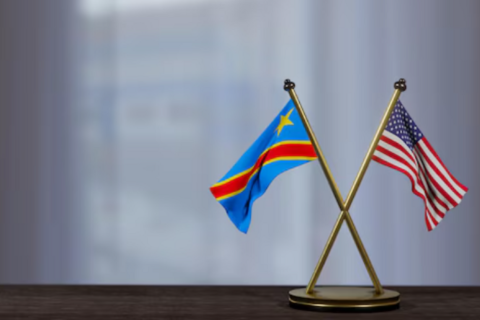
Within the space of six weeks, three separate mining agreements involving the Democratic Republic of the Congo brought together Glencore, a US-backed investor, and Chinese partners. In February, state-owned miner Gécamines signed an agreement to market half of the copper produced at Glencore's Kamoto Copper Company for the next two years. Weeks later, US-backed Orion Commodity Management announced plans to acquire a stake in that marketing venture. Shortly afterward, China concluded another mining cooperation agreement with Kinshasa. Taken individually, each transaction reflects a commercial decision. Together, they point to something more significant: the DRC is increasingly negotiating from a position of greater leverage rather than relying on a single external partner.
For decades, Gécamines functioned largely as a passive shareholder, collecting royalties while foreign operators extracted and marketed the country's mineral wealth. Today, the company is attempting to reposition itself further up the value chain. Chairman Guy Robert Lukama has outlined plans for Gécamines to market as much as 500,000 tonnes of copper and 40,000 tonnes of cobalt annually through its own trading operations. Such ambitions only become viable when multiple buyers are competing for access. At present, they are. The timing is hardly accidental. The DRC is the world's second-largest producer of copper and accounts for roughly 70 percent of global cobalt supply. As demand for electric vehicles and energy-transition technologies continues to expand, securing reliable access to these minerals has become a strategic priority for major economies.
Washington's recent engagement reflects that reality. The December 2025 minerals agreement between the United States and the DRC linked greater economic cooperation with broader security coordination in eastern Congo, including efforts to address armed groups operating around key mining regions. Orion Commodity Management's proposed investment in Gécamines' marketing venture represents one of the first commercial initiatives emerging from that broader framework.
China, meanwhile, has shown no indication of retreating. It remains the dominant processor of Congolese cobalt and one of the DRC's most significant economic partners. The latest cooperation agreement builds upon the renegotiated Sicomines framework, including a renewed commitment to infrastructure investment estimated at approximately $7 billion. Rather than competing directly with Washington's approach, Beijing continues reinforcing its long-established position across the country's mining sector. Far from signaling inconsistency, these parallel partnerships reflect an increasingly pragmatic strategy. Rather than choosing between competing geopolitical partners, Kinshasa appears intent on maintaining relationships with all of them, allowing competition itself to strengthen its negotiating position. Across Central Africa, governments are gradually recognizing that strategic flexibility can generate leverage. In the DRC, Gécamines has become one of the principal instruments through which that strategy is being implemented.
Yet the strategy also carries significant risks.
An investigation by the DRC's Inspector General of Finance in 2023 highlighted longstanding concerns surrounding opaque commercial practices and conflicts of interest within Gécamines. Expanding the company's role from shareholder to international trader will require stronger governance, greater financial transparency, and more robust institutional oversight than it has consistently demonstrated in the past. Competition among international investors creates opportunities only if the resulting value remains within public institutions. Otherwise, increased bargaining power risks becoming another mechanism through which private interests capture national wealth.
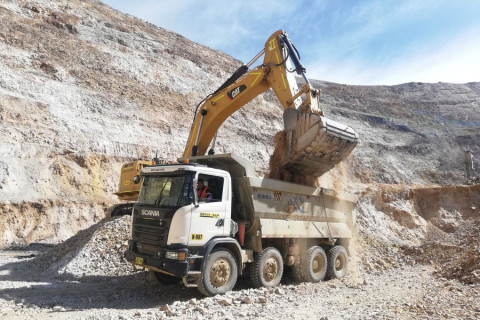
Kamoto Copper Company alone produced approximately 190,000 tonnes of copper last year and is targeting annual production of 300,000 tonnes. Gécamines, Orion Commodity Management, Glencore, and Chinese partners all have strategic interests in that output. The critical question is therefore no longer who gains access to Congolese minerals. It is whether the DRC can translate growing international competition into long-term national value.
The country possesses more leverage today than it has in decades. Whether that leverage ultimately delivers lasting economic benefits will depend less on the rivalry between global powers than on the strength of the institutions responsible for managing it.