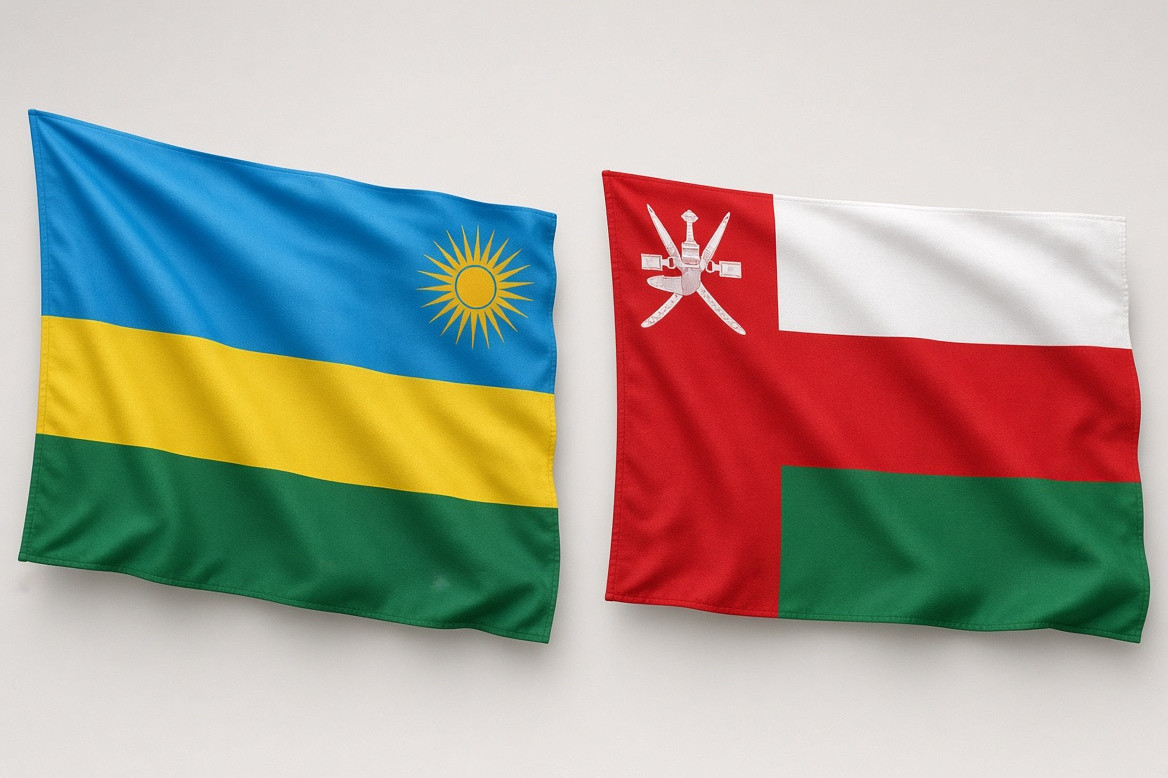
Oman is deepening its partnership with Rwanda as Muscat seeks to expand its economic and transport links with East Africa, turning a relationship with a relatively small landlocked country into a broader platform for logistics, investment and regional connectivity.
President Paul Kagame’s September 7–8 visit to Oman produced a series of agreements that moved bilateral relations beyond traditional diplomacy. The two countries agreed to open resident embassies, establish a Joint Committee and Joint Business Council, and strengthen cooperation in investment, transport, energy, mining, tourism, logistics, communications, banking and finance. They also signed agreements and memoranda covering trade, investment promotion, logistics, inland and dry ports, agriculture and strategic investment.
The logistics component is particularly significant for Oman. In January, the two governments signed agreements covering dry ports, supply chains, aviation, data centres and infrastructure. Oman’s transport minister said at the time that the cooperation was aligned with Muscat’s strategy to expand international partnerships, with a particular focus on East Africa.
Rwanda offers Oman a potential regional platform rather than a large consumer market. As a landlocked country, Rwanda depends heavily on transport corridors through neighboring states, while Kigali has invested in aviation, logistics, digital infrastructure and business services. The new agreements on inland ports, supply chains and air connectivity therefore address complementary interests: Rwanda needs efficient external connections, while Oman is seeking stronger links with markets beyond the Gulf.
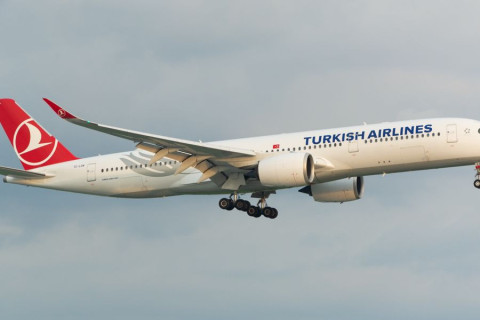
Air connectivity is already expanding. SalamAir launched twice-weekly direct flights between Muscat and Kigali in July, following an earlier agreement involving Oman Air. Rwanda said the new route would strengthen connections between the country, Oman and the wider Middle East.
Energy provides another practical link. Rwanda is moving toward a government-to-government fuel import model under which Oman’s OQ Trading is expected to supply petroleum products. Rwanda currently imports most of its fuel through regional ports, making logistics and energy supply closely connected.
Oman is not entering an empty Gulf market in Rwanda. The UAE is already Rwanda’s leading trade partner, with bilateral trade exceeding $1.5 billion in 2024, while Qatar Investment Authority acquired a 60% stake in the New Kigali International Airport project for $578 million and committed another $1.1 billion to complete it.
The security dimension adds another layer to Oman’s engagement. Rwanda remains deeply involved in the Great Lakes crisis, while fighting in eastern DRC and accusations exchanged between Kinshasa and Kigali continue to complicate regional diplomacy. In June, the African Union and international partners warned of escalating fighting in eastern DRC and urged implementation of the Rwanda-DRC peace process.
Oman’s growing relationship with Rwanda therefore appears to be driven less by Rwanda’s economic size than by its position within East African transport, investment and diplomatic networks. For Muscat, Kigali can serve as a gateway into a region where Oman is seeking to build wider commercial and political connections.