For much of the post-Cold War period, international partnerships in Central Africa often followed a familiar pattern. Governments typically relied on one dominant external partner for investment, security assistance, or political support. Former colonial powers remained influential, China emerged as the region's principal infrastructure financier, and Western institutions continued shaping development priorities through aid and multilateral lending.
That model is gradually disappearing.
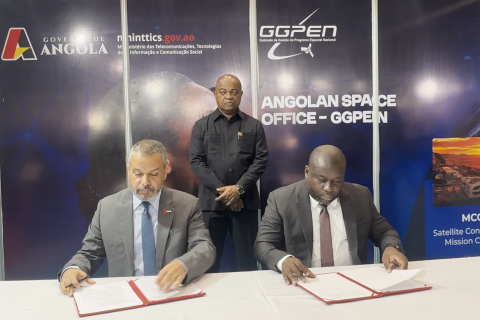
Today, Central African governments are increasingly pursuing relationships with multiple partners simultaneously, choosing partners by sector rather than ideology. Infrastructure may involve Chinese financing. Port management may be entrusted to Gulf investors. Public health cooperation increasingly includes Brazil. Digital services may draw on Indian expertise, while European institutions continue supporting governance reforms and climate initiatives. Rather than replacing one partner with another, governments are assembling broader portfolios of international relationships.
The Democratic Republic of the Congo illustrates this shift particularly clearly. While Chinese companies remain deeply embedded in the country's mining sector, Washington has expanded cooperation through critical minerals and security initiatives. At the same time, Gulf investors continue exploring opportunities in logistics and infrastructure. Kinshasa is no longer operating within a framework of exclusive partnerships. Instead, it increasingly benefits from competition among external actors seeking access to strategic sectors. A similar pattern is emerging elsewhere across the region. Gabon's diplomatic normalization has reopened engagement with African institutions while simultaneously strengthening economic ties with Gulf investors and maintaining relationships with European partners. Cameroon continues expanding cooperation across traditional Western institutions while pursuing investment from Asia and the Middle East. Rather than viewing these relationships as mutually exclusive, governments increasingly treat them as complementary.
This diversification reflects more than changing geopolitics. It also reflects changing bargaining power. As global competition intensifies over critical minerals, energy resources, transport corridors, and emerging markets, Central African countries possess assets that multiple partners increasingly value. That competition creates opportunities for governments willing to negotiate from a position of flexibility rather than alignment. The shift is also changing the nature of international cooperation itself. Investment is no longer measured solely through large infrastructure projects. Technical expertise, institutional development, digital governance, healthcare, education, and regulatory capacity are becoming equally important areas of engagement. Brazil's growing cooperation in public health, India's expanding digital partnerships, and Gulf investment in logistics demonstrate that influence today increasingly extends beyond traditional diplomacy or development finance.
This more diversified approach does not eliminate risks. Managing multiple strategic relationships requires stronger institutions capable of negotiating complex agreements, coordinating competing interests, and ensuring that external partnerships complement rather than undermine national development priorities. Without that institutional capacity, diversification can easily become fragmentation.
For Central Africa, however, the broader direction appears increasingly clear. The question is no longer which external power will shape the region's future. It is how effectively governments can use growing international competition to advance their own national priorities. The era of one-partner diplomacy is gradually giving way to something more pragmatic. In a more fragmented international system, flexibility itself is becoming one of Central Africa's most valuable diplomatic assets.