African Energy Week (AEW) 2026 will put reliable and affordable electricity at the center of Africa’s energy agenda, bringing gas-to-power, renewables, power grids and investment together as the continent seeks to expand energy access and support economic development.
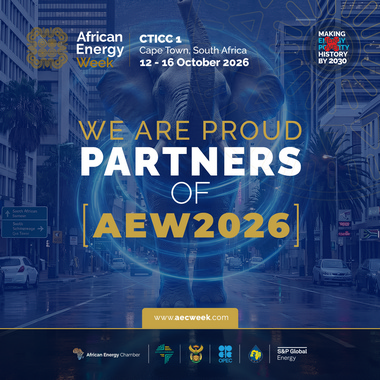
Taking place in Cape Town from October 12–16, AEW 2026 will examine how African countries can turn their energy resources into operational projects and more reliable power systems. The program spans oil and gas, power, renewables, infrastructure and finance, with sessions focused on energy access, project development and the investment needed to close the continent’s power gap.
The scale of that challenge remains significant. More than 560 million people in sub-Saharan Africa still lacked access to electricity in 2024, according to the International Energy Agency. The agency says the pace of electrification must triple to achieve universal access by 2030, with rural communities accounting for a large share of the remaining gap.
Against this backdrop, gas-to-power will feature prominently in the AEW agenda. A session on Senegal will examine how the Greater Tortue Ahmeyim (GTA), Sangomar and Yakaar-Teranga developments can contribute to energy security, industrialization and greater energy sovereignty as the country moves toward ending natural gas imports. GTA and Yakaar-Teranga are gas developments, while Sangomar is Senegal’s first offshore oil project. The session will also examine financing and risk mitigation for energy infrastructure.
Regional integration will also feature in discussions on the MSGBC Basin, where gas and LNG developments are creating opportunities for domestic power generation, industrial growth and cross-border infrastructure. The agenda will examine the frameworks needed to advance projects while balancing LNG exports with domestic gas-to-power and industrial demand, including pipelines, LNG hubs and integrated regional infrastructure.
Mozambique will provide another case study. Its dedicated AEW session will examine the restart of large-scale LNG development, rising demand for gas-to-power, downstream industrial opportunities and the role of renewables in strengthening long-term energy security.
Renewables will form another major part of the discussion. AEW sessions will examine how solar, wind, hydropower and geothermal resources can be converted into reliable electricity, alongside energy storage, mini-grids, smart grids and regional power pools. Other sessions will focus on transmission investment and grid digitalization, reflecting the need to strengthen the networks that connect new generation capacity to consumers.
Financing cuts across the program. AEW will examine project bankability, risk mitigation, blended finance and ways to mobilize private and institutional capital for power and renewable energy infrastructure. The emphasis reflects a central challenge for Africa’s energy sector: resources and development plans do not translate into electricity without financing, infrastructure and projects that can become operational.
“Africa’s energy transition requires us to develop gas-to-power alongside renewables, using each to address the continent’s energy deficit while building stronger economies. AEW 2026 brings the projects, capital and partners needed to turn that complementary energy mix into reliable power and industrial growth,” said NJ Ayuk, executive chairman of the African Energy Chamber.
By bringing these issues together, AEW 2026 is placing energy access within a broader discussion about generation, infrastructure and investment. The challenge is not simply to add new capacity, but to build systems that can deliver dependable electricity to households and businesses.
For Africa’s energy transition, that means connecting resources and investment with the infrastructure needed to put more reliable power within reach of the people and economies that need it most.