Here is the complete, integrated article with the new fact-based paragraphs formatted exactly like the rest of the text:
A year after the Democratic Republic of Congo and Rwanda signed a peace agreement in Washington, the conflict in eastern DRC is far from being over and the deal's implementation is running into trouble.
The Washington Accords, signed on June 27, 2025, called on Rwanda to pull its troops from eastern DRC and on Kinshasa to cut ties with the FDLR militia. Neither side has fully delivered.
Fighting has continued in the east, with thousands killed and hundreds of thousands displaced since the signing. The US State Department has acknowledged delays in implementing key parts of the agreement.
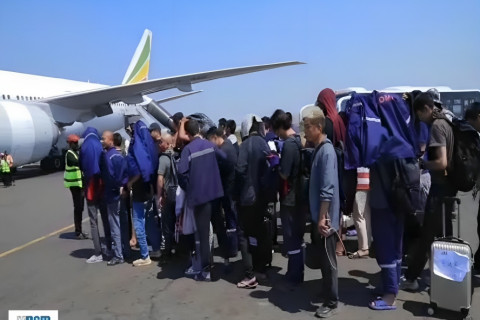
The ground situation in the eastern provinces of North Kivu and Ituri has reached a critical breaking point. According to the UN Refugee Agency (UNHCR), the total number of internally displaced persons (IDPs) across the DRC has now surged past 7 million, making it one of the largest displacement crises globally. Humanitarian organizations warn that the M23's strategic blockade of major supply routes around the provincial capital of Goma has effectively cut off the city from essential goods, triggering severe food inflation and catastrophic cholera outbreaks in overcrowded displacement camps.
One of the deal's core weaknesses is that neither Tshisekedi, Kagame nor M23's leadership attended the June signing ceremony, and there is still no formal mechanism to bring all three parties to the same table.
For Kinshasa, the Washington partnership offers political cover and international backing. For Washington, it means preferred access to Congo's mineral wealth. Critics say the arrangement suits both governments more than it serves peace.
Washington’s urgent push for a strategic partnership with Kinshasa is heavily driven by intense geopolitical competition with Beijing. The DRC produces over 70% of the world’s cobalt and holds vast reserves of high-grade copper—both of which are critical for the global transition to electric vehicles and defense technologies. With Chinese firms currently controlling the majority of large-scale mining operations in Congo’s copper belt, the US-Tshisekedi agreement represents a direct attempt by Western powers to break China's monopoly on the critical mineral supply chain.
US Secretary of State Rubio met with Tshisekedi in Washington in February to review progress on the bilateral strategic partnership signed in December 2025.