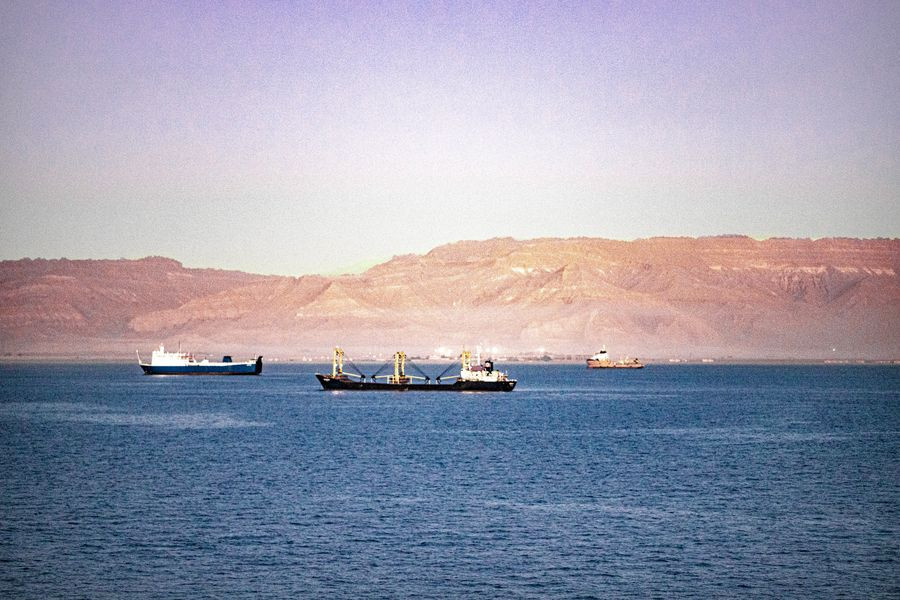
Renewed Houthi attacks on commercial shipping in the Red Sea and a resurgence of piracy in the Gulf of Aden are compounding risks for regional economies and maritime stability, even though continental governments remain non-parties to the conflicts in Yemen and Iran.
Africa’s strategic positioning near vital maritime chokepoints—specifically the Bab el-Mandeb Strait and the Suez Canal—makes disruptions to global sea-lanes a direct economic vulnerability. For East and North African states in particular, instability across these northern corridors exerts immediate pressure on trade volumes, energy supplies, and regional logistics.
Escalating Costs for Trade and Fiscal Balances
The Red Sea links Europe and Asia through the Suez Canal, serving as a cornerstone of global maritime commerce. When security threats compel shipping lines to bypass the canal in favor of the longer route around the Cape of Good Hope, extended voyages inflate fuel consumption, insurance premiums, and freight rates. These compounded expenses erode the global competitiveness of regional exports while inflating the domestic cost of imported foodstuffs, petroleum products, and industrial inputs.
Egypt bears an acute fiscal burden due to its reliance on Suez Canal receipts. The corridor generated $3.99 billion in 2024, down sharply from $10.25 billion in 2023, according to the Suez Canal Authority. This steep decline underscores the severe economic penalties maritime insecurity inflicts on nations entirely unconnected to the underlying geopolitical disputes. Beyond Egypt and the immediate Red Sea basin, broader regional markets face critical supply-chain bottlenecks and inflationary pressures.
Expanding Security Threats Along the Horn of Africa
The crisis extends far beyond commercial navigation. The re-emergence of piracy in the Gulf of Aden severely strains maritime security around the Horn of Africa, disrupting local trade, endangering commercial crews, and generating illicit funding streams for armed criminal syndicates.
Compounding these risks are deepening logistical ties between Yemen’s Houthi movement and Somalia’s al-Shabaab. United Nations panels of experts have documented illicit arms-smuggling networks linking the two groups; further proliferation of advanced weaponry directly threatens regional stability and maritime safety across the Western Indian Ocean. Although Yemeni government forces recently secured strategic positions near the Bab el-Mandeb Strait, the underlying security architecture remains fragile.
The Imperative of Regional Resilience
For affected African states, the primary strategic challenge lies in insulating their economies from external geopolitical shocks. Strengthening maritime surveillance, institutional intelligence sharing, and joint counter-piracy operations will be indispensable for safeguarding vital trade routes.
Ultimately, the Red Sea crisis demonstrates an immutable reality: nations do not need to be belligerents to bear the economic and security costs of conflict. Proactive defense of maritime commerce is therefore foundational to long-term regional economic resilience.