Ghana and Russia are looking to expand their relationship beyond trade, with energy, agriculture, education, geological exploration and security emerging as areas of cooperation following talks between the two countries’ foreign ministers in Moscow.
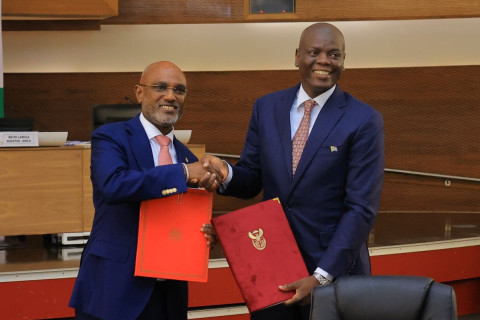
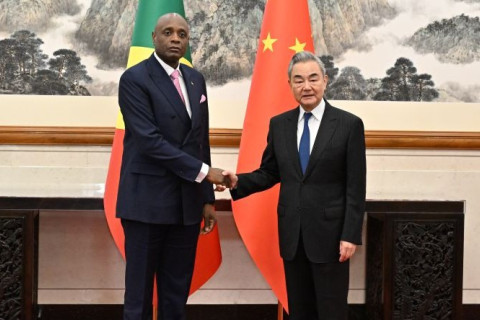
Ghanaian Foreign Minister Samuel Okudzeto Ablakwa visited Russia on August 17 for three days of talks with his Russian counterpart, Sergey Lavrov. The visit produced a visa waiver agreement for holders of diplomatic and service passports, the first such agreement between the two countries since they established diplomatic relations in 1958.
The agreement is limited to official passport holders, but Accra described it as a step toward broader discussions on travel arrangements. The two sides also discussed ways to expand economic ties, including cooperation in energy, agriculture and geological exploration.
Security was another important part of the talks. Ghana welcomed Russian support in the fight against violent extremism in the Sahel, while stressing that any response should be based on an Africa-led solution with support from international partners.
Moscow has also said it plans to sign a memorandum of cooperation with the Economic Community of West African States covering security. Russia has offered to help normalize relations between ECOWAS and the Alliance of Sahel States — Burkina Faso, Mali and Niger.
The security discussion comes as Ghana works to prevent instability in the Sahel from spreading farther south. Accra has been strengthening efforts to address the threat of violent extremism while maintaining its role as an active member of ECOWAS.
Economic cooperation is also gaining attention. Ghana has been seeking Russian investment and technical support as it pushes industrialization and job creation. Recent discussions have included nuclear energy, the green transition, agriculture and geological exploration.
Education is another part of the relationship. The two countries have discussed expanding opportunities for Ghanaian students to study in Russia, alongside broader technical and educational cooperation.
The latest talks suggest that Accra and Moscow are trying to build a broader relationship that extends beyond traditional trade. For Ghana, the agenda now includes investment, technology, education and security cooperation. For Russia, closer engagement with Accra provides another channel for relations with a West African country that remains closely connected to the wider ECOWAS region.
The immediate results are modest, but the range of issues now under discussion shows that Ghana-Russia relations are becoming broader and more practical.